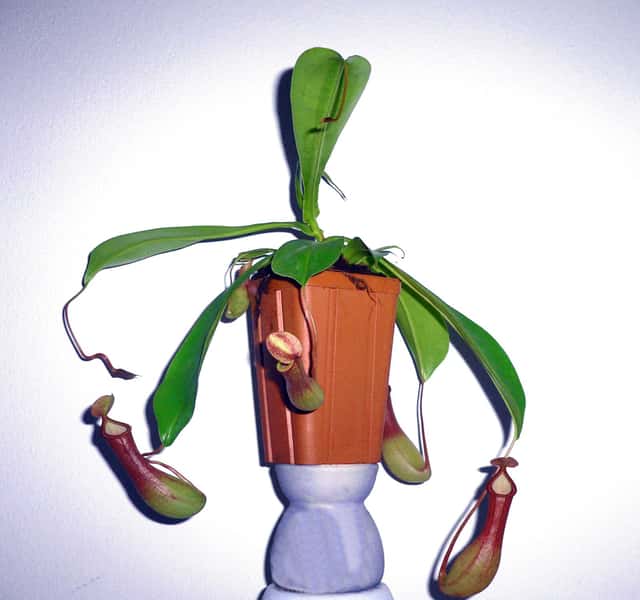
Nepenthaceae
Ventrata pitcher plant (Nepenthes ventrata)
Nepenthes ventrata
Needs bright indirect light, high humidity (above 60%, ideally above 70%) and daytime temperatures of 22 to 30 C with cooler nights (15 to 20 C). Use an airy, low-nutrient mix and only rain or distilled water. Never fertilize the substrate.
Every 3 days
Bright indirect
15° - 30°C
60% - 80%
Categories
What is Ventrata pitcher plant?
Ventrata pitcher plant (Nepenthes ventrata) is a medium-care plant from the Nepenthaceae family. Nepenthes ventrata is a hardy hybrid of Nepenthes alata and Nepenthes ventricosa, popular as a carnivorous houseplant. It grows pitchers at the tips of leaf tendrils that trap and digest insects, and thrives in hanging pots.
Ventrata pitcher plant grows up to watering every 3 days, 15°C – 30°C, 60–80% humidity. It is suitable for indoor environments and safe for pets.
Unlike many popular species, Ventrata pitcher plant is safe to keep around pets. Without adequate drainage, root rot can develop within 7 days.
How to Care for Ventrata pitcher plant?
TLDR: Ventrata pitcher plant needs Bright indirect, watering every 3 days, and temperatures between 15-30°C with 60-80% humidity.
How Often Should You Water Ventrata pitcher plant?
Keep the substrate constantly moist, watering several times a week with rain, distilled or demineralized water. Tap water builds up salts and chlorine that harm roots and pitchers.
How Much Light Does Ventrata pitcher plant Need?
Prefers plenty of bright indirect light, 10 to 14 hours a day. It tolerates direct sun if introduced slowly, but very intense light turns leaves dark red and can scorch them.
What Is the Best Soil for Ventrata pitcher plant?
Use a light, nutrient-poor mix such as sphagnum moss with perlite. Avoid regular potting soil and fertilizer in the substrate.
What Pot Should You Use for Ventrata pitcher plant?
Hanging pot or basket with drainage holes, plastic or unglazed ceramic, filled with an airy sphagnum and perlite mix.
Care Schedule
Misting
Every 1 days
What Is Ventrata pitcher plant and Where Does It Come From?
Nepenthes ventrata is a hardy hybrid of Nepenthes alata and Nepenthes ventricosa, popular as a carnivorous houseplant. It grows pitchers at the tips of leaf tendrils that trap and digest insects, and thrives in hanging pots.
How Big Does Ventrata pitcher plant Grow?
TLDR: Ventrata pitcher plant can reach up to ?cm tall with Medium growth rate.
Growth rate
Medium
Foliage
Evergreen
Plant Uses
Ornamental
Great for decoration
Is your plant showing symptoms?
Click on the symptom to discover possible causes:
What Diseases Commonly Affect Ventrata pitcher plant?
TLDR: Ventrata pitcher plant is susceptible to 7 known diseases. Monitor regularly for early detection.
Root Rot
Root rot is a serious fungal disease that affects the root system of plants, causing them to decay and die. It is primarily caused by overwatering, poor drainage, or soil-borne fungi such as Pythium, Phytophthora, Rhizoctonia, and Fusarium. The disease thrives in waterlogged conditions where roots are deprived of oxygen, making them susceptible to fungal infection.
Leaf Spot
Leaf spot is a common fungal disease caused by various pathogens including Alternaria, Ascochyta, Colletotrichum, Septoria, and Venturia. It primarily affects leaves, causing discolored spots that can lead to premature leaf drop if left untreated.
Scale Insects
Scale insects are small sap-sucking pests that appear as brown, shell-like bumps on plant stems and leaves. There are over 25 species, divided into armored (hard) and unarmored (soft) scales. They feed by piercing plant tissue and extracting sap, which weakens the plant and can lead to yellowing, stunted growth, and even death if left untreated. They also excrete honeydew, which attracts ants and promotes sooty mold growth.
Mealybugs
Mealybugs are small, soft-bodied insects covered with a white, waxy, cottony material. They are common pests of houseplants and outdoor plants in mild climates. These sap-sucking insects feed on plant tissue, causing damage, stunted growth, and can lead to plant death if left untreated. They produce sticky honeydew which attracts sooty mold.
Fun Facts
It is carnivorous: the pitchers lure, trap and digest insects.
It is a hybrid of Nepenthes alata and Nepenthes ventricosa, known for being hardy.
Pitchers form at the tips of leaf tendrils and look great in hanging pots.
Frequently asked questions
Is Nepenthes ventrata toxic to pets?
Can I water it with tap water?
Should I fertilize the soil?
Why is it not making pitchers?
Compare with similar plants
| Attribute | Difficulty | Light | Watering | Pet Safe |
|---|---|---|---|---|
| Dark Fieldcap | Medium | Low light | 2d | ⚠️ |
| Azalea | Medium | Partial shade | 3d | ⚠️ |
| Muriel's Bamboo | Medium | Partial shade | 3d | ✓ |
| Bougainvillea | Medium | Direct sun | 7d | ⚠️ |




