Amaryllidaceae
Victory Onion: Edible Plant
Allium victorialis
Requires full sun and well-draining soil, preferably loamy with added sand and organic matter. Once established, relatively drought-tolerant. Winter dormancy is natural and essential. Light spring fertilization suffices; harsh conditions typical of alpine habitat are preferred.
Every 10 days
Direct sun
-30° - 25°C
30% - 70%
Categories
What is Victory Onion?
Victory Onion (Allium victorialis) is a medium-care plant from the Amaryllidaceae family. Allium victorialis is a hardy perennial bulbous plant in the Amaryllidaceae family, native to alpine and subalpine regions of Europe and Asia. Remarkably cold-hardy, it withstands temperatures down to -30°C (USDA hardiness zone 4). The plant forms compact clumps of broad, glossy, dark green foliage...
Victory Onion grows up to 80cm, spread of 40cm, watering every 10 days, -30°C – 25°C, 30–70% humidity. It is not suitable for indoor environments and not safe for pets.
Without precautions, ingestion can cause irritation in pets. Keep out of reach of cats and dogs.
How to Care for Victory Onion?
TLDR: Victory Onion needs Direct sun, watering every 10 days, and temperatures between -30-25°C with 30-70% humidity.
How Often Should You Water Victory Onion?
Water when soil surface becomes dry; reduce frequency once established. Avoid waterlogging which causes bulb rot. Prefers moderate moisture during growing season.
How Much Light Does Victory Onion Need?
Full sun is mandatory; plant will decline in shade. Position in maximum direct sunlight exposure.
What Is the Best Soil for Victory Onion?
Use well-draining, slightly acidic to neutral or mildly alkaline soil. Amend with sand, small gravel, and organic compost. Poor, sandy loam mimics alpine conditions. Heavy clay soils must be significantly amended or avoided.
What Pot Should You Use for Victory Onion?
Shallow pots with excellent drainage holes; select terracotta for breathability. Bulbs prefer cool root conditions.
Care Schedule
Fertilize
Every 120 days
Rotate
Every 180 days
Repot
Every 365 days
What Is Victory Onion and Where Does It Come From?
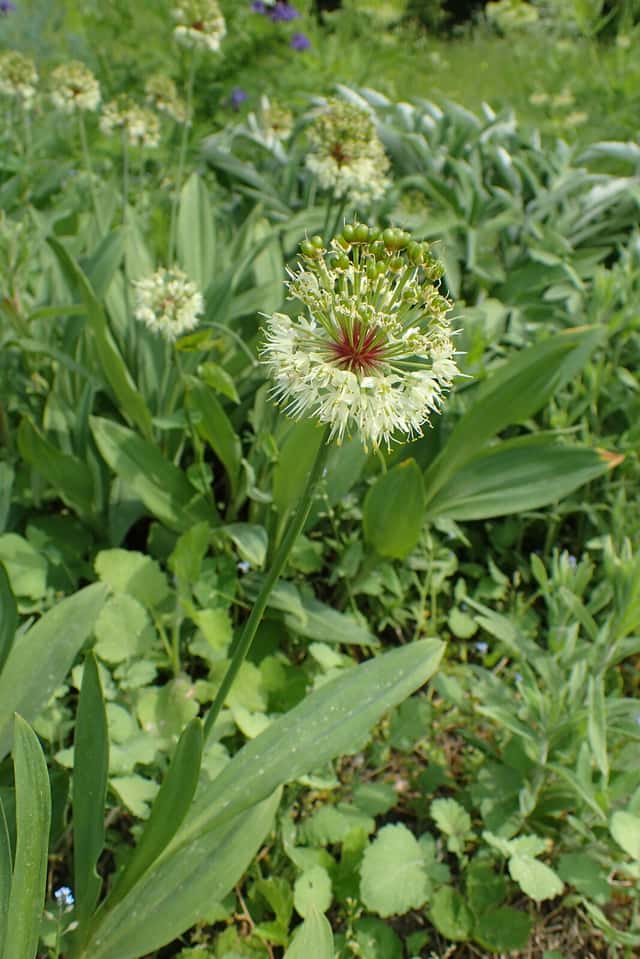
Allium victorialis is a hardy perennial bulbous plant in the Amaryllidaceae family, native to alpine and subalpine regions of Europe and Asia. Remarkably cold-hardy, it withstands temperatures down to -30°C (USDA hardiness zone 4). The plant forms compact clumps of broad, glossy, dark green foliage resembling leeks. It produces tall, leafless flowering scapes (30-70 cm) with loose hemispheric umbels of 20-35 small white to creamy-green flowers blooming May through August. Small bulbs (10-20 mm diameter) cluster on a short rhizome, naturally self-dividing over time to create expanding colonies.
How Big Does Victory Onion Grow?
TLDR: Victory Onion can reach up to 80cm tall with Slow growth rate.
Max height
80cm
Spread
40cm
Growth rate
Slow
Foliage
Deciduous
Warning: Toxic Plant
This plant can be toxic if ingested. Keep out of reach of:
Plant Uses
Edible
Can be consumed
Medicinal
Medicinal properties
Ornamental
Great for decoration
Medicinal Uses
- Antiscorbutic (high vitamin C content)
- Carminative and digestive aid
- Diuretic properties
- Vermifuge for intestinal parasites
- Traditional treatment for menorrhagia
Culinary Uses
- Bulbs as pungent garlic-onion substitute
- Leaves (traditionally favored in Japanese cuisine)
- Young shoots with mild garlic-leek flavor
Is your plant showing symptoms?
Click on the symptom to discover possible causes:
What Diseases Commonly Affect Victory Onion?
TLDR: Victory Onion is susceptible to 10 known diseases. Monitor regularly for early detection.
Downy Mildew
Downy mildew is a fungal-like disease caused by oomycetes (water molds) that thrives in cool, wet conditions. It affects a wide range of plants, causing yellowing leaves with fuzzy white-gray growth underneath, leading to defoliation and reduced yields if left untreated.
Rust
Rust is a common fungal disease caused by fungi in the order Pucciniales that affects a wide variety of plants. The disease gets its name from the characteristic orange, yellow, or reddish-brown pustules that appear on leaves, resembling metal rust. This obligate fungal parasite requires living plants to survive and can cause significant economic losses in agricultural crops.
White Mold
White mold (Sclerotinia sclerotiorum) is a devastating fungal disease affecting over 400 plant species worldwide. The fungus produces black, seed-like structures (sclerotia) that can survive in soil for 5 or more years. The disease is favored by cool, moist weather (50-68°F/10-20°C), especially during flowering.
Grey Mould
Meaning & Symbolism
Victory, protection, and alpine resilience; symbolizes strength and endurance in harsh conditions
Compare with similar plants
| Attribute | Difficulty | Light | Watering | Pet Safe |
|---|---|---|---|---|
| Dark Fieldcap | Medium | Low light | 2d | ⚠️ |
| Azalea | Medium | Partial shade | 3d | ⚠️ |
| Muriel's Bamboo | Medium | Partial shade | 3d | ✓ |
| Bougainvillea | Medium | Direct sun | 7d | ⚠️ |




