Plantaginaceae
Bacopa monnieri (Water Hyssop): Growing & Care Guide
Bacopa monnieri
An easy-care plant that needs consistently moist soil and good light. It prefers morning sun with light afternoon shade in hot climates. It tolerates drought poorly but recovers well from pruning and resists pests when properly cared for.
Every 3 days
Bright indirect
10° - 32°C
55% - 75%
Categories
What is Water Hyssop?
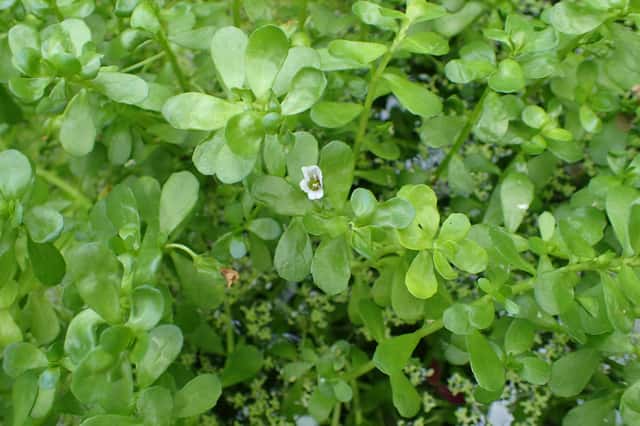
Water Hyssop (Bacopa monnieri) is a easy-care plant from the Plantaginaceae family. Bacopa monnieri, widely known as water hyssop or brahmi, is a creeping, succulent-leaved herb native to wetlands across Asia, including riverbanks, ponds and marshes in India, China and Vietnam. Its branching stems and small fleshy leaves form dense mats in moist soil, and the plant is also a popula...
Water Hyssop grows up to 15cm, spread of 100cm, watering every 3 days, 10°C – 32°C, 55–75% humidity. It is suitable for indoor environments and safe for pets.
Unlike many tropical plants, Water Hyssop tolerates watering mistakes. Best for beginners. Unlike many popular species, Water Hyssop is safe to keep around pets. Without adequate drainage, root rot can develop within 7 days.
How to Care for Water Hyssop?
TLDR: Water Hyssop needs Bright indirect, watering every 3 days, and temperatures between 10-32°C with 55-75% humidity.
How Often Should You Water Water Hyssop?
Keep the substrate constantly moist, never letting it dry out between waterings. Water every 2-3 days in summer and slightly less in winter, avoiding prolonged standing water.
How Much Light Does Water Hyssop Need?
Provide 4-6 hours of direct sunlight daily, preferably in the morning. In very hot climates, protect from intense afternoon sun to prevent leaf scorch.
What Is the Best Soil for Water Hyssop?
Use a rich, organic substrate that drains well but retains moisture, with a pH between 6.0 and 7.5. Sandy soil mixed with organic compost works well.
What Pot Should You Use for Water Hyssop?
Wide, shallow pots, or pots with a saucer kept filled with water to maintain constant moisture (the plant tolerates waterlogged soil).
Care Schedule
Fertilize
Every 21 days
Repot
Every 730 days
What Is Water Hyssop and Where Does It Come From?
Bacopa monnieri, widely known as water hyssop or brahmi, is a creeping, succulent-leaved herb native to wetlands across Asia, including riverbanks, ponds and marshes in India, China and Vietnam. Its branching stems and small fleshy leaves form dense mats in moist soil, and the plant is also a popular aquarium species. In traditional Ayurvedic medicine it has been valued for centuries as a brain tonic for memory, focus and stress relief.
How to Propagate Water Hyssop?
Stem cutting
Bacopa roots quickly in water; change the water every 2-3 days to prevent rot.
- 1 Cut a healthy 6-8 cm stem with at least 2-3 nodes
- 2 Remove the leaves from the lower half of the cutting
- 3 Place the cutting in clean water or moist substrate
- 4 Keep in bright indirect light until roots form
- 5 Transplant into final substrate once roots reach 2-3 cm
Materials needed:
Clump division
Divide the plant on overcast days to reduce water stress.
- 1 Carefully remove the clump from its pot or bed
- 2 Separate the roots into smaller sections, each with stems and roots
- 3 Replant each section in moist substrate or soil
- 4 Water thoroughly after replanting to reduce stress
Materials needed:
How Big Does Water Hyssop Grow?
TLDR: Water Hyssop can reach up to 15cm tall with Fast growth rate.
Max height
15cm
Spread
1.0m
Growth rate
Fast
Foliage
Evergreen
Plant Uses
Medicinal
Medicinal properties
Ornamental
Great for decoration
Ground Cover
Soil coverage
Medicinal Uses
- Ayurvedic brain tonic for memory and focus
- Reduces anxiety and stress
- Antioxidant and anti-inflammatory properties
- Cognitive support in older adults
Culinary Uses
- Young leaves occasionally eaten in salads and teas in traditional Indian cuisine
Is your plant showing symptoms?
Click on the symptom to discover possible causes:
What Diseases Commonly Affect Water Hyssop?
TLDR: Water Hyssop is susceptible to 7 known diseases. Monitor regularly for early detection.
Root Rot
Root rot is a serious fungal disease that affects the root system of plants, causing them to decay and die. It is primarily caused by overwatering, poor drainage, or soil-borne fungi such as Pythium, Phytophthora, Rhizoctonia, and Fusarium. The disease thrives in waterlogged conditions where roots are deprived of oxygen, making them susceptible to fungal infection.
Powdery Mildew
Powdery mildew is a common fungal disease caused by various fungi species including Erysiphe, Podosphaera, Oïdium, and Leveillula. It affects over 10,000 plant species worldwide. The disease thrives in warm, dry climates with high humidity and appears as a distinctive white powdery coating on plant surfaces.
Aphids
Aphids are small, soft-bodied, pear-shaped insects (1/16 to 1/8 inch long) that feed by sucking nutrient-rich sap from plants. They reproduce rapidly and can quickly weaken plants, causing distorted growth and transmitting plant viruses. Aphids come in various colors including green, black, red, yellow, brown, and gray. They secrete honeydew, a sticky substance that attracts ants and encourages sooty mold growth.
Spider Mites
Spider mites are tiny arachnids (less than 1/20 inch long) related to spiders and ticks that feed on plant sap. They thrive in hot, dry conditions and can cause significant damage to ornamental and vegetable plants. During severe infestations, crop losses can reach 14% or higher as these pests disrupt vital plant processes including photosynthesis, carbon dioxide absorption, and transpiration.
Meaning & Symbolism
Dedicated to Brahma in Indian tradition, brahmi symbolizes mental clarity, wisdom and memory, and is traditionally used in rituals and meditation practices.
Fun Facts
Grows naturally in marshes and riverbanks across India, China and Vietnam, and can live partially submerged
Has been used for over 3,000 years in Ayurvedic medicine as a memory and focus tonic
One of the most popular plants in planted aquariums, simply known as bacopa
Its name brahmi comes from Brahma, the Hindu god of creation associated with knowledge
Frequently asked questions
Is Bacopa monnieri toxic to cats and dogs?
Can I grow water hyssop indoors?
How often should I water water hyssop?
How do you propagate Bacopa monnieri?
Does water hyssop need frequent pruning?
Compare with similar plants
| Attribute | Difficulty | Light | Watering | Pet Safe |
|---|---|---|---|---|
| Field Maple | Easy | Bright indirect | 14d | ✓ |
| Silver Birch | Easy | Direct sun | 14d | ✓ |
| Common Blanketflower | Easy | Direct sun | 10d | ✓ |
| Cushion Bush | Easy | Direct sun | 14d | ✓ |





