Lamiaceae
White Sage (Salvia apiana)
Salvia apiana
White sage is a low-maintenance, drought-tolerant shrub that wants full sun, lean sandy soil, and infrequent deep watering. Avoid rich soil and overwatering, both of which invite root rot; let it dry out fully between waterings.
Every 21 days
Direct sun
-9° - 40°C
10% - 40%
Categories
What is White Sage?
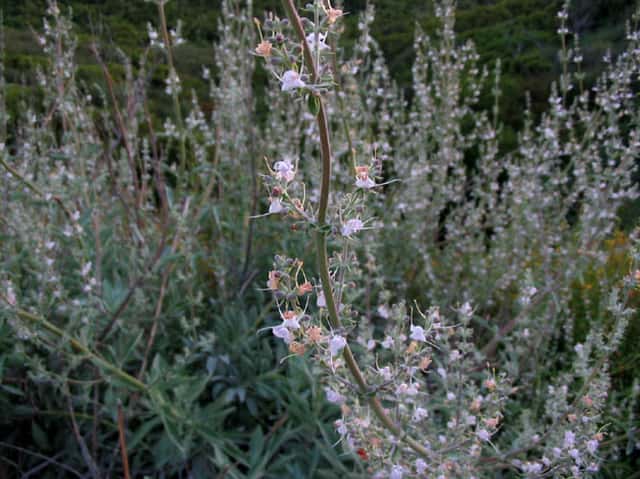
White Sage (Salvia apiana) is a easy-care plant from the Lamiaceae family. Salvia apiana, commonly known as white sage, is an aromatic evergreen shrub native to the coastal sage scrub of Southern California and northern Baja California. It forms a rounded mound of silvery-white, felted leaves and sends up tall flowering spikes of pale lavender-white blossoms in late spring...
White Sage grows up to 1.5m, spread of 150cm, watering every 21 days, -9°C – 40°C, 10–40% humidity. It is not suitable for indoor environments and safe for pets.
Unlike many tropical plants, White Sage tolerates watering mistakes. Best for beginners. Unlike many popular species, White Sage is safe to keep around pets.
How to Care for White Sage?
TLDR: White Sage needs Direct sun, watering every 21 days, and temperatures between -9-40°C with 10-40% humidity.
How Often Should You Water White Sage?
Water deeply but infrequently, letting the soil dry out completely between waterings. Established plants often thrive on rainfall alone in mild climates; overwatering is the most common cause of failure.
How Much Light Does White Sage Need?
Give white sage at least 6 hours of direct sun daily. It will grow leggy and weak, and become more prone to disease, in partial shade.
What Is the Best Soil for White Sage?
Use sandy, rocky, or gravelly soil with excellent drainage and a slightly alkaline pH (7.5-8.5). Rich, moisture-retentive soil leads to root rot.
What Pot Should You Use for White Sage?
If grown in a container, choose an unglazed terracotta pot with generous drainage holes: its porous walls help excess moisture evaporate and mimic the plant's native rocky, well-drained soil.
What Is White Sage and Where Does It Come From?
Salvia apiana, commonly known as white sage, is an aromatic evergreen shrub native to the coastal sage scrub of Southern California and northern Baja California. It forms a rounded mound of silvery-white, felted leaves and sends up tall flowering spikes of pale lavender-white blossoms in late spring. Deeply drought-adapted, white sage thrives in poor, rocky, well-drained soil and full sun, asking for little water once established. Beyond its garden appeal, it is one of the most culturally significant plants of California, long tended and used ceremonially by Indigenous peoples including the Cahuilla, Kumeyaay, Chumash, and Luiseno.
How to Propagate White Sage?
Stem Cutting
Avoid overwatering the cutting; white sage roots best in slightly dry, well-aerated conditions.
- 1 Take a 4-6 inch (10-15cm) cutting from a non-flowering stem
- 2 Strip the leaves from the lower half of the cutting
- 3 Dip the cut end in rooting hormone
- 4 Insert into a well-draining mix of sand and perlite
- 5 Keep in warm, bright, indirect light and mist lightly until roots form
Materials needed:
Seed Propagation
Germination can be slow and uneven; sow more seeds than you need.
- 1 Sow seeds shallowly on the surface of well-draining soil, as they need light to germinate
- 2 Keep soil lightly moist until germination
- 3 Once seedlings have true leaves, reduce watering frequency
- 4 Transplant outdoors after the danger of frost has passed
Materials needed:
How Big Does White Sage Grow?
TLDR: White Sage can reach up to 1.5m tall with Medium growth rate.
Max height
1.5m
Spread
1.5m
Growth rate
Medium
Foliage
Evergreen
Plant Uses
Medicinal
Medicinal properties
Aromatic
Pleasant fragrance
Ornamental
Great for decoration
Edible
Can be consumed
Medicinal Uses
- Traditionally used by Indigenous Californians to treat colds, sore throats, and respiratory ailments
- Root tea historically used by Cahuilla women to ease postpartum recovery
- Leaves used in traditional smudging for spiritual and physical cleansing
Culinary Uses
- Seeds traditionally ground into pinole, a nutritious maize-and-seed meal
- Young leaves occasionally used sparingly to season game and other foods
Is your plant showing symptoms?
Click on the symptom to discover possible causes:
What Diseases Commonly Affect White Sage?
TLDR: White Sage is susceptible to 5 known diseases. Monitor regularly for early detection.
Root Rot
Root rot is a serious fungal disease that affects the root system of plants, causing them to decay and die. It is primarily caused by overwatering, poor drainage, or soil-borne fungi such as Pythium, Phytophthora, Rhizoctonia, and Fusarium. The disease thrives in waterlogged conditions where roots are deprived of oxygen, making them susceptible to fungal infection.
Powdery Mildew
Powdery mildew is a common fungal disease caused by various fungi species including Erysiphe, Podosphaera, Oïdium, and Leveillula. It affects over 10,000 plant species worldwide. The disease thrives in warm, dry climates with high humidity and appears as a distinctive white powdery coating on plant surfaces.
Aphids
Aphids are small, soft-bodied, pear-shaped insects (1/16 to 1/8 inch long) that feed by sucking nutrient-rich sap from plants. They reproduce rapidly and can quickly weaken plants, causing distorted growth and transmitting plant viruses. Aphids come in various colors including green, black, red, yellow, brown, and gray. They secrete honeydew, a sticky substance that attracts ants and encourages sooty mold growth.
Spider Mites
Spider mites are tiny arachnids (less than 1/20 inch long) related to spiders and ticks that feed on plant sap. They thrive in hot, dry conditions and can cause significant damage to ornamental and vegetable plants. During severe infestations, crop losses can reach 14% or higher as these pests disrupt vital plant processes including photosynthesis, carbon dioxide absorption, and transpiration.
Meaning & Symbolism
White sage represents purification, cleansing, protection, and spiritual renewal. It has been sacred to Indigenous Californian peoples for countless generations, used in ceremony to cleanse people, spaces, and ceremonial objects.
Fun Facts
White sage grows naturally only in a narrow strip of coastal Southern California and northern Baja California, nowhere else on Earth.
Its Latin name apiana refers to the bees (apis) that its flowers strongly attract.
The Cahuilla, Kumeyaay, Chumash, and Luiseno peoples have used white sage in ceremony, food, and medicine for thousands of years.
Wild white sage has become vulnerable to over-harvesting for the smudge-stick trade, making garden-grown plants an important, more sustainable alternative.
Frequently asked questions
Is white sage safe to grow around pets?
How often should I water white sage?
Can white sage be grown indoors?
Why is harvesting white sage considered culturally sensitive?
Compare with similar plants
| Attribute | Difficulty | Light | Watering | Pet Safe |
|---|---|---|---|---|
| Field Maple | Easy | Bright indirect | 14d | ✓ |
| Silver Birch | Easy | Direct sun | 14d | ✓ |
| Common Blanketflower | Easy | Direct sun | 10d | ✓ |
| Cushion Bush | Easy | Direct sun | 14d | ✓ |
Choose & Compare
Sources & References
- Salvia apiana - Wikipedia
- White Sage (Salvia apiana): Benefits, Uses, and How to Grow It - Gardenia.net
- How to Plant, Grow, and Care for White Sage - Epic Gardening
- WHITE SAGE Salvia apiana - USDA NRCS Plant Guide
- White Sage Protection - California Native Plant Society
- White sage (Salvia apiana): an important ceremonial and medicinal plant for Native Americans - Ethnoherbalist
- White Sage: Salvia Apiana Care and Growing Guide - Plantly





