Pinaceae
White Spruce Care Guide
Picea glauca
Give white spruce as much bright, direct light as possible, water only once the top few centimeters of soil have dried, and keep it in fast-draining soil to avoid root rot. It thrives in cool temperatures with good air circulation and struggles in hot, humid, low-light indoor spots.
Every 10 days
Direct sun
-20° - 24°C
30% - 50%
Categories
What is White Spruce?
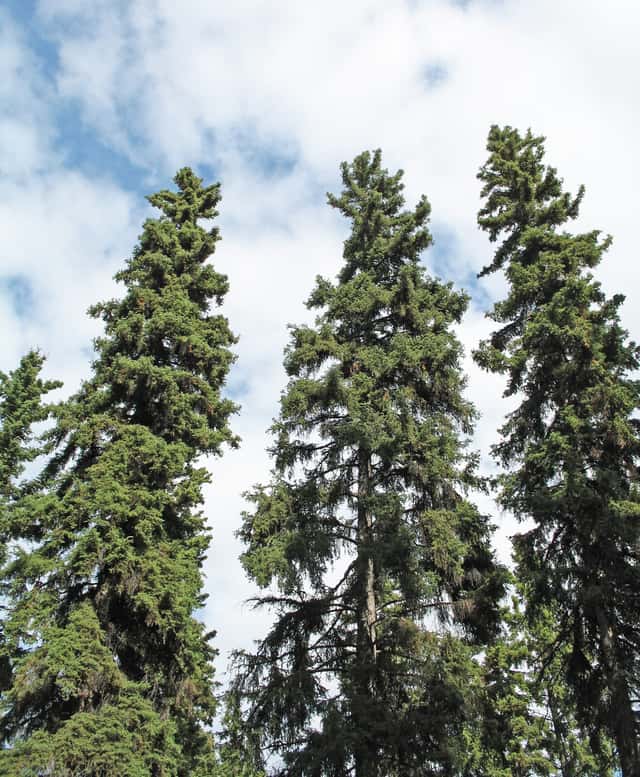
White Spruce (Picea glauca) is a medium-care plant from the Pinaceae family. White spruce (Picea glauca) is a cold-hardy evergreen conifer native to Canada and the northern United States, prized for its dense pyramidal habit and soft, bluish-green needles. While the wild species can reach 18-24 m in forests, its compact cultivar 'Conica' (Dwarf Alberta Spruce) grows only a f...
White Spruce grows up to 18.0m, spread of 500cm, watering every 10 days, -20°C – 24°C, 30–50% humidity. It is suitable for indoor environments and safe for pets.
Unlike many popular species, White Spruce is safe to keep around pets. Without adequate drainage, root rot can develop within 20 days.
How to Care for White Spruce?
TLDR: White Spruce needs Direct sun, watering every 10 days, and temperatures between -20-24°C with 30-50% humidity.
How Often Should You Water White Spruce?
Water thoroughly when the top 5-7 cm of soil feels dry, then let it drain completely - white spruce is very sensitive to soggy, waterlogged soil.
How Much Light Does White Spruce Need?
Place it within a foot of a bright window or, ideally, outdoors in full sun; it does not tolerate low light and will thin out and drop needles without enough brightness.
What Is the Best Soil for White Spruce?
Use a well-draining potting mix amended with perlite or coarse sand; slightly acidic to neutral pH (5.5-7.0) and good drainage are essential to prevent fungal root problems.
What Pot Should You Use for White Spruce?
A wide, sturdy pot with excellent drainage holes; unglazed terracotta or a bonsai-style container suits its shallow, wide root system well.
Care Schedule
Fertilize
Every 365 days
Rotate
Every 30 days
Repot
Every 365 days
What Is White Spruce and Where Does It Come From?
White spruce (Picea glauca) is a cold-hardy evergreen conifer native to Canada and the northern United States, prized for its dense pyramidal habit and soft, bluish-green needles. While the wild species can reach 18-24 m in forests, its compact cultivar 'Conica' (Dwarf Alberta Spruce) grows only a few centimeters a year, making it one of the most popular conifers for containers, bonsai and indoor/patio growing.
How to Propagate White Spruce?
Semi-hardwood cuttings
Rooting is slow and unreliable; bottom heat and humidity domes improve success rates.
- 1 Take a 10-15 cm semi-hardwood cutting from a healthy side shoot in early fall
- 2 Strip the lower needles and dip the cut end in rooting hormone
- 3 Insert into a well-draining mix of perlite and peat
- 4 Keep consistently moist and in bright, indirect light until roots form
Materials needed:
Seed propagation
Wild-collected seed produces variable results; cultivars like Conica must be propagated vegetatively to stay true to type.
- 1 Cold-stratify seeds for 3-4 weeks in the refrigerator
- 2 Sow in moist seed-starting mix and cover lightly
- 3 Keep at 15-20°C in bright, indirect light
- 4 Transplant seedlings once they have several true needles
Materials needed:
How Big Does White Spruce Grow?
TLDR: White Spruce can reach up to 18.0m tall with Slow growth rate.
Max height
18.0m
Spread
5.0m
Growth rate
Slow
Foliage
Evergreen
Plant Uses
Ornamental
Great for decoration
Is your plant showing symptoms?
Click on the symptom to discover possible causes:
What Diseases Commonly Affect White Spruce?
TLDR: White Spruce is susceptible to 8 known diseases. Monitor regularly for early detection.
Root Rot
Root rot is a serious fungal disease that affects the root system of plants, causing them to decay and die. It is primarily caused by overwatering, poor drainage, or soil-borne fungi such as Pythium, Phytophthora, Rhizoctonia, and Fusarium. The disease thrives in waterlogged conditions where roots are deprived of oxygen, making them susceptible to fungal infection.
Canker
Canker is a disease caused by various fungi and bacteria that create necrotic, sunken areas on bark of branches, stems, and trunks. Pathogens enter through wounds and natural openings, especially when plants are stressed. Canker can gradually weaken or kill branches by disrupting water and nutrient flow.
Spider Mites
Spider mites are tiny arachnids (less than 1/20 inch long) related to spiders and ticks that feed on plant sap. They thrive in hot, dry conditions and can cause significant damage to ornamental and vegetable plants. During severe infestations, crop losses can reach 14% or higher as these pests disrupt vital plant processes including photosynthesis, carbon dioxide absorption, and transpiration.
Aphids
Aphids are small, soft-bodied, pear-shaped insects (1/16 to 1/8 inch long) that feed by sucking nutrient-rich sap from plants. They reproduce rapidly and can quickly weaken plants, causing distorted growth and transmitting plant viruses. Aphids come in various colors including green, black, red, yellow, brown, and gray. They secrete honeydew, a sticky substance that attracts ants and encourages sooty mold growth.
Meaning & Symbolism
As an evergreen that stays green through freezing winters, white spruce symbolizes endurance, protection and hope. It is a classic North American Christmas tree, representing the continuity of life through the dark season.
Fun Facts
The dwarf 'Conica' cultivar was discovered growing as a natural mutation in Alberta, Canada, in 1904.
White spruce needles have a distinctive skunky smell when crushed, earning it the nickname "skunk spruce".
It is one of the most cold-hardy trees in the world, surviving winters down to USDA zone 2.
Frequently asked questions
How often should I water white spruce?
Can I grow white spruce indoors?
Is white spruce toxic to cats or dogs?
Why are the needles on my spruce turning brown?
Compare with similar plants
| Attribute | Difficulty | Light | Watering | Pet Safe |
|---|---|---|---|---|
| Dark Fieldcap | Medium | Low light | 2d | ⚠️ |
| Azalea | Medium | Partial shade | 3d | ⚠️ |
| Muriel's Bamboo | Medium | Partial shade | 3d | ✓ |
| Bougainvillea | Medium | Direct sun | 7d | ⚠️ |
Choose & Compare
Sources & References
- Dwarf Alberta Spruce Care 101 - Greg App
- The Complete White Spruce Plant Care Guide - Greg App
- Picea glauca Conica - Missouri Botanical Garden Plant Finder
- White Spruce - Picea glauca - The UFOR Nursery & Lab
- Is White Spruce (Picea glauca) Toxic to Cats? - Cat-World
- Spruce Tree Pest & Disease Issues - Independent Tree
- Common White Spruce Tree Diseases - Live to Plant




