Iridaceae
White Walking Iris (Neomarica candida)
Neomarica candida
A hardy, low-maintenance plant: full sun to partial shade, fertile and well-drained soil, regular watering without waterlogging, and quarterly fertilization ensure generous blooming.
Every 7 days
Bright indirect
10° - 32°C
50% - 80%
Categories
What is White Walking Iris?
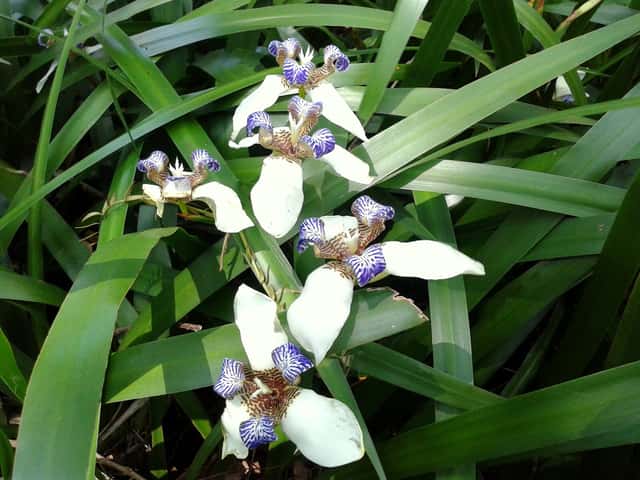
White Walking Iris (Neomarica candida) is a easy-care plant from the Iridaceae family. The White Walking Iris is a perennial rhizomatous herb from the Iridaceae family, native to the Brazilian coast (from Espírito Santo to Rio Grande do Sul). It forms clumps of fan-shaped leaves, resembling a small lily or orchid. Between spring and summer, it produces delicate flowers with white sepa...
White Walking Iris grows up to 90cm, spread of 60cm, watering every 7 days, 10°C – 32°C, 50–80% humidity. It is suitable for indoor environments and not safe for pets.
Unlike many tropical plants, White Walking Iris tolerates watering mistakes. Best for beginners. Without precautions, ingestion can cause irritation in pets. Keep out of reach of cats and dogs. Without adequate drainage, root rot can develop within 14 days.
How to Care for White Walking Iris?
TLDR: White Walking Iris needs Bright indirect, watering every 7 days, and temperatures between 10-32°C with 50-80% humidity.
How Often Should You Water White Walking Iris?
Water weekly, keeping the soil slightly moist; space out waterings in winter and avoid waterlogging, which promotes root rot.
How Much Light Does White Walking Iris Need?
Prefers full sun or partial shade; a few hours of direct sunlight per day stimulate flowering, but it tolerates filtered light.
What Is the Best Soil for White Walking Iris?
Use fertile soil, rich in organic matter and well-drained, with a pH between 6 and 7; never bury the rhizome too deep.
What Pot Should You Use for White Walking Iris?
Wide, shallow pots with good drainage, or mass plantings in garden beds.
Care Schedule
Fertilize
Every 90 days
Repot
Every 730 days
What Is White Walking Iris and Where Does It Come From?
The White Walking Iris is a perennial rhizomatous herb from the Iridaceae family, native to the Brazilian coast (from Espírito Santo to Rio Grande do Sul). It forms clumps of fan-shaped leaves, resembling a small lily or orchid. Between spring and summer, it produces delicate flowers with white sepals streaked with brown at the base and three recurved blue petals; each flower lasts only one day but they renew continuously. It is a hardy plant that tolerates sea spray and wind, and it "walks" through the garden by forming plantlets at the tips of its flower stalks.
How to Propagate White Walking Iris?
Clump Division
Do not bury the rhizome too deep, as this can cause rot and reduce flowering.
- 1 Choose a mature clump in late winter or early spring
- 2 Carefully dig up the rhizome using a garden trowel
- 3 Divide the rhizome into sections, each with leaves and roots
- 4 Replant the divisions at the same depth level in well-drained soil
- 5 Water thoroughly until established
Materials needed:
Offset Separation (Plantlets)
This is how the plant naturally "walks" through the garden.
- 1 Wait for small plantlets to form at the tips of the flower stalks
- 2 Cut the stalk a few inches below the plantlet once it has visible roots
- 3 Plant the offset in light substrate and keep it moist
- 4 Transfer to a permanent pot after rooting
Materials needed:
How Big Does White Walking Iris Grow?
TLDR: White Walking Iris can reach up to 90cm tall with Medium growth rate.
Max height
90cm
Spread
60cm
Growth rate
Medium
Foliage
Evergreen
Warning: Toxic Plant
This plant can be toxic if ingested. Keep out of reach of:
Plant Uses
Ornamental
Great for decoration
Ground Cover
Soil coverage
Is your plant showing symptoms?
Click on the symptom to discover possible causes:
What Diseases Commonly Affect White Walking Iris?
TLDR: White Walking Iris is susceptible to 5 known diseases. Monitor regularly for early detection.
Aphids
Aphids are small, soft-bodied, pear-shaped insects (1/16 to 1/8 inch long) that feed by sucking nutrient-rich sap from plants. They reproduce rapidly and can quickly weaken plants, causing distorted growth and transmitting plant viruses. Aphids come in various colors including green, black, red, yellow, brown, and gray. They secrete honeydew, a sticky substance that attracts ants and encourages sooty mold growth.
Mealybugs
Mealybugs are small, soft-bodied insects covered with a white, waxy, cottony material. They are common pests of houseplants and outdoor plants in mild climates. These sap-sucking insects feed on plant tissue, causing damage, stunted growth, and can lead to plant death if left untreated. They produce sticky honeydew which attracts sooty mold.
Spider Mites
Spider mites are tiny arachnids (less than 1/20 inch long) related to spiders and ticks that feed on plant sap. They thrive in hot, dry conditions and can cause significant damage to ornamental and vegetable plants. During severe infestations, crop losses can reach 14% or higher as these pests disrupt vital plant processes including photosynthesis, carbon dioxide absorption, and transpiration.
Root Rot
Root rot is a serious fungal disease that affects the root system of plants, causing them to decay and die. It is primarily caused by overwatering, poor drainage, or soil-borne fungi such as Pythium, Phytophthora, Rhizoctonia, and Fusarium. The disease thrives in waterlogged conditions where roots are deprived of oxygen, making them susceptible to fungal infection.
Meaning & Symbolism
Popularly known as the "Apostle Plant" due to the belief that the clump only blooms once it has twelve leaves, one for each apostle.
Fun Facts
Also called the "plant of the twelve apostles", from folklore that a clump only blooms once it grows twelve leaves.
Each flower lasts just a single day, but the plant produces new buds continuously from late spring through summer.
It gets the name "walking iris" because plantlets form at the tips of flower stalks and root where they touch the ground.
It is native to the Brazilian coastline, occurring naturally from Espírito Santo to Rio Grande do Sul.
Frequently asked questions
How often should I water a White Walking Iris?
Is the White Walking Iris toxic to cats and dogs?
Why isn't my White Walking Iris blooming?
How do I propagate a White Walking Iris?
Compare with similar plants
| Attribute | Difficulty | Light | Watering | Pet Safe |
|---|---|---|---|---|
| Field Maple | Easy | Bright indirect | 14d | ✓ |
| Silver Birch | Easy | Direct sun | 14d | ✓ |
| Common Blanketflower | Easy | Direct sun | 10d | ✓ |
| Cushion Bush | Easy | Direct sun | 14d | ✓ |





