Asteraceae
Wild Aster: Ground Cover Plant
Aster ageratoides
Very easy to care for in the right location; thrives in full sun to partial shade and only requires regular watering during dry periods. Avoid persistently wet soil, as the plant is vulnerable to root rot and fungal diseases such as gray mold.
Every 5 days
Bright indirect
-20° - 35°C
40% - 70%
Categories
What is Wild Aster?
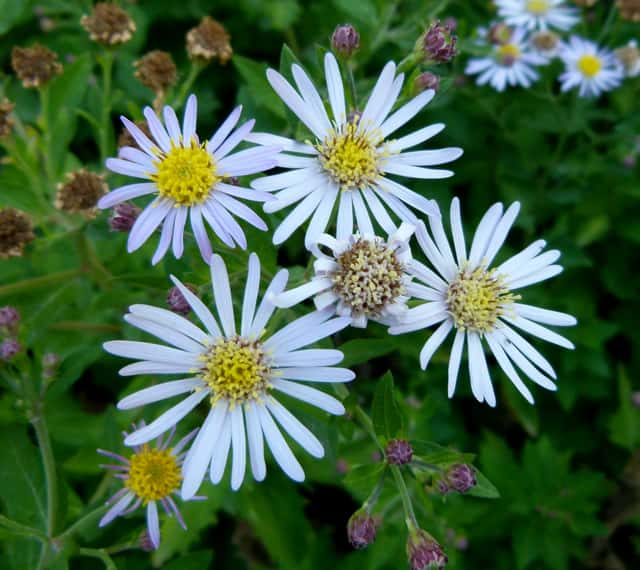
Wild Aster (Aster ageratoides) is a easy-care plant from the Asteraceae family. Aster ageratoides, the Asian aster, is a robust and hardy perennial from East Asia known for its late and abundant flowering. From late summer well into autumn, the plant is covered in a wealth of small, star-shaped flowers in shades of purple, blue, pink, or white with yellow centers. It has an upr...
Wild Aster grows up to 1.0m, spread of 60cm, watering every 5 days, -20°C – 35°C, 40–70% humidity. It is not suitable for indoor environments and safe for pets.
Unlike many tropical plants, Wild Aster tolerates watering mistakes. Best for beginners. Unlike many popular species, Wild Aster is safe to keep around pets.
How to Care for Wild Aster?
TLDR: Wild Aster needs Bright indirect, watering every 5 days, and temperatures between -20-35°C with 40-70% humidity.
How Often Should You Water Wild Aster?
Water evenly to keep the soil slightly moist, but allow the top surface of the soil to dry slightly between waterings — Asian aster tolerates drought better than waterlogged, swampy soil.
How Much Light Does Wild Aster Need?
Place the plant in a sunny spot for the most vigorous flowering; it also does well in light shade, but will bloom more sparsely.
What Is the Best Soil for Wild Aster?
Prefers nutrient-rich, well-drained loamy soil with a pH of 6-7.5. Poorly drained soil significantly increases the risk of root rot.
What Pot Should You Use for Wild Aster?
Best suited for planting directly in garden soil; however, it can be grown in large pots with plenty of drainage holes and a well-drained substrate. Divide the plant every 3 years to keep it healthy and compact.
Care Schedule
Fertilize
Every 30 days
Repot
Every 1095 days
What Is Wild Aster and Where Does It Come From?
Aster ageratoides, the Asian aster, is a robust and hardy perennial from East Asia known for its late and abundant flowering. From late summer well into autumn, the plant is covered in a wealth of small, star-shaped flowers in shades of purple, blue, pink, or white with yellow centers. It has an upright growth habit with dark green, lance-shaped leaves that form a dense ground cover, and it thrives best in full sun to light shade. The plant is valued in horticulture for its low maintenance, but it is sensitive to wet, poorly drained soil, which can lead to root rot.
How to Propagate Wild Aster?
Root division
- Divide the plant every 3 years to maintain its vitality and avoid thinning in the center.
- 1 Dig up the plant
Carefully dig up the entire plant with a spade in early spring before new growth emerges.
- 2 Divide the root ball
Cut or pull the root ball apart into smaller sections, each with healthy shoots and roots.
- 3 Replant
Plant the new sections immediately in well-drained soil and water thoroughly.
Materials needed:
How Big Does Wild Aster Grow?
TLDR: Wild Aster can reach up to 1.0m tall with Medium growth rate.
Max height
1.0m
Spread
60cm
Growth rate
Medium
Foliage
Deciduous
Plant Uses
Ornamental
Great for decoration
Ground Cover
Soil coverage
Medicinal
Medicinal properties
Medicinal Uses
- The root is traditionally used in Chinese folk medicine for bleeding, malaria, and lung ailments
- Related Aster species (including Aster tataricus) are used in TCM as an expectorant and antitussive
Is your plant showing symptoms?
Click on the symptom to discover possible causes:
What Diseases Commonly Affect Wild Aster?
TLDR: Wild Aster is susceptible to 10 known diseases. Monitor regularly for early detection.
Root-Knot Nematodes
Root-knot nematodes (Meloidogyne species) are microscopic roundworms that parasitize plant roots, causing characteristic galls or knots. These soil-borne pests are among the most economically damaging plant pathogens worldwide, affecting a wide range of ornamental and edible plants. The nematodes inject enzymes into root cells, causing abnormal swelling and disrupting water and nutrient uptake.
Leaf Spot
Leaf spot is a common fungal disease caused by various pathogens including Alternaria, Ascochyta, Colletotrichum, Septoria, and Venturia. It primarily affects leaves, causing discolored spots that can lead to premature leaf drop if left untreated.
Gray Mold (Botrytis Blight)
Gray mold, caused by the fungus Botrytis cinerea, is one of the most common fungal diseases in plants. It affects over 200 plant species, including ornamentals, vegetables, fruits, and houseplants. The disease thrives in cool, humid conditions with poor air circulation, causing grayish spots and soft rot on infected tissues.
Fusarium Wilt
Fusarium wilt is a serious fungal disease caused by the soil-borne fungus Fusarium oxysporum. The fungus invades roots and blocks the water-conducting vessels (xylem) of the plant, causing progressive wilting and eventual death. Host-specific forms of the pathogen exist that attack different plant species.
Meaning & Symbolism
Symbolizes patience, endurance, and the beauty of autumn — one of the last flowers to defy the cold.
Compare with similar plants
| Attribute | Difficulty | Light | Watering | Pet Safe |
|---|---|---|---|---|
| Field Maple | Easy | Bright indirect | 14d | ✓ |
| Silver Birch | Easy | Direct sun | 14d | ✓ |
| Common Blanketflower | Easy | Direct sun | 10d | ✓ |
| Cushion Bush | Easy | Direct sun | 14d | ✓ |
Choose & Compare
Sources & References
- Aster ageratoides - How to grow & care (GrowPlants.org)
- Japanese Aster Plant Care (Greg App)
- Aster Plant Diseases And Pests (Gardening Know How)
- Toxic and Non-toxic Plants: Aster (ASPCA)
- Aster - Herb Database (medicinal uses)
- Radix Asteris: Traditional Usage, Phytochemistry and Pharmacology of An Important Traditional Chinese Medicine





