Araceae
Bog Arum: How to Care for Calla palustris
Calla
A shallow-water/bog plant that needs permanently saturated or submerged soil, partial shade to full sun, and cool-to-temperate climates. Slow growing and easy to care for as long as moisture never runs out.
Every 1 days
Partial shade
10° - 25°C
60% - 100%
Categories
What is Bog Arum?
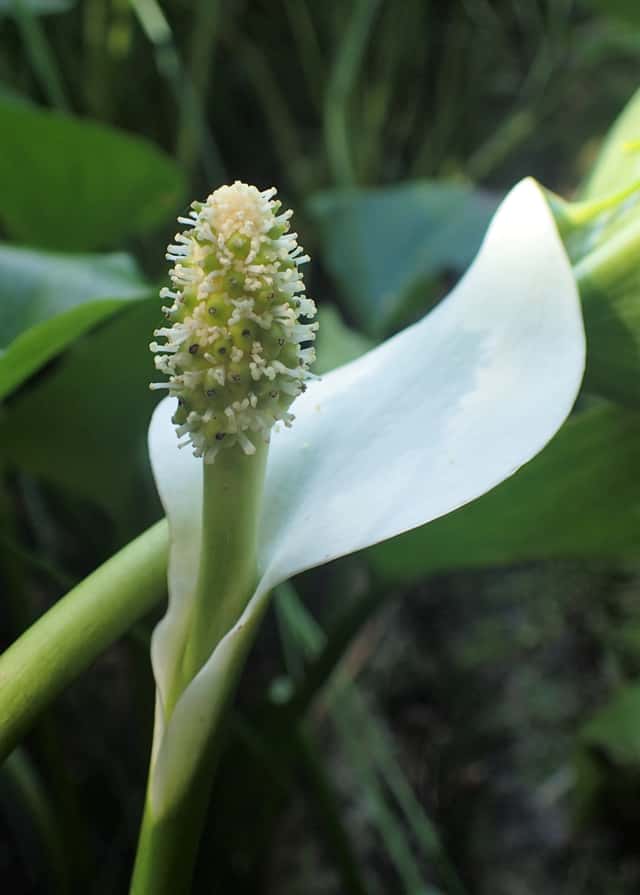
Bog Arum (Calla) is a easy-care plant from the Araceae family. Bog Arum (Calla palustris) is a rhizomatous, herbaceous perennial native to cold bogs, marshes, and lake margins across the Northern Hemisphere. It should not be confused with the common calla lily (Zantedeschia aethiopica). It has glossy, heart-shaped dark green leaves and a white spathe surroundin...
Bog Arum grows up to 40cm, spread of 30cm, watering every 1 days, 10°C – 25°C, 60–100% humidity. It is not suitable for indoor environments and not safe for pets.
Unlike many tropical plants, Bog Arum tolerates watering mistakes. Best for beginners. Without precautions, ingestion can cause irritation in pets. Keep out of reach of cats and dogs.
How to Care for Bog Arum?
TLDR: Bog Arum needs Partial shade, watering every 1 days, and temperatures between 10-25°C with 60-100% humidity.
How Often Should You Water Bog Arum?
Keep the substrate constantly waterlogged or in shallow standing water (up to 5 cm); never let it dry out, as the plant will not survive a dry spell.
How Much Light Does Bog Arum Need?
Prefers partial shade (2-6 hours of direct light) but tolerates full sun as long as the soil stays consistently wet.
What Is the Best Soil for Bog Arum?
Peaty, organically-rich soil with clay or silt texture, pH between 5.0 and 7.0 (acidic to neutral).
What Pot Should You Use for Bog Arum?
Pot without drainage holes or a container suited for aquatic/bog plants
What Is Bog Arum and Where Does It Come From?
Bog Arum (Calla palustris) is a rhizomatous, herbaceous perennial native to cold bogs, marshes, and lake margins across the Northern Hemisphere. It should not be confused with the common calla lily (Zantedeschia aethiopica). It has glossy, heart-shaped dark green leaves and a white spathe surrounding a small yellowish-green spadix, followed by clusters of red berries.
How to Propagate Bog Arum?
Rhizome division
Keep rhizomes moist throughout the process, as they dry out quickly.
- 1 Lift the clump from the water or waterlogged soil in early spring
- 2 Separate the rhizomes with a clean knife, ensuring each piece has at least one growth bud
- 3 Replant immediately in waterlogged soil or shallow water
Materials needed:
Seed propagation
Germination can be slow and uneven; be patient.
- 1 Harvest ripe red berries in autumn
- 2 Extract and clean the seeds
- 3 Sow in waterlogged substrate and keep in a cool, moist location
Materials needed:
How Big Does Bog Arum Grow?
TLDR: Bog Arum can reach up to 40cm tall with Slow growth rate.
Max height
40cm
Spread
30cm
Growth rate
Slow
Foliage
Deciduous
Warning: Toxic Plant
This plant can be toxic if ingested. Keep out of reach of:
Plant Uses
Ornamental
Great for decoration
Is your plant showing symptoms?
Click on the symptom to discover possible causes:
What Diseases Commonly Affect Bog Arum?
TLDR: Bog Arum is susceptible to 3 known diseases. Monitor regularly for early detection.
Root Rot
Root rot is a serious fungal disease that affects the root system of plants, causing them to decay and die. It is primarily caused by overwatering, poor drainage, or soil-borne fungi such as Pythium, Phytophthora, Rhizoctonia, and Fusarium. The disease thrives in waterlogged conditions where roots are deprived of oxygen, making them susceptible to fungal infection.
Slugs and Snails
Slugs and snails are mollusks that feed on plant tissue, causing irregular holes in leaves and damage to young seedlings. They are most active at night and in moist conditions, leaving characteristic silvery slime trails. These pests can quickly devastate gardens, especially during wet seasons.
Aphids
Aphids are small, soft-bodied, pear-shaped insects (1/16 to 1/8 inch long) that feed by sucking nutrient-rich sap from plants. They reproduce rapidly and can quickly weaken plants, causing distorted growth and transmitting plant viruses. Aphids come in various colors including green, black, red, yellow, brown, and gray. They secrete honeydew, a sticky substance that attracts ants and encourages sooty mold growth.
Meaning & Symbolism
Symbolizes purity and quiet resilience, flourishing in boggy habitats where few other plants thrive.
Fun Facts
The genus name Calla comes from the Greek "kalos", meaning beauty
It produces toxic red berries after flowering
It is native to arctic and subarctic regions of the Northern Hemisphere
It can grow directly in shallow water, acting like a semi-aquatic plant
Frequently asked questions
Is Bog Arum toxic?
Can I grow Bog Arum in a regular potted arrangement?
How long does it take to bloom?
Is it the same plant as calla lily?
Compare with similar plants
| Attribute | Difficulty | Light | Watering | Pet Safe |
|---|---|---|---|---|
| Field Maple | Easy | Bright indirect | 14d | ✓ |
| Silver Birch | Easy | Direct sun | 14d | ✓ |
| Common Blanketflower | Easy | Direct sun | 10d | ✓ |
| Cushion Bush | Easy | Direct sun | 14d | ✓ |





