Iridaceae
Freesia: Aromatic Plant
Freesia refracta
Requires a bright, cool location with well-draining, slightly acidic to neutral soil. Water carefully to keep the soil evenly moist but never waterlogged; gradually reduce watering after flowering until the leaves wither and the corm enters dormancy.
Every 5 days
Bright indirect
7° - 24°C
40% - 60%
Categories
What is Freesia?
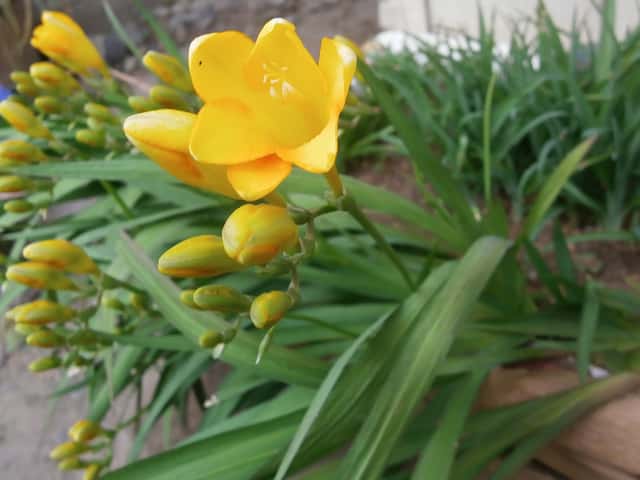
Freesia (Freesia refracta) is a medium-care plant from the Iridaceae family. Freesia refracta is a bulbous (cormous) perennial native to South Africa (Cape Province) belonging to the iris family (Iridaceae). Its highly fragrant, funnel-shaped flowers bloom in one-sided clusters on thin, arched stems, typically in shades of cream, white, and yellow, sometimes with purple tint...
Freesia grows up to 45cm, spread of 20cm, watering every 5 days, 7°C – 24°C, 40–60% humidity. It is suitable for indoor environments and safe for pets.
Unlike many popular species, Freesia is safe to keep around pets. Without adequate drainage, root rot can develop within 10 days.
How to Care for Freesia?
TLDR: Freesia needs Bright indirect, watering every 5 days, and temperatures between 7-24°C with 40-60% humidity.
How Often Should You Water Freesia?
Keep the soil evenly moist during the growth and flowering period, but allow the top layer to dry out slightly between waterings—stagnant moisture causes corm rot. Gradually stop watering after the flowering period ends.
How Much Light Does Freesia Need?
Requires plenty of light: a sunny but sheltered spot outdoors, or bright, indirect light indoors. Avoid harsh midday sun to ensure the blooms last longer.
What Is the Best Soil for Freesia?
Requires loose, well-aerated, nutrient-rich soil—mix sand or perlite into the earth to ensure good drainage; soil pH should be neutral (6.0-7.0).
What Pot Should You Use for Freesia?
A deep pot with good drainage holes to comfortably accommodate the corms and their roots while avoiding water stagnation.
Care Schedule
Fertilize
Every 14 days
Rotate
Every 7 days
Repot
Every 365 days
What Is Freesia and Where Does It Come From?
Freesia refracta is a bulbous (cormous) perennial native to South Africa (Cape Province) belonging to the iris family (Iridaceae). Its highly fragrant, funnel-shaped flowers bloom in one-sided clusters on thin, arched stems, typically in shades of cream, white, and yellow, sometimes with purple tints on the reverse of the petals. Sword-shaped, bright green leaves emerge from near the ground. It is primarily grown as a cut flower, garden ornamental, and fragrant potted plant; it blooms in winter and spring before entering a dormant period.
How to Propagate Freesia?
Separation of cormlets
- Only use healthy, firm corms for propagation.
- 1 Digging up the corms
Carefully dig the corms out of the ground after the foliage has withered.
- 2 Separating offsets
Manually separate the small cormlets (offsets) from the main parent corm.
- 3 Storage or planting
Store in a cool, dry place until autumn planting, or plant them immediately into pots.
Materials needed:
How Big Does Freesia Grow?
TLDR: Freesia can reach up to 45cm tall with Medium growth rate.
Max height
45cm
Spread
20cm
Growth rate
Medium
Foliage
Deciduous
Plant Uses
Ornamental
Great for decoration
Aromatic
Pleasant fragrance
Is your plant showing symptoms?
Click on the symptom to discover possible causes:
What Diseases Commonly Affect Freesia?
TLDR: Freesia is susceptible to 9 known diseases. Monitor regularly for early detection.
Aphids
Aphids are small, soft-bodied, pear-shaped insects (1/16 to 1/8 inch long) that feed by sucking nutrient-rich sap from plants. They reproduce rapidly and can quickly weaken plants, causing distorted growth and transmitting plant viruses. Aphids come in various colors including green, black, red, yellow, brown, and gray. They secrete honeydew, a sticky substance that attracts ants and encourages sooty mold growth.
Thrips
Thrips are tiny cigar-shaped insects (1/25-inch long) that damage plants by sucking plant juices and scraping at fruits, flowers, and leaves. With over 6,000 species and rapid reproduction (lifecycle as short as 14 days), they can quickly infest plants and transmit viruses like tomato spotted wilt virus.
Spider Mites
Spider mites are tiny arachnids (less than 1/20 inch long) related to spiders and ticks that feed on plant sap. They thrive in hot, dry conditions and can cause significant damage to ornamental and vegetable plants. During severe infestations, crop losses can reach 14% or higher as these pests disrupt vital plant processes including photosynthesis, carbon dioxide absorption, and transpiration.
Slugs and Snails
Slugs and snails are mollusks that feed on plant tissue, causing irregular holes in leaves and damage to young seedlings. They are most active at night and in moist conditions, leaving characteristic silvery slime trails. These pests can quickly devastate gardens, especially during wet seasons.
Meaning & Symbolism
The freesia is a symbol of trust, innocence, friendship, and new beginnings.
Compare with similar plants
| Attribute | Difficulty | Light | Watering | Pet Safe |
|---|---|---|---|---|
| Dark Fieldcap | Medium | Low light | 2d | ⚠️ |
| Azalea | Medium | Partial shade | 3d | ⚠️ |
| Muriel's Bamboo | Medium | Partial shade | 3d | ✓ |
| Bougainvillea | Medium | Direct sun | 7d | ⚠️ |




