Paeoniaceae
Wild Peony (Paeonia mascula)
Paeonia mascula
A temperate perennial: sun or part shade in a sheltered spot, deep, fertile, well-drained soil and water only in dry spells. Hardy to about -15 °C and needs a cold winter to flower.
Every 7 days
Bright indirect
-15° - °C
% - %
Categories
What is Wild Peony?
Wild Peony (Paeonia mascula) is a medium-care plant from the Paeoniaceae family. Wild peony (Paeonia mascula) is a herbaceous peony native to southern Europe and the Middle East, from Spain to Syria and Israel. It forms a clump 50 cm to 1 m tall, with bluish-green leaves divided into broad leaflets. In late spring it bears single, scented flowers 7-13 cm across, deep purplish-re...
Wild Peony grows up to 1.0m, spread of 100cm, watering every 7 days. It is not suitable for indoor environments and not safe for pets.
Without precautions, ingestion can cause irritation in pets. Keep out of reach of cats and dogs.
How to Care for Wild Peony?
TLDR: Wild Peony needs Bright indirect, watering every 7 days, and temperatures between -15-30°C with 40-70% humidity.
How Often Should You Water Wild Peony?
Water about once a week in dry spells, without waterlogging. Once established it tolerates drought; soggy soil kills it.
How Much Light Does Wild Peony Need?
Full sun or part shade, sheltered from wind.
What Is the Best Soil for Wild Peony?
Deep, fertile, humus-rich soil that is moist but well drained. Clay, loam or sand, acid to alkaline pH.
What Pot Should You Use for Wild Peony?
Best in the ground; in a container, use a deep pot with drainage holes.
What Is Wild Peony and Where Does It Come From?
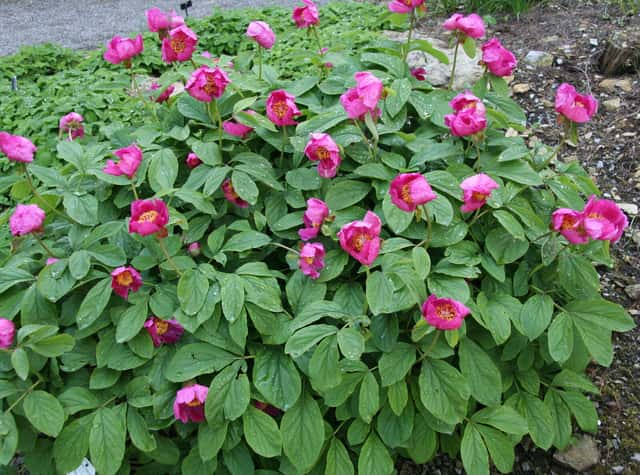
Wild peony (Paeonia mascula) is a herbaceous peony native to southern Europe and the Middle East, from Spain to Syria and Israel. It forms a clump 50 cm to 1 m tall, with bluish-green leaves divided into broad leaflets. In late spring it bears single, scented flowers 7-13 cm across, deep purplish-red or rose pink, with a boss of yellow stamens; the display lasts about a week. Over summer the seed pods, once called jester's hats, split open to show red and black seeds. The top growth dies back in winter and returns in spring. It is long-lived, takes 2 to 5 years to mature and dislikes being disturbed.
How to Propagate Wild Peony?
Seed
Stored seed can take 18 months or more to germinate; seedlings take years to flower.
- 1 Sow seed as soon as it ripens in late summer
- 2 Use deep pots in a cold frame or sheltered spot
- 3 Keep the mix lightly moist over winter
- 4 Leave seedlings in the pot for 2 seasons before planting out
Materials needed:
Division
Divide only when needed: the plant sulks and may not flower for 1-2 years.
- 1 In autumn, lift the clump carefully
- 2 Cut into pieces with 3-5 buds and good roots
- 3 Replant with buds no more than 5 cm deep
- 4 Water well
Materials needed:
How Big Does Wild Peony Grow?
TLDR: Wild Peony can reach up to 1.0m tall with Slow growth rate.
Max height
1.0m
Spread
1.0m
Growth rate
Slow
Foliage
Deciduous
Warning: Toxic Plant
This plant can be toxic if ingested. Keep out of reach of:
Plant Uses
Ornamental
Great for decoration
Medicinal
Medicinal properties
Medicinal Uses
- The powdered root was used in folk medicine for colds and sore throats (traditional use; not a substitute for medical advice).
Is your plant showing symptoms?
Click on the symptom to discover possible causes:
What Diseases Commonly Affect Wild Peony?
TLDR: Wild Peony is susceptible to 6 known diseases. Monitor regularly for early detection.
Gray Mold (Botrytis Blight)
Gray mold, caused by the fungus Botrytis cinerea, is one of the most common fungal diseases in plants. It affects over 200 plant species, including ornamentals, vegetables, fruits, and houseplants. The disease thrives in cool, humid conditions with poor air circulation, causing grayish spots and soft rot on infected tissues.
Gray Mold (Botrytis Blight)
Gray mold, caused by the fungus Botrytis cinerea, is a widespread necrotrophic pathogen affecting over 1,400 plant species. It thrives in cool, humid conditions and attacks weakened or aging plant tissues, causing soft rot and characteristic gray fuzzy growth.
Verticillium Wilt
Verticillium wilt is a soil-borne fungal disease caused primarily by the fungi Verticillium dahliae and V. albo-atrum. These pathogens infect plant roots and grow within the vascular tissues, blocking water and nutrient transport, resulting in wilting and eventual plant death. The disease affects over 350 plant species including vegetables, fruits, ornamental flowers, and trees. The fungi can survive in soil for more than 10 years as resistant structures called microsclerotia.
Viruses
Viral diseases are infectious conditions caused by tiny intracellular parasites that require host cells to survive. Viruses are typically transmitted to plants by insects and mites. Some viruses are severe plant pathogens, such as Rose Rosette Virus or Tobacco Rattle Virus.
Fun Facts
In Britain it grows wild only on two small islands in the Bristol Channel, said to have been brought by monks.
The open seed pods, with red and black seeds, were once called jester's hats.
Each flower lasts only a few days, and the whole display about a week.
Frequently asked questions
Is wild peony toxic to pets?
Why do the shoots wilt and turn brown in spring?
Can I grow it in a hot climate?
Can I move the plant?
Compare with similar plants
| Attribute | Difficulty | Light | Watering | Pet Safe |
|---|---|---|---|---|
| Dark Fieldcap | Medium | Low light | 2d | ⚠️ |
| Azalea | Medium | Partial shade | 3d | ⚠️ |
| Muriel's Bamboo | Medium | Partial shade | 3d | ✓ |
| Bougainvillea | Medium | Direct sun | 7d | ⚠️ |