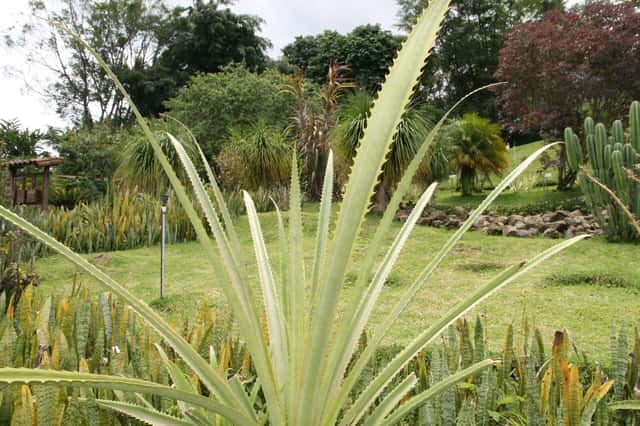
Bromeliaceae
Wild Pineapple: Ground Cover Plant
Bromelia pinguin
Bromelia pinguin is an exceptionally easy-to-grow, extremely hardy plant with minimal care requirements. It thrives in bright to direct light, well-draining soil, and tolerates drought well. The primary concern is avoiding waterlogged soil, which causes root rot. It performs excellently both in containers and as a landscape plant in tropical and subtropical regions.
Every 5 days
Bright indirect
15° - 27°C
40% - 70%
Categories
What is Wild Pineapple?
Wild Pineapple (Bromelia pinguin) is a easy-care plant from the Bromeliaceae family. Bromelia pinguin, commonly known as Wild Pineapple or Pinguin, is a spiny terrestrial bromeliad native to Central America, the Caribbean, and northern South America. It forms dense rosettes with long, robust leaves armed with sharp spines. The intensely sour yellow fruits are edible with a distincti...
Wild Pineapple grows up to 1.0m, spread of 200cm, watering every 5 days, 15°C – 27°C, 40–70% humidity. It is suitable for indoor environments and safe for pets.
Unlike many tropical plants, Wild Pineapple tolerates watering mistakes. Best for beginners. Unlike many popular species, Wild Pineapple is safe to keep around pets. Without adequate drainage, root rot can develop within 10 days.
How to Care for Wild Pineapple?
TLDR: Wild Pineapple needs Bright indirect, watering every 5 days, and temperatures between 15-27°C with 40-70% humidity.
How Often Should You Water Wild Pineapple?
Water moderately, allowing the soil to dry between waterings. Never allow the soil to become waterlogged, as this causes root rot and plant decline. The plant is drought-tolerant and prefers to be underwatered rather than overwatered. In rainy climates, little supplemental watering may be needed.
How Much Light Does Wild Pineapple Need?
Place in bright, direct light. The plant thrives outdoors in full sun but also tolerates partial shade. For indoor cultivation, position near a sunny window. Adequate light is essential for flowering and fruit production. Semi-shade to full sun conditions promote optimal growth.
What Is the Best Soil for Wild Pineapple?
Use well-draining soil, ideally a mix of coconut fiber or sphagnum moss combined with sand and some composted bark. The plant tolerates poor soil and various soil types as long as drainage is excellent. Avoid compacted or overly water-retentive soils.
What Pot Should You Use for Wild Pineapple?
Use pots with adequate drainage holes. Ceramic or terracotta pots are preferred as they allow soil to dry more evenly. Ensure drainage holes are sufficient to prevent water accumulation.
Care Schedule
Fertilize
Every 30 days
Repot
Every 365 days
What Is Wild Pineapple and Where Does It Come From?
Bromelia pinguin, commonly known as Wild Pineapple or Pinguin, is a spiny terrestrial bromeliad native to Central America, the Caribbean, and northern South America. It forms dense rosettes with long, robust leaves armed with sharp spines. The intensely sour yellow fruits are edible with a distinctive, citrus-like flavor. The plant naturally reproduces via thick runners (stolons) both above and below ground, forming dense colonies in its native habitat. Extremely hardy and adapted to challenging conditions, it is widely planted as a living fence and for erosion control throughout the tropics.
How Big Does Wild Pineapple Grow?
TLDR: Wild Pineapple can reach up to 1.0m tall with Fast growth rate.
Max height
1.0m
Spread
2.0m
Growth rate
Fast
Foliage
Evergreen
Plant Uses
Ornamental
Great for decoration
Edible
Can be consumed
Ground Cover
Soil coverage
Medicinal Uses
- Traditional folk medicine applications for anti-inflammatory properties
Culinary Uses
- Edible intensely sour fruit used for vinegar production
- Refreshing beverage made from the fruit
- Young basal shoots eaten raw or cooked, especially valuable during dry seasons
Is your plant showing symptoms?
Click on the symptom to discover possible causes:
What Diseases Commonly Affect Wild Pineapple?
TLDR: Wild Pineapple is susceptible to 2 known diseases. Monitor regularly for early detection.
Root Rot
Root rot is a serious fungal disease that affects the root system of plants, causing them to decay and die. It is primarily caused by overwatering, poor drainage, or soil-borne fungi such as Pythium, Phytophthora, Rhizoctonia, and Fusarium. The disease thrives in waterlogged conditions where roots are deprived of oxygen, making them susceptible to fungal infection.
Overwatering
Overwatering occurs when plants receive too much water, depriving roots of oxygen and causing root rot. This environmental stress is one of the most common causes of houseplant death, as waterlogged soil prevents roots from breathing and functioning properly.
Compare with similar plants
| Attribute | Difficulty | Light | Watering | Pet Safe |
|---|---|---|---|---|
| Field Maple | Easy | Bright indirect | 14d | ✓ |
| Silver Birch | Easy | Direct sun | 14d | ✓ |
| Common Blanketflower | Easy | Direct sun | 10d | ✓ |
| Cushion Bush | Easy | Direct sun | 14d | ✓ |





