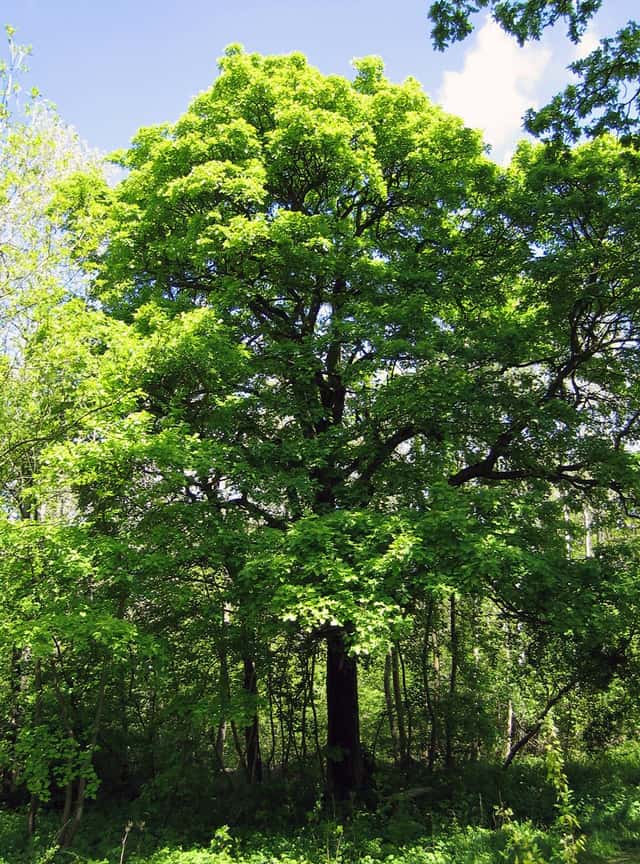
Rosaceae
Wild Service Tree: Edible Plant
Torminalis glaberrima
It requires a sunny or slightly semi-shaded location with well-drained, preferably calcareous-alkaline soil. It needs regular watering in its youth, but mature specimens are quite drought-tolerant. It can be sensitive to some Rosaceae pathogens, so it is worth monitoring for signs of fire blight and powdery mildew.
Every 14 days
Bright indirect
-25° - 35°C
40% - 70%
Categories
What is Wild Service Tree?
Wild Service Tree (Torminalis glaberrima) is a medium-care plant from the Rosaceae family. The wild service tree (Torminalis glaberrima, formerly Sorbus torminalis) is a medium-to-large deciduous tree in the rose family (Rosaceae), native to Europe and Western Asia. Its distinctive lobed foliage, reminiscent of maple leaves, turns a vibrant red-bronze in the fall. Its white flowers bloom...
Wild Service Tree grows up to 20.0m, spread of 800cm, watering every 14 days, -25°C – 35°C, 40–70% humidity. It is not suitable for indoor environments and safe for pets.
Unlike many popular species, Wild Service Tree is safe to keep around pets.
How to Care for Wild Service Tree?
TLDR: Wild Service Tree needs Bright indirect, watering every 14 days, and temperatures between -25-35°C with 40-70% humidity.
How Often Should You Water Wild Service Tree?
During the first two years after planting, water thoroughly once a week during dry spells; thereafter, a deep watering every two weeks during the summer months is sufficient, as the mature tree is drought-tolerant.
How Much Light Does Wild Service Tree Need?
Full sun promotes more abundant flowering, higher fruit yields, and more intense autumn foliage color, though the tree can tolerate moderate shade.
What Is the Best Soil for Wild Service Tree?
It prefers calcareous, well-drained, nutrient-rich clay or loamy soils; it does not tolerate waterlogging well.
Care Schedule
Fertilize
Every 365 days
What Is Wild Service Tree and Where Does It Come From?
The wild service tree (Torminalis glaberrima, formerly Sorbus torminalis) is a medium-to-large deciduous tree in the rose family (Rosaceae), native to Europe and Western Asia. Its distinctive lobed foliage, reminiscent of maple leaves, turns a vibrant red-bronze in the fall. Its white flowers bloom in loose panicles during May and June, followed by small, brown, speckled pomes. Due to their tart flavor, they are only edible when overripe (bletted, or softened after frost), at which point they become a vitamin C-rich treat. It grows at a moderate rate but is exceptionally long-lived, reaching heights of up to 20 meters, and tolerates drier, calcareous soils well, becoming drought-tolerant once established.
How to Propagate Wild Service Tree?
Seed sowing
- Seed germination can be slow and uneven; patience is required.
- 1 Stratification
Seeds require a cold period to germinate, so keep them in moist sand during winter.
- 2 Sowing
Sow the seeds in a fine planting medium in spring.
- 3 Care
Keep the soil moist and protect young seedlings from direct sunlight.
Materials needed:
Grafting
- Professional gardeners prefer this method to maintain cultivar identity.
- 1 Rootstock selection
Use Sorbus aucuparia or Crataegus as rootstock.
- 2 Performing the graft
Perform whip-and-tongue or wedge grafting in early spring.
- 3 Securing
Bind the graft site tightly with grafting tape.
Materials needed:
How Big Does Wild Service Tree Grow?
TLDR: Wild Service Tree can reach up to 20.0m tall with Medium growth rate.
Max height
20.0m
Spread
8.0m
Growth rate
Medium
Foliage
Deciduous
Plant Uses
Ornamental
Great for decoration
Edible
Can be consumed
Medicinal
Medicinal properties
Medicinal Uses
- Anti-diarrheal agent
- Anti-inflammatory effect
Culinary Uses
- Making jams and jellies
- Distilling fruit brandy
- Consumption as dried fruit
Is your plant showing symptoms?
Click on the symptom to discover possible causes:
What Diseases Commonly Affect Wild Service Tree?
TLDR: Wild Service Tree is susceptible to 8 known diseases. Monitor regularly for early detection.
Fire Blight
Fire blight is a highly destructive and contagious bacterial disease caused by Erwinia amylovora. It primarily affects plants in the Rosaceae family, including apple, pear, quince trees, and various ornamental plants. The disease can destroy an entire orchard in a single growing season under ideal conditions, with the bacterium moving approximately 11 inches per week in new growth.
Powdery Mildew
Powdery mildew is a common fungal disease caused by various fungi species including Erysiphe, Podosphaera, Oïdium, and Leveillula. It affects over 10,000 plant species worldwide. The disease thrives in warm, dry climates with high humidity and appears as a distinctive white powdery coating on plant surfaces.
Rust
Rust is a common fungal disease caused by fungi in the order Pucciniales that affects a wide variety of plants. The disease gets its name from the characteristic orange, yellow, or reddish-brown pustules that appear on leaves, resembling metal rust. This obligate fungal parasite requires living plants to survive and can cause significant economic losses in agricultural crops.
Leaf Spot
Leaf spot is a common fungal disease caused by various pathogens including Alternaria, Ascochyta, Colletotrichum, Septoria, and Venturia. It primarily affects leaves, causing discolored spots that can lead to premature leaf drop if left untreated.
Meaning & Symbolism
In folk tradition, the wild service tree is a symbol of wisdom and protection.
Compare with similar plants
| Attribute | Difficulty | Light | Watering | Pet Safe |
|---|---|---|---|---|
| Dark Fieldcap | Medium | Low light | 2d | ⚠️ |
| Azalea | Medium | Partial shade | 3d | ⚠️ |
| Muriel's Bamboo | Medium | Partial shade | 3d | ✓ |
| Bougainvillea | Medium | Direct sun | 7d | ⚠️ |




