Thymelaeaceae
Winter daphne: Aromatic Plant
Daphne odora
Grow in a sheltered spot with partial shade (morning sun, afternoon shade) in fertile, well-drained, neutral-to-slightly-alkaline soil enriched with organic matter. Keep soil evenly moist but never waterlogged - root rot from overwatering or poor drainage is the most common killer. Established plants need very little care: avoid transplanting once sited, skip routine pruning (it can trigger die-back), and only remove dead or diseased wood after flowering.
Every 7 days
Partial shade
-15° - 30°C
% - %
Categories
What is Winter daphne?
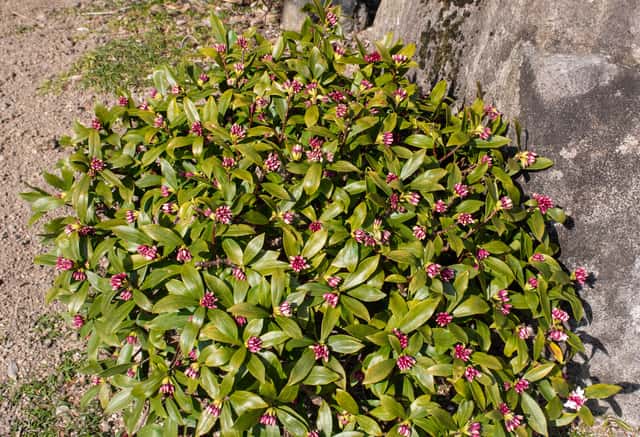
Winter daphne (Daphne odora) is a medium-care plant from the Thymelaeaceae family. Winter daphne is a compact, slow-growing evergreen shrub prized for the intensely fragrant, reddish-purple flowers (white inside) it produces in dense terminal clusters during late winter and early spring. Native to China and Japan, it has glossy, leathery dark-green leaves and forms a rounded mound...
Winter daphne grows up to 1.2m, spread of 120cm, watering every 7 days, -15°C – 30°C. It is not suitable for indoor environments and not safe for pets.
Without precautions, ingestion can cause irritation in pets. Keep out of reach of cats and dogs.
How to Care for Winter daphne?
TLDR: Winter daphne needs Partial shade, watering every 7 days, and temperatures between -15-30°C with 40-70% humidity.
How Often Should You Water Winter daphne?
Water enough to keep soil lightly moist; check about an inch down and only water when it starts to dry, since both soggy and bone-dry soil cause stress and root problems.
How Much Light Does Winter daphne Need?
Give it a partial-shade position - morning sun with afternoon shade is ideal; full sun is only safe if the roots stay cool and shaded, especially in hot climates.
What Is the Best Soil for Winter daphne?
Plant in fertile, humus-rich, sharply-draining soil with a neutral to slightly alkaline pH; sharp drainage is essential since Winter daphne cannot tolerate wet feet.
What Pot Should You Use for Winter daphne?
If grown in a container, use a wide, deep pot with generous drainage holes (unglazed terracotta is ideal) since daphnes are deep-rooted, resent disturbance, and struggle in cramped or waterlogged pots.
Care Schedule
Repot
Every 365 days
What Is Winter daphne and Where Does It Come From?
Winter daphne is a compact, slow-growing evergreen shrub prized for the intensely fragrant, reddish-purple flowers (white inside) it produces in dense terminal clusters during late winter and early spring. Native to China and Japan, it has glossy, leathery dark-green leaves and forms a rounded mound roughly 3-4 ft (about 1.2 m) tall and wide. It is a classic sheltered-garden and courtyard shrub, valued more for its perfume than its looks, but every part of the plant is poisonous if eaten.
How Big Does Winter daphne Grow?
TLDR: Winter daphne can reach up to 1.2m tall with Slow growth rate.
Max height
1.2m
Spread
1.2m
Growth rate
Slow
Foliage
Evergreen
Warning: Toxic Plant
This plant can be toxic if ingested. Keep out of reach of:
Plant Uses
Ornamental
Great for decoration
Aromatic
Pleasant fragrance
Is your plant showing symptoms?
Click on the symptom to discover possible causes:
What Diseases Commonly Affect Winter daphne?
TLDR: Winter daphne is susceptible to 9 known diseases. Monitor regularly for early detection.
Root Rot
Root rot is a serious fungal disease that affects the root system of plants, causing them to decay and die. It is primarily caused by overwatering, poor drainage, or soil-borne fungi such as Pythium, Phytophthora, Rhizoctonia, and Fusarium. The disease thrives in waterlogged conditions where roots are deprived of oxygen, making them susceptible to fungal infection.
Crown Rot
Crown rot is a serious fungal disease that attacks the crown (base) of the plant where the stem meets the soil. It is caused by various fungal pathogens including Phytophthora, Fusarium, and Rhizoctonia. The disease thrives in waterlogged conditions and can quickly spread to kill the entire plant if not addressed promptly.
Gray Mold (Botrytis Blight)
Gray mold, caused by the fungus Botrytis cinerea, is one of the most common fungal diseases in plants. It affects over 200 plant species, including ornamentals, vegetables, fruits, and houseplants. The disease thrives in cool, humid conditions with poor air circulation, causing grayish spots and soft rot on infected tissues.
Leaf Spot
Leaf spot is a common fungal disease caused by various pathogens including Alternaria, Ascochyta, Colletotrichum, Septoria, and Venturia. It primarily affects leaves, causing discolored spots that can lead to premature leaf drop if left untreated.
Meaning & Symbolism
Charm, hidden beauty, and renewal; in East Asian tradition its late-winter blooms are associated with the arrival of spring and good fortune.
Compare with similar plants
| Attribute | Difficulty | Light | Watering | Pet Safe |
|---|---|---|---|---|
| Dark Fieldcap | Medium | Low light | 2d | ⚠️ |
| Azalea | Medium | Partial shade | 3d | ⚠️ |
| Muriel's Bamboo | Medium | Partial shade | 3d | ✓ |
| Bougainvillea | Medium | Direct sun | 7d | ⚠️ |




