Rosaceae
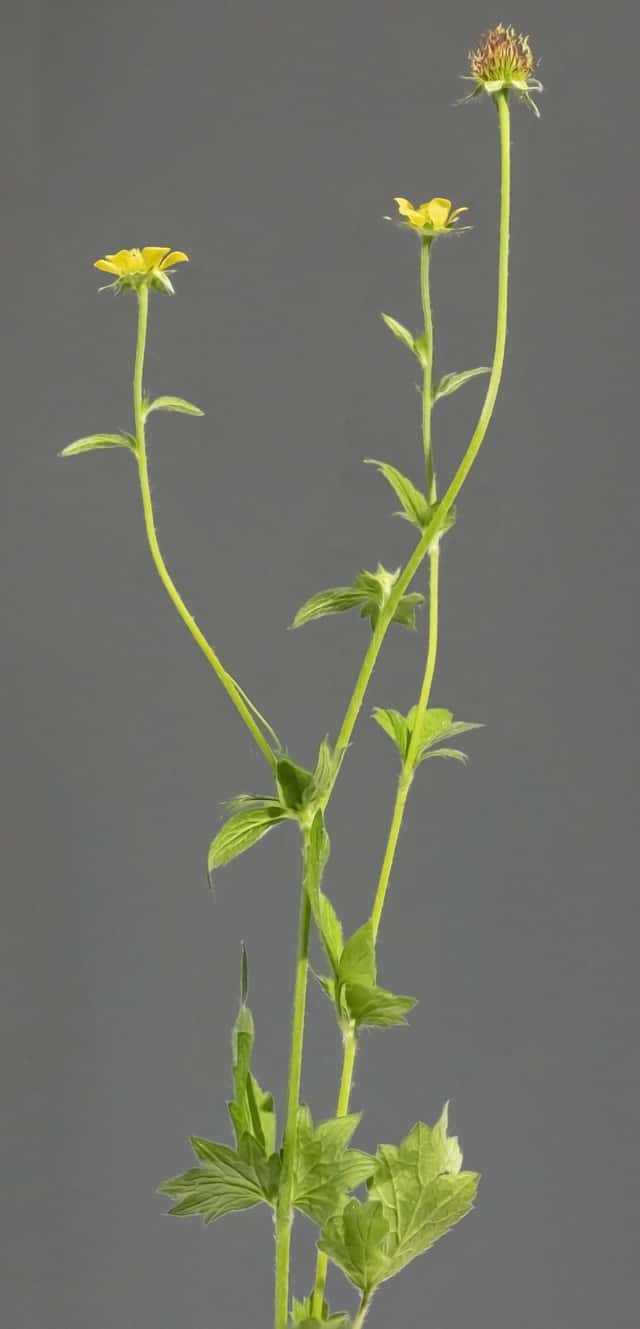
Wood Avens (Geum urbanum)
Geum urbanum
A hardy, low-maintenance plant ideal for shaded or partially sunny gardens. Prefers soil rich in organic matter, consistently lightly moist but well-draining. Tolerates occasional neglect but dislikes waterlogging. Deadhead spent flowers to prolong blooming.
Every 5 days
Partial shade
-5° - 30°C
40% - 70%
Categories
What is Wood Avens?
Wood Avens (Geum urbanum) is a easy-care plant from the Rosaceae family. Wood Avens (Geum urbanum) is a herbaceous perennial in the Rosaceae family, native to the temperate regions of Europe and Asia. It grows naturally along woodland edges, hedgerows, and shaded, moist ground, reaching up to 60 cm in height. It produces glossy compound basal leaves and small five-petale...
Wood Avens grows up to 60cm, spread of 45cm, watering every 5 days, -5°C – 30°C, 40–70% humidity. It is not suitable for indoor environments and safe for pets.
Unlike many tropical plants, Wood Avens tolerates watering mistakes. Best for beginners. Unlike many popular species, Wood Avens is safe to keep around pets.
How to Care for Wood Avens?
TLDR: Wood Avens needs Partial shade, watering every 5 days, and temperatures between -5-30°C with 40-70% humidity.
How Often Should You Water Wood Avens?
Water to keep the soil evenly moist without waterlogging it. Let the top layer of soil dry slightly between waterings. In pots, avoid saucers with standing water to prevent root rot.
How Much Light Does Wood Avens Need?
Prefers partial to full shade, similar to woodland edge conditions. Tolerates full sun in cooler climates with consistently moist soil, but avoid intense direct exposure in hot regions.
What Is the Best Soil for Wood Avens?
Plant in soil rich in organic matter, well-draining, and mildly acidic to neutral (pH 5.5-7.5). Add compost to improve moisture retention without waterlogging.
What Pot Should You Use for Wood Avens?
Terracotta or clay pot with good drainage, since the plant prefers cool, slightly moist conditions; avoid dark plastic pots that overheat in sun.
What Is Wood Avens and Where Does It Come From?
Wood Avens (Geum urbanum) is a herbaceous perennial in the Rosaceae family, native to the temperate regions of Europe and Asia. It grows naturally along woodland edges, hedgerows, and shaded, moist ground, reaching up to 60 cm in height. It produces glossy compound basal leaves and small five-petaled yellow flowers from May through August. When cut, the root releases a clove-like scent due to its eugenol content, earning it the folk name "Clove Root." Historically it was one of the most valued medicinal herbs in medieval Europe, used as a digestive tonic and in herbal infusions.
How to Propagate Wood Avens?
Seed propagation
The seeds have tiny hooks that cling to animal fur for natural dispersal; germination is irregular, so be patient.
- 1 Collect mature seeds (hooked achenes) in late summer
- 2 Sow directly in soil or in trays with a light substrate
- 3 Keep the substrate moist and in a shaded spot
- 4 Transplant seedlings once they have 2-3 true leaves
Materials needed:
Clump division
Division is the fastest way to get plants identical to the parent plant.
- 1 Carefully dig up the mature clump
- 2 Divide the rhizome into sections, ensuring each has roots and buds
- 3 Replant immediately in soil rich in organic matter
- 4 Water well after planting
Materials needed:
How Big Does Wood Avens Grow?
TLDR: Wood Avens can reach up to 60cm tall with Medium growth rate.
Max height
60cm
Spread
45cm
Growth rate
Medium
Foliage
Deciduous
Plant Uses
Medicinal
Medicinal properties
Edible
Can be consumed
Aromatic
Pleasant fragrance
Ornamental
Great for decoration
Medicinal Uses
- Digestive tonic
- Gargle for sore throat and mouth ulcers
- Astringent for diarrhea
- Mild anti-inflammatory
Culinary Uses
- Young leaves cooked like spinach
- Root used to flavor soups and stews
- Dried root used as a clove substitute in beverages and ale
Is your plant showing symptoms?
Click on the symptom to discover possible causes:
What Diseases Commonly Affect Wood Avens?
TLDR: Wood Avens is susceptible to 5 known diseases. Monitor regularly for early detection.
Root Rot
Root rot is a serious fungal disease that affects the root system of plants, causing them to decay and die. It is primarily caused by overwatering, poor drainage, or soil-borne fungi such as Pythium, Phytophthora, Rhizoctonia, and Fusarium. The disease thrives in waterlogged conditions where roots are deprived of oxygen, making them susceptible to fungal infection.
Slugs and Snails
Slugs and snails are mollusks that feed on plant tissue, causing irregular holes in leaves and damage to young seedlings. They are most active at night and in moist conditions, leaving characteristic silvery slime trails. These pests can quickly devastate gardens, especially during wet seasons.
Aphids
Aphids are small, soft-bodied, pear-shaped insects (1/16 to 1/8 inch long) that feed by sucking nutrient-rich sap from plants. They reproduce rapidly and can quickly weaken plants, causing distorted growth and transmitting plant viruses. Aphids come in various colors including green, black, red, yellow, brown, and gray. They secrete honeydew, a sticky substance that attracts ants and encourages sooty mold growth.
Spider Mites
Spider mites are tiny arachnids (less than 1/20 inch long) related to spiders and ticks that feed on plant sap. They thrive in hot, dry conditions and can cause significant damage to ornamental and vegetable plants. During severe infestations, crop losses can reach 14% or higher as these pests disrupt vital plant processes including photosynthesis, carbon dioxide absorption, and transpiration.
Meaning & Symbolism
In medieval Christian tradition, Wood Avens was called "herba benedicta" (blessed herb) and associated with the Holy Trinity and the five wounds of Christ, owing to its three leaflets and five petals. It was carried as a protective amulet against evil spirits and venomous creatures.
Fun Facts
The root smells like cloves when cut, earning it the name "Clove Root"
In the Middle Ages it was called "herba benedicta" (blessed herb) and carried as a protective amulet
Its seeds have tiny hooks that cling to animal fur for dispersal
It is a pest- and disease-resistant plant requiring very little maintenance
Frequently asked questions
Is Wood Avens toxic to cats and dogs?
How often should I water Wood Avens?
Can Wood Avens be grown in a pot?
What is the root of Wood Avens used for?
Compare with similar plants
| Attribute | Difficulty | Light | Watering | Pet Safe |
|---|---|---|---|---|
| Field Maple | Easy | Bright indirect | 14d | ✓ |
| Silver Birch | Easy | Direct sun | 14d | ✓ |
| Common Blanketflower | Easy | Direct sun | 10d | ✓ |
| Cushion Bush | Easy | Direct sun | 14d | ✓ |





