Asteraceae
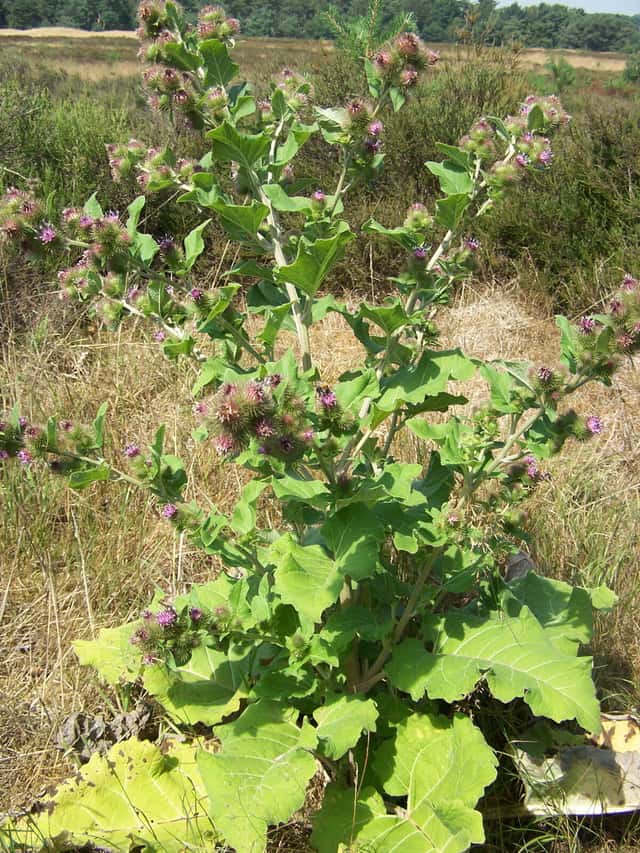
Wood Burdock (Arctium nemorosum)
Arctium nemorosum
Grow wood burdock in a partly shaded to sunny spot with loamy, moisture-retentive, well-drained soil. It is a tough, low-maintenance biennial that self-seeds readily once established; watch for aphids and powdery mildew in humid conditions.
Every 7 days
Partial shade
10° - 25°C
50% - 70%
Categories
What is Wood Burdock?
Wood Burdock (Arctium nemorosum) is a easy-care plant from the Asteraceae family. Arctium nemorosum, known as wood burdock, is a robust biennial herb in the daisy family (Asteraceae), native to woodlands and shaded, disturbed ground across Europe and into the Caucasus, generally on calcium-rich soils. In its first year it forms a low rosette of large, downy, heart-shaped leaves;...
Wood Burdock grows up to 2.0m, watering every 7 days, 10°C – 25°C, 50–70% humidity. It is not suitable for indoor environments and safe for pets.
Unlike many tropical plants, Wood Burdock tolerates watering mistakes. Best for beginners. Unlike many popular species, Wood Burdock is safe to keep around pets.
How to Care for Wood Burdock?
TLDR: Wood Burdock needs Partial shade, watering every 7 days, and temperatures between 10-25°C with 50-70% humidity.
How Often Should You Water Wood Burdock?
Keep the soil evenly moist, especially through the first-year rosette stage; established plants tolerate brief dry spells but perform best without waterlogging.
How Much Light Does Wood Burdock Need?
Provide full sun to light woodland shade -- it grows naturally at woodland edges and in dappled shade.
What Is the Best Soil for Wood Burdock?
Plant in loamy, well-drained soil with a neutral to slightly alkaline pH; it favours calcium-rich ground and struggles in strongly acidic soils.
What Pot Should You Use for Wood Burdock?
Best grown in open ground rather than containers because of its long taproot; a deep raised bed is a good alternative if space is limited.
What Is Wood Burdock and Where Does It Come From?
Arctium nemorosum, known as wood burdock, is a robust biennial herb in the daisy family (Asteraceae), native to woodlands and shaded, disturbed ground across Europe and into the Caucasus, generally on calcium-rich soils. In its first year it forms a low rosette of large, downy, heart-shaped leaves; in its second year it sends up a tall flowering stem, often over 2 metres high, topped with clusters of thistle-like purple-pink flowerheads from midsummer into autumn. The flowerheads ripen into the familiar hooked burrs that catch on fur and clothing to disperse seed.
How to Propagate Wood Burdock?
Seed sowing
Burdock develops a long taproot, so it establishes best when sown directly outdoors rather than transplanted; avoid disturbing the roots once seedlings are up.
- 1 Collect ripe seeds from dried burr heads in autumn, or source fresh seed
- 2 Soak seeds in water for 12 hours, or lightly scarify the seed coat, to improve germination
- 3 Sow directly into loosened, moist soil in spring or early summer, or direct-sow in autumn
- 4 Keep the soil consistently moist until seedlings emerge, usually within 2-4 weeks
- 5 Thin seedlings to about 15cm apart once they have their first true leaves
Materials needed:
How Big Does Wood Burdock Grow?
TLDR: Wood Burdock can reach up to 2.0m tall with Medium growth rate.
Max height
2.0m
Growth rate
Medium
Foliage
Deciduous
Plant Uses
Edible
Can be consumed
Medicinal
Medicinal properties
Medicinal Uses
- Root traditionally used as a detoxifying, blood-purifying herb
- Traditionally applied for skin conditions such as eczema, acne and boils
Culinary Uses
- Young roots peeled and cooked like a root vegetable
- Young leaves and peeled stalks used cooked as a pot-herb
Is your plant showing symptoms?
Click on the symptom to discover possible causes:
What Diseases Commonly Affect Wood Burdock?
TLDR: Wood Burdock is susceptible to 5 known diseases. Monitor regularly for early detection.
Powdery Mildew
Powdery mildew is a common fungal disease caused by various fungi species including Erysiphe, Podosphaera, Oïdium, and Leveillula. It affects over 10,000 plant species worldwide. The disease thrives in warm, dry climates with high humidity and appears as a distinctive white powdery coating on plant surfaces.
Rust
Rust is a common fungal disease caused by fungi in the order Pucciniales that affects a wide variety of plants. The disease gets its name from the characteristic orange, yellow, or reddish-brown pustules that appear on leaves, resembling metal rust. This obligate fungal parasite requires living plants to survive and can cause significant economic losses in agricultural crops.
Aphids
Aphids are small, soft-bodied, pear-shaped insects (1/16 to 1/8 inch long) that feed by sucking nutrient-rich sap from plants. They reproduce rapidly and can quickly weaken plants, causing distorted growth and transmitting plant viruses. Aphids come in various colors including green, black, red, yellow, brown, and gray. They secrete honeydew, a sticky substance that attracts ants and encourages sooty mold growth.
Spider Mites
Spider mites are tiny arachnids (less than 1/20 inch long) related to spiders and ticks that feed on plant sap. They thrive in hot, dry conditions and can cause significant damage to ornamental and vegetable plants. During severe infestations, crop losses can reach 14% or higher as these pests disrupt vital plant processes including photosynthesis, carbon dioxide absorption, and transpiration.
Meaning & Symbolism
In European folklore burdock's clinging burrs symbolise tenacity and persistence -- the same burrs that famously inspired the invention of Velcro.
Fun Facts
Its hooked burrs, which cling to fur and clothing, are said to have inspired Swiss engineer George de Mestral to invent Velcro in the 1940s.
The plant flowers only in its second year, after spending its first year as a low leaf rosette.
Its taproot can grow over a metre deep, helping it survive in compacted woodland-edge soils.
Frequently asked questions
Is wood burdock the same as common burdock?
Does wood burdock need full sun?
Is wood burdock invasive?
Can I grow wood burdock in a pot?
Compare with similar plants
| Attribute | Difficulty | Light | Watering | Pet Safe |
|---|---|---|---|---|
| Field Maple | Easy | Bright indirect | 14d | ✓ |
| Silver Birch | Easy | Direct sun | 14d | ✓ |
| Common Blanketflower | Easy | Direct sun | 10d | ✓ |
| Cushion Bush | Easy | Direct sun | 14d | ✓ |
Choose & Compare
Sources & References
- Arctium nemorosum - Wikipedia
- Arctium nemorosum | wood burdock - RHS
- Arctium - Plants For A Future (genus profile)
- How To Grow Arctium nemorosum - EarthOne
- Arctium nemorosum Lej. - Plants of the World Online, Kew
- Arctium minus subsp. nemorosum (Lej.) Syme, Wood Burdock - BSBI
- Common Burdock Problems and Solutions - Greg App





