Asteraceae
Wormwood (Artemisia absinthium)
Artemisia absinthium
Strong sun and soil that drains, even if it's poor. Once established it handles drought and barely needs feeding: a little compost in spring is enough. Soggy soil rots the roots.
Every 14 days
Direct sun
° - °C
% - %
Categories
What is Wormwood?
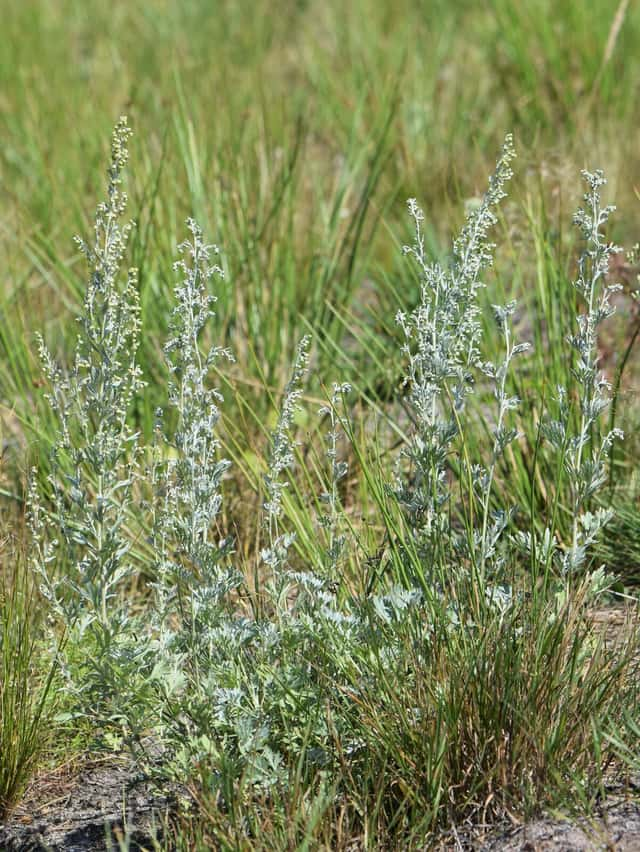
Wormwood (Artemisia absinthium) is a easy-care plant from the Asteraceae family. Wormwood is a perennial herb with silvery-grey, finely cut, hairy leaves, a strong smell and a very bitter taste. It's native to temperate Europe and Asia. It forms a clump 2 to 5 ft (60 to 150 cm) tall that turns woody at the base, and from late summer into early fall it hangs small greenish-yellow...
Wormwood grows up to 1.5m, spread of 150cm, watering every 14 days. It is not suitable for indoor environments and not safe for pets.
Unlike many tropical plants, Wormwood tolerates watering mistakes. Best for beginners. Without precautions, ingestion can cause irritation in pets. Keep out of reach of cats and dogs.
How to Care for Wormwood?
TLDR: Wormwood needs Direct sun, watering every 14 days, and temperatures between 15-30°C with 40-70% humidity.
How Often Should You Water Wormwood?
New plants: water every 14 days or when the soil dries out. Established plants in the ground usually get by on rain.
How Much Light Does Wormwood Need?
Full sun. It struggles more in humid summers, so give it the airiest spot you've got.
What Is the Best Soil for Wormwood?
The poorer and drier the soil, the longer it lives and the stronger it smells. It tolerates pH 4.8 to 8.2, but not soil that holds water.
What Pot Should You Use for Wormwood?
A garden bed is better. In a pot, go deep and make sure it has drainage holes. Keep it away from seedlings: compounds from the leaves can hold back nearby plants.
Care Schedule
Fertilize
Every 365 days
What Is Wormwood and Where Does It Come From?
Wormwood is a perennial herb with silvery-grey, finely cut, hairy leaves, a strong smell and a very bitter taste. It's native to temperate Europe and Asia. It forms a clump 2 to 5 ft (60 to 150 cm) tall that turns woody at the base, and from late summer into early fall it hangs small greenish-yellow flowers. This is the herb that flavored absinthe. Its oil contains thujone, which can affect the nervous system at high doses, so take care around kids and animals.
How to Propagate Wormwood?
Dividing the clump
Wear gloves if your skin is sensitive, since the plant can cause irritation.
- 1 Dig up the clump with some soil
- 2 Split it into pieces with roots
- 3 Replant in a sunny spot with soil that drains
- 4 Water until it settles in
Materials needed:
Stem cutting
Seed works too, but it germinates slowly.
- 1 Cut a young stem
- 2 Remove the lower leaves
- 3 Plant it in moist, sandy soil
- 4 Keep it in light shade until it settles in
Materials needed:
How Big Does Wormwood Grow?
TLDR: Wormwood can reach up to 1.5m tall with Medium growth rate.
Max height
1.5m
Spread
1.5m
Warning: Toxic Plant
This plant can be toxic if ingested. Keep out of reach of:
Plant Uses
Ornamental
Great for decoration
Medicinal
Medicinal properties
Aromatic
Pleasant fragrance
Medicinal Uses
- Traditional use as a bitter tonic; long-term use can be toxic and calls for medical advice
Culinary Uses
- Traditional flavoring for drinks such as absinthe
Is your plant showing symptoms?
Click on the symptom to discover possible causes:
What Diseases Commonly Affect Wormwood?
TLDR: Wormwood is susceptible to 4 known diseases. Monitor regularly for early detection.
Root Rot
Root rot is a serious fungal disease that affects the root system of plants, causing them to decay and die. It is primarily caused by overwatering, poor drainage, or soil-borne fungi such as Pythium, Phytophthora, Rhizoctonia, and Fusarium. The disease thrives in waterlogged conditions where roots are deprived of oxygen, making them susceptible to fungal infection.
Aphids
Aphids are small, soft-bodied, pear-shaped insects (1/16 to 1/8 inch long) that feed by sucking nutrient-rich sap from plants. They reproduce rapidly and can quickly weaken plants, causing distorted growth and transmitting plant viruses. Aphids come in various colors including green, black, red, yellow, brown, and gray. They secrete honeydew, a sticky substance that attracts ants and encourages sooty mold growth.
Fusarium Wilt
Fusarium is a soil-borne fungus that primarily attacks the roots and vascular tissues of plants. It enters through small wounds or stressed roots, is favored by warm temperatures and waterlogging, and then obstructs the flow of sap. Symptoms include yellowing, often on only one side of the plant, wilting even with moist soil, stunted growth, and, when cutting the stem, internal brown streaks. It frequently affects tomatoes, peppers, eggplants, basil, cucumbers, and zucchini, as well as ornamentals like carnations and cyclamen. In potted plants, it can manifest as root rot with a darkened crown.
Rhizoctonia solani
Rhizoctonia solani is a soil-borne fungus that attacks stems, roots, and young seedlings. It thrives in warm, humid weather and in soil that stays wet or drains poorly. Typical signs include seedlings collapsing at the soil line (damping-off), sunken brown lesions near the soil on stems, brown rotting roots, wilting even when the soil is moist, and slow, stunted growth. In lawns, it can cause the well-known “brown patch” during warm, humid periods. Many plants are at risk, including vegetables (such as lettuce, beans, and brassicas), ornamentals, houseplants, and turfgrass.
Fun Facts
Absinthe was banned in the US until 2007
Deer and rabbits tend to avoid it because of the smell
The poorer the soil, the more aromatic it gets
Frequently asked questions
Is wormwood toxic?
Can I make wormwood tea?
How often should I water wormwood?
When should I prune wormwood?
Why do plants near my wormwood struggle?
Compare with similar plants
| Attribute | Difficulty | Light | Watering | Pet Safe |
|---|---|---|---|---|
| Field Maple | Easy | Bright indirect | 14d | ✓ |
| Iberian Houseleek | Easy | Direct sun | 14d | ✓ |
| Silver Birch | Easy | Direct sun | 14d | ✓ |
| Common Blanketflower | Easy | Direct sun | 10d | ✓ |





