Passifloraceae
Yellow Alder (Turnera ulmifolia): Care Guide
Turnera ulmifolia
A tough, low-maintenance shrub that adapts to sandy, loamy or clay soils as long as drainage is good. Grows best in full sun to part shade and tolerates short dry spells once established.
Every 7 days
Bright indirect
15° - 35°C
% - %
Categories
What is Yellow Alder?
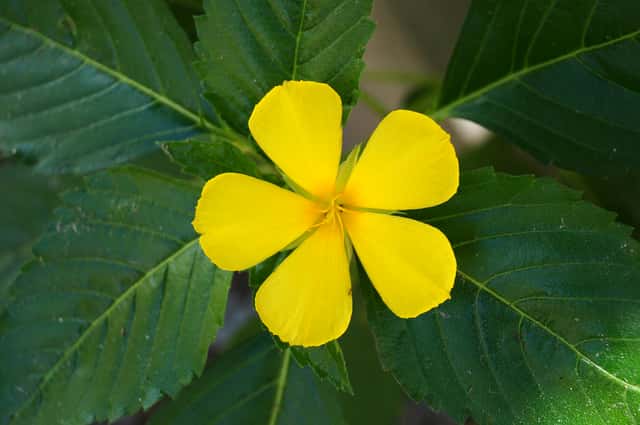
Yellow Alder (Turnera ulmifolia) is a easy-care plant from the Passifloraceae family. Yellow alder (Turnera ulmifolia) is a tropical perennial subshrub native to Mexico, Central America, the Caribbean and northern South America. It produces bright yellow flowers that open at sunrise and wilt by midday, and is widely grown as a butterfly-attracting ornamental.
Yellow Alder grows up to 1.5m, spread of 90cm, watering every 7 days, 15°C – 35°C. It is not suitable for indoor environments and safe for pets.
Unlike many tropical plants, Yellow Alder tolerates watering mistakes. Best for beginners. Unlike many popular species, Yellow Alder is safe to keep around pets.
How to Care for Yellow Alder?
TLDR: Yellow Alder needs Bright indirect, watering every 7 days, and temperatures between 15-35°C with 40-70% humidity.
How Often Should You Water Yellow Alder?
Water when the top couple of inches of soil feel dry, roughly once a week. Avoid soggy soil, which encourages root rot.
How Much Light Does Yellow Alder Need?
Prefers full sun to part shade for the fullest form and best flowering; in very hot climates, afternoon shade helps prevent leaf scorch.
What Is the Best Soil for Yellow Alder?
Adapts to sandy, loamy, or clay soils, but must be well-draining; a slightly acidic to neutral pH is ideal.
What Pot Should You Use for Yellow Alder?
Terracotta or ceramic pots with drainage holes, or garden beds and borders in full sun.
Care Schedule
Fertilize
Every 42 days
What Is Yellow Alder and Where Does It Come From?
Yellow alder (Turnera ulmifolia) is a tropical perennial subshrub native to Mexico, Central America, the Caribbean and northern South America. It produces bright yellow flowers that open at sunrise and wilt by midday, and is widely grown as a butterfly-attracting ornamental.
How to Propagate Yellow Alder?
Seed propagation
Yellow alder self-seeds readily in the garden; seedlings often pop up near the parent plant.
- 1 Collect ripe seeds from dried seed capsules
- 2 Sow in a light, moist growing medium
- 3 Keep in bright indirect light until germination
Materials needed:
Stem cutting
Keep the substrate lightly moist until roots form, without waterlogging.
- 1 Take a 4-6 inch semi-hardwood cutting
- 2 Remove lower leaves
- 3 Plant in moist, well-draining soil
Materials needed:
How Big Does Yellow Alder Grow?
TLDR: Yellow Alder can reach up to 1.5m tall with Medium growth rate.
Max height
1.5m
Spread
90cm
Growth rate
Medium
Foliage
Evergreen
Plant Uses
Ornamental
Great for decoration
Medicinal
Medicinal properties
Medicinal Uses
- Traditional treatment for gastrointestinal disorders and ulcers
- Folk use for coughs and respiratory conditions
- Anti-inflammatory leaf and flower infusions
Is your plant showing symptoms?
Click on the symptom to discover possible causes:
What Diseases Commonly Affect Yellow Alder?
TLDR: Yellow Alder is susceptible to 7 known diseases. Monitor regularly for early detection.
Whiteflies
Whiteflies are small, soft-bodied, winged insects closely related to aphids and mealybugs. They are moth-like in appearance, about 1/16 inch long, triangular in shape, and gray-white in color. These sap-sucking pests feed on plant tissue, causing yellowing, stunted growth, and wilting. They also excrete honeydew, which attracts ants and promotes sooty mold growth. Whiteflies can transmit serious plant viruses.
Aphids
Aphids are small, soft-bodied, pear-shaped insects (1/16 to 1/8 inch long) that feed by sucking nutrient-rich sap from plants. They reproduce rapidly and can quickly weaken plants, causing distorted growth and transmitting plant viruses. Aphids come in various colors including green, black, red, yellow, brown, and gray. They secrete honeydew, a sticky substance that attracts ants and encourages sooty mold growth.
Scale Insects
Scale insects are small sap-sucking pests that appear as brown, shell-like bumps on plant stems and leaves. There are over 25 species, divided into armored (hard) and unarmored (soft) scales. They feed by piercing plant tissue and extracting sap, which weakens the plant and can lead to yellowing, stunted growth, and even death if left untreated. They also excrete honeydew, which attracts ants and promotes sooty mold growth.
Spider Mites
Spider mites are tiny arachnids (less than 1/20 inch long) related to spiders and ticks that feed on plant sap. They thrive in hot, dry conditions and can cause significant damage to ornamental and vegetable plants. During severe infestations, crop losses can reach 14% or higher as these pests disrupt vital plant processes including photosynthesis, carbon dioxide absorption, and transpiration.
Fun Facts
Its flowers open at sunrise and wilt by midday, lasting only a few hours
Widely used in Caribbean and South American folk medicine for stomach ailments
Attracts butterflies and pollinators to the garden
Frequently asked questions
Does yellow alder need a lot of sun?
How often should I water yellow alder?
Is yellow alder toxic to pets?
What pests commonly affect yellow alder?
Compare with similar plants
| Attribute | Difficulty | Light | Watering | Pet Safe |
|---|---|---|---|---|
| Field Maple | Easy | Bright indirect | 14d | ✓ |
| Silver Birch | Easy | Direct sun | 14d | ✓ |
| Common Blanketflower | Easy | Direct sun | 10d | ✓ |
| Cushion Bush | Easy | Direct sun | 14d | ✓ |
Choose & Compare
Sources & References
- FPS-593/FP593: Turnera ulmifolia Yellow Alder, Yellow Elder, Ramgoat Dashalong - UF/IFAS
- Turnera ulmifolia - Wikipedia
- Turnera ulmifolia - Care, Propagation & Tips | Viriar
- Keep Your Ramgoat Dashalong Alive: Light, Water & Care Instructions
- Hierba Damiana (Turnera ulmifolia) - iNaturalist Mexico
- Avaliacao da turnera ulmifolia: perfil fitoquimico e atividades farmacologicas





