Cactaceae
Yellow Dragon Fruit (Selenicereus megalanthus) Growing Guide
Selenicereus megalanthus
A cactus for mild climates that wants plenty of light but suffers in harsh afternoon sun in hot regions. Plant in light, well-drained soil and give the stems a sturdy support to climb. Water when the soil surface dries, more during flowering and fruit set, and avoid waterlogging. It is the most cold-sensitive pitaya: protect it below 5 °C. Fruit takes 4-6 months to ripen.
Every 7 days
Bright indirect
5° - 32°C
60% - 85%
Categories
What is Yellow Dragon Fruit?
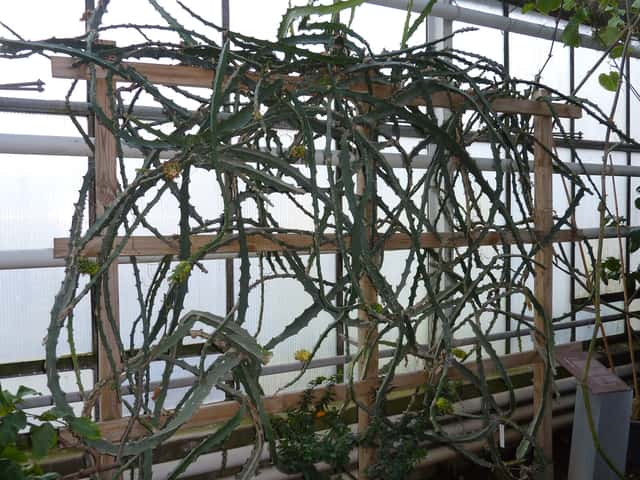
Yellow Dragon Fruit (Selenicereus megalanthus) is a medium-care plant from the Cactaceae family. Selenicereus megalanthus (synonym Hylocereus megalanthus) is a climbing, epiphytic cactus in the family Cactaceae, native to Andean forests of Colombia, Ecuador, Peru and Bolivia. It has three-angled green stems with short spines that climb trees or supports and put out aerial roots. At night it ope...
Yellow Dragon Fruit grows up to 4.0m, spread of 150cm, watering every 7 days, 5°C – 32°C, 60–85% humidity. It is not suitable for indoor environments and safe for pets.
Unlike many popular species, Yellow Dragon Fruit is safe to keep around pets.
How to Care for Yellow Dragon Fruit?
TLDR: Yellow Dragon Fruit needs Bright indirect, watering every 7 days, and temperatures between 5-32°C with 60-85% humidity.
How Often Should You Water Yellow Dragon Fruit?
Water about once a week in warm weather, when the top few centimeters of soil are dry. Keep moisture steady during flowering and while fruit develops. Water much less in winter.
How Much Light Does Yellow Dragon Fruit Need?
Give morning sun or strong filtered light. In very hot areas, 30% shade cloth prevents yellow sunburn patches on the stems.
What Is the Best Soil for Yellow Dragon Fruit?
Use sandy soil or cactus mix enriched with compost, well drained and slightly acidic. Never let the base stay soggy.
What Pot Should You Use for Yellow Dragon Fruit?
A large, heavy pot (50 liters or more), clay or thick plastic, with good drainage holes and a sturdy post in the center.
Care Schedule
Fertilize
Every 30 days
Repot
Every 730 days
What Is Yellow Dragon Fruit and Where Does It Come From?
Selenicereus megalanthus (synonym Hylocereus megalanthus) is a climbing, epiphytic cactus in the family Cactaceae, native to Andean forests of Colombia, Ecuador, Peru and Bolivia. It has three-angled green stems with short spines that climb trees or supports and put out aerial roots. At night it opens some of the largest flowers of any cactus, white and fragrant, up to 38 cm long. The fruit has a yellow, spiny skin whose spines fall off as it ripens, and sweet, translucent white flesh with edible black seeds.
How to Propagate Yellow Dragon Fruit?
Stem cuttings
Cuttings from plants that already fruit start producing sooner. Use clean tools and do not water before the cut has callused.
- 1 Cut a healthy stem segment 25-40 cm long.
- 2 Let the cut end dry in the shade for 5-7 days until it calluses.
- 3 Plant the cutting 5 cm deep in sandy mix next to a support.
- 4 Water lightly until roots and new shoots appear.
Materials needed:
Seed
Seed-grown plants can take several years to fruit and do not come true to the parent.
- 1 Wash seeds from a ripe fruit and let them dry.
- 2 Sow on the surface of moist mix, barely covered.
- 3 Keep in a bright, warm spot until they germinate.
Materials needed:
How Big Does Yellow Dragon Fruit Grow?
TLDR: Yellow Dragon Fruit can reach up to 4.0m tall with Medium growth rate.
Max height
4.0m
Spread
1.5m
Growth rate
Medium
Foliage
Evergreen
Plant Uses
Edible
Can be consumed
Ornamental
Great for decoration
Medicinal Uses
- Fruit and seeds traditionally eaten as a mild laxative
Culinary Uses
- Fruit eaten fresh with a spoon
- Juices, sorbets and fruit salads
Is your plant showing symptoms?
Click on the symptom to discover possible causes:
What Diseases Commonly Affect Yellow Dragon Fruit?
TLDR: Yellow Dragon Fruit is susceptible to 8 known diseases. Monitor regularly for early detection.
Fusarium Wilt
Fusarium is a soil-borne fungus that primarily attacks the roots and vascular tissues of plants. It enters through small wounds or stressed roots, is favored by warm temperatures and waterlogging, and then obstructs the flow of sap. Symptoms include yellowing, often on only one side of the plant, wilting even with moist soil, stunted growth, and, when cutting the stem, internal brown streaks. It frequently affects tomatoes, peppers, eggplants, basil, cucumbers, and zucchini, as well as ornamentals like carnations and cyclamen. In potted plants, it can manifest as root rot with a darkened crown.
Anthracnose
Anthracnose is a fungal disease caused by fungi in the genus Colletotrichum that affects many plants, including vegetables, fruits, and trees. The disease thrives in cool, wet conditions, causing dark, sunken lesions on leaves, stems, flowers, and fruits.
Bacterial Soft Rot
Bacterial soft rot is a destructive plant disease caused primarily by bacteria from the genera Pectobacterium (formerly Erwinia) and Dickeya. These bacteria produce enzymes that break down plant cell walls, causing rapid and foul-smelling tissue decomposition. It mainly affects succulent tissues such as tubers, fruits, stems, and bulbs, being especially problematic in warm and humid conditions.
Fruit Rot
Fruit rot is a fungal disease caused by various fungi such as Botrytis or Monilia. It manifests as rapidly spreading brown spots that soften tissues and often cover the fruit with a gray or white downy growth. It spreads through humidity and wind.
Fun Facts
Its white flowers are among the largest of any cactus and open for a single night.
The spines on the fruit come off easily once it is ripe.
Colombia is the main producer and exporter of yellow dragon fruit.
Frequently asked questions
How is yellow dragon fruit different from red dragon fruit?
Do I need to hand-pollinate yellow dragon fruit?
How long until yellow dragon fruit produces fruit?
Can yellow dragon fruit handle cold?
Compare with similar plants
| Attribute | Difficulty | Light | Watering | Pet Safe |
|---|---|---|---|---|
| Dark Fieldcap | Medium | Low light | 2d | ⚠️ |
| Azalea | Medium | Partial shade | 3d | ⚠️ |
| Muriel's Bamboo | Medium | Partial shade | 3d | ✓ |
| Bougainvillea | Medium | Direct sun | 7d | ⚠️ |
Choose & Compare
Sources & References
- Selenicereus megalanthus - Wikipedia
- Pitaya - Revista Brasileira de Fruticultura (SciELO)
- Aspectos da producao de pitaya - Embrapa
- Pitaya cultivation in Israel (yellow pitaya clones and cold sensitivity) - Growables
- Pitaya presentation - California Rare Fruit Growers
- Pitaia amarela - Agroportal (Madeira)




