Menyanthaceae
Yellow Floating Heart: Full Sun Plant
Nymphoides peltata
Plant the rhizome in a sandy or loamy substrate rich in organic matter, submerged at a depth of 4 to 24 inches in calm, sunny water. Maintenance is straightforward: regularly remove spent leaves and flowers, and trim invasive stems to control its spread, as the plant can rapidly colonize the entire surface of a pond.
Every 1 days
Direct sun
10° - 30°C
% - %
Categories
What is Yellow Floating Heart?
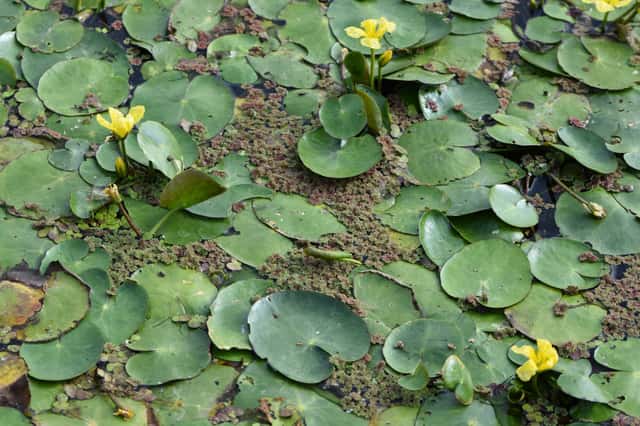
Yellow Floating Heart (Nymphoides peltata) is a easy-care plant from the Menyanthaceae family. The Yellow Floating Heart (Nymphoides peltata) is a perennial aquatic plant in the Menyanthaceae family, native to Europe and temperate Asia. Its round, heart-shaped leaves, resembling a miniature water lily, float on the water's surface and can reach 6 inches in diameter, often featuring a purple-t...
Yellow Floating Heart grows up to 15cm, spread of 250cm, watering every 1 days, 10°C – 30°C. It is not suitable for indoor environments and safe for pets.
Unlike many tropical plants, Yellow Floating Heart tolerates watering mistakes. Best for beginners. Unlike many popular species, Yellow Floating Heart is safe to keep around pets.
How to Care for Yellow Floating Heart?
TLDR: Yellow Floating Heart needs Direct sun, watering every 1 days, and temperatures between 10-30°C with 40-70% humidity.
How Often Should You Water Yellow Floating Heart?
The Yellow Floating Heart lives permanently submerged in the pond: simply maintain a stable water level with the rhizome covered by 4 to 24 inches of water, and avoid areas with strong currents or proximity to fountains.
How Much Light Does Yellow Floating Heart Need?
Place in full sun for abundant flowering; it tolerates partial shade but will bloom less generously.
What Is the Best Soil for Yellow Floating Heart?
A sandy or loamy substrate, rich in organic matter with a neutral to slightly alkaline pH, is ideal. Use a wide-mesh aquatic basket filled with specialized pond soil if your water feature has a liner.
What Pot Should You Use for Yellow Floating Heart?
Use a wide-mesh aquatic basket lined with burlap, filled with aquatic soil, and weighted with gravel to prevent the substrate from dispersing into the water.
Care Schedule
Repot
Every 730 days
What Is Yellow Floating Heart and Where Does It Come From?
The Yellow Floating Heart (Nymphoides peltata) is a perennial aquatic plant in the Menyanthaceae family, native to Europe and temperate Asia. Its round, heart-shaped leaves, resembling a miniature water lily, float on the water's surface and can reach 6 inches in diameter, often featuring a purple-tinted underside. From June to September, it produces a succession of bright yellow, five-petaled flowers with fringed edges. Although each bloom lasts only a single day, they are continuously renewed throughout the summer. Vigorous and hardy down to -4°F (-20°C), it quickly forms a floating carpet and helps purify pond water by absorbing excess nitrogen and phosphorus.
How to Propagate Yellow Floating Heart?
Rhizome Division
Perform division every 2 to 3 years to prevent the clump from becoming exhausted and to limit pond overcrowding.
- 1 Gently remove the rhizome from the aquatic basket or the pond floor in spring
- 2 Cut the rhizome into several pieces, each with roots and at least one bud
- 3 Replant each fragment in an aquatic basket filled with substrate rich in organic matter
- 4 Submerge the basket at a depth of 4 to 12 inches during the recovery period
Materials needed:
Floating Stolon Cuttings
This method takes advantage of the plant's natural tendency to produce plantlets along its long floating stems; monitor propagation to avoid taking over the entire pond.
- 1 Identify a stolon already carrying young plantlets at its nodes
- 2 Cut the stem segment carrying the plantlet and its emerging roots
- 3 Let the fragment float freely on the water surface or lightly anchor it into the substrate
- 4 Wait for full rooting before allowing it to drift or repositioning it
Materials needed:
How Big Does Yellow Floating Heart Grow?
TLDR: Yellow Floating Heart can reach up to 15cm tall with Fast growth rate.
Max height
15cm
Spread
2.5m
Growth rate
Fast
Foliage
Deciduous
Plant Uses
Ornamental
Great for decoration
Is your plant showing symptoms?
Click on the symptom to discover possible causes:
What Diseases Commonly Affect Yellow Floating Heart?
TLDR: Yellow Floating Heart is susceptible to 4 known diseases. Monitor regularly for early detection.
Aphids
Aphids are small, soft-bodied, pear-shaped insects (1/16 to 1/8 inch long) that feed by sucking nutrient-rich sap from plants. They reproduce rapidly and can quickly weaken plants, causing distorted growth and transmitting plant viruses. Aphids come in various colors including green, black, red, yellow, brown, and gray. They secrete honeydew, a sticky substance that attracts ants and encourages sooty mold growth.
Rust
Rust is a common fungal disease caused by fungi in the order Pucciniales that affects a wide variety of plants. The disease gets its name from the characteristic orange, yellow, or reddish-brown pustules that appear on leaves, resembling metal rust. This obligate fungal parasite requires living plants to survive and can cause significant economic losses in agricultural crops.
Leafminers
Leafminers are the larvae of various insects including flies, moths, sawflies, and beetles that tunnel between leaf surfaces, creating distinctive serpentine trails or blotchy patches. While primarily cosmetic, severe infestations can weaken plants by reducing photosynthesis capacity and making them susceptible to secondary infections.
Caterpillars
Caterpillars are the larval stage of moths and butterflies that feed voraciously on plant foliage, stems, flowers, and fruits. Common species include cabbage loopers, tomato hornworms, armyworms, and cutworms. These pests can cause extensive damage by consuming large amounts of plant tissue in a short time. They vary in size from small (1/4 inch) to large (5 inches), with colors ranging from green to brown, often featuring stripes or spots. Caterpillars are highly mobile and can quickly spread throughout gardens, making them one of the most destructive common pests.
Meaning & Symbolism
Like the water lilies it resembles, the Yellow Floating Heart evokes purity, serenity, and renewal; its ephemeral flowers, which live for only a day, serve as a reminder of the fleeting beauty of the present moment.
Compare with similar plants
| Attribute | Difficulty | Light | Watering | Pet Safe |
|---|---|---|---|---|
| Field Maple | Easy | Bright indirect | 14d | ✓ |
| Silver Birch | Easy | Direct sun | 14d | ✓ |
| Common Blanketflower | Easy | Direct sun | 10d | ✓ |
| Cushion Bush | Easy | Direct sun | 14d | ✓ |





