Nymphaeaceae
Nuphar (Yellow Pond-Lily) Care Guide
Nuphar
Grow Nuphar permanently submerged in an aquatic planting basket or directly in the muddy bottom of a pond, in 30-90 cm of still to slow-moving water. It thrives in full sun but tolerates part shade better than most water lilies. Use a heavy, nutrient-rich loam or clay-based aquatic substrate topped with coarse gravel to keep it in place, and feed with aquatic plant tablets during the growing season. Once established, Nuphar needs very little upkeep beyond removing spent leaves and dividing overcrowded rhizomes every few years.
Every 1 days
Bright indirect
5° - 30°C
% - %
Categories
What is Yellow Pond-Lily?
Yellow Pond-Lily (Nuphar) is a medium-care plant from the Nymphaeaceae family. Nuphar is a genus of hardy aquatic perennials native to still and slow-moving fresh waters across the temperate Northern Hemisphere -- from ponds and lake margins to ditches, canals, and slow rivers. Thick, spongy rhizomes anchor in the muddy bottom and send up both submerged, translucent leaves and...
Yellow Pond-Lily grows up to 60cm, spread of 180cm, watering every 1 days, 5°C – 30°C. It is not suitable for indoor environments and not safe for pets.
Without precautions, ingestion can cause irritation in pets. Keep out of reach of cats and dogs.
How to Care for Yellow Pond-Lily?
TLDR: Yellow Pond-Lily needs Bright indirect, watering every 1 days, and temperatures between 5-30°C with 40-70% humidity.
How Often Should You Water Yellow Pond-Lily?
This is a true aquatic plant, not a potted houseplant -- it must stay permanently submerged in clean, unchlorinated, well-oxygenated water. Never let the rhizome or roots dry out; top up pond water level regularly, especially in hot weather.
How Much Light Does Yellow Pond-Lily Need?
Give it as much direct sun as possible for the best flowering (6+ hours ideally), though it will still grow -- just flower less -- in partial shade, which is where it out-performs most other pond lilies.
What Is the Best Soil for Yellow Pond-Lily?
Plant the rhizome horizontally in heavy loam, clay, or a dedicated aquatic planting substrate rich in organic matter, with the growing tip (bud) left uncovered and pointing upward. Cap the surface with washed gravel to stop soil clouding the water and to deter fish from digging it up.
What Pot Should You Use for Yellow Pond-Lily?
Use a wide, mesh-sided aquatic planting basket (no drainage needed, obviously) rather than a solid pot -- it lets roots access surrounding water and nutrients while still containing the spreading rhizome so it does not take over the whole pond.
What Is Yellow Pond-Lily and Where Does It Come From?
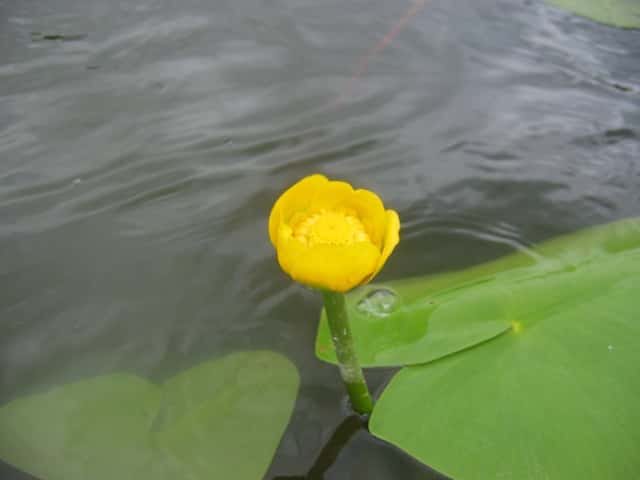
Nuphar is a genus of hardy aquatic perennials native to still and slow-moving fresh waters across the temperate Northern Hemisphere -- from ponds and lake margins to ditches, canals, and slow rivers. Thick, spongy rhizomes anchor in the muddy bottom and send up both submerged, translucent leaves and floating or emergent leathery leaves. From late spring through autumn the plant produces small, cup-shaped, yellow (occasionally greenish-yellow) flowers held just above the water surface, each lasting several days and opening in the morning. Compared with the related water lilies (Nymphaea), Nuphar tolerates deeper water, cooler climates, and considerably more shade, making it one of the toughest and lowest-maintenance plants for natural ponds and wildlife water gardens.
How to Propagate Yellow Pond-Lily?
Rhizome division
Use clean, sharp tools to prevent rot; keep buds facing upward and visible so the new shoot is not smothered.
- 1 Lift the rhizome from the water in early spring, before new growth starts.
- 2 Cut the rhizome into sections, making sure each piece keeps at least one healthy growth bud.
- 3 Replant each section horizontally in an aquatic planting basket with rich clay-loam substrate, leaving the bud exposed.
- 4 Gradually lower the basket to the recommended water depth and keep it in a sunny spot.
Materials needed:
Seed sowing
Germination is slow and uneven; be patient and avoid letting the water stagnate or get too cold.
- 1 Collect ripe seeds directly from the water, since the fruits sink as they mature.
- 2 Sow in small pots submerged under about 2.5 cm of water in a protected environment (greenhouse).
- 3 Keep the water clean and mildly warm until germination.
- 4 Transplant young seedlings into larger containers as they grow, gradually increasing water depth.
Materials needed:
How Big Does Yellow Pond-Lily Grow?
TLDR: Yellow Pond-Lily can reach up to 60cm tall with Medium growth rate.
Max height
60cm
Spread
1.8m
Growth rate
Medium
Foliage
Deciduous
Warning: Toxic Plant
This plant can be toxic if ingested. Keep out of reach of:
Plant Uses
Ornamental
Great for decoration
Edible
Can be consumed
Medicinal
Medicinal properties
Medicinal Uses
- Traditionally used as a mild sedative and anti-inflammatory
- Dried rhizome used to help stop bleeding and treat diarrhea/dysentery in folk medicine
- Root poultices applied to skin inflammation and swelling
- Modern lab research into anti-viral (anti-measles) and cytotoxic properties of its alkaloids
Culinary Uses
- Roots can be boiled or roasted after soaking to remove bitterness, with a flavor compared to liver
- Seeds are edible raw, roasted, or ground into flour
- Roasted seeds have historically been popped like popcorn
- Root and seed starch used to thicken soups or supplement grain flour
Is your plant showing symptoms?
Click on the symptom to discover possible causes:
What Diseases Commonly Affect Yellow Pond-Lily?
TLDR: Yellow Pond-Lily is susceptible to 1 known diseases. Monitor regularly for early detection.
Meaning & Symbolism
Like other water lilies, Nuphar is widely seen as a symbol of purity, renewal, and resilience -- its blossoms rising untouched from muddy water evoke transformation and the possibility of beauty emerging from difficult conditions. Its daily rhythm of opening at dawn and closing at dusk has also made it an emblem of natural cycles and quiet endurance.
Fun Facts
Its floating leaves have a waxy, water-repellent coating and a notch that lets rain run off instead of pooling and sinking the leaf.
Each flower typically opens for only 4-5 days, blooming in the morning and closing again at night.
Nuphar can grow in water up to about 10,000 feet (3,000 m) in elevation in some mountain lakes.
The genus name comes from the Persian/Arabic word for water lily, "nilufar".
Frequently asked questions
How deep should the water be for Nuphar?
Does Nuphar need full sun?
Is Nuphar toxic to pets?
How do I propagate Nuphar?
Does Nuphar have many pests or diseases?
Compare with similar plants
| Attribute | Difficulty | Light | Watering | Pet Safe |
|---|---|---|---|---|
| Dark Fieldcap | Medium | Low light | 2d | ⚠️ |
| Azalea | Medium | Partial shade | 3d | ⚠️ |
| Muriel's Bamboo | Medium | Partial shade | 3d | ✓ |
| Bougainvillea | Medium | Direct sun | 7d | ⚠️ |
Choose & Compare
Sources & References
- Nuphar luteum - NC State Extension Gardener Plant Toolbox
- Nuphar advena - Practical Plants
- Nuphar lutea - Missouri Botanical Garden Plant Finder
- Nuphar Lutea - ScienceDirect Topics overview
- Nuphar lutea - Native Plants of North America (Wildflower Center)
- Yellow Pond-Lily Plant Care Guide - Greg App




