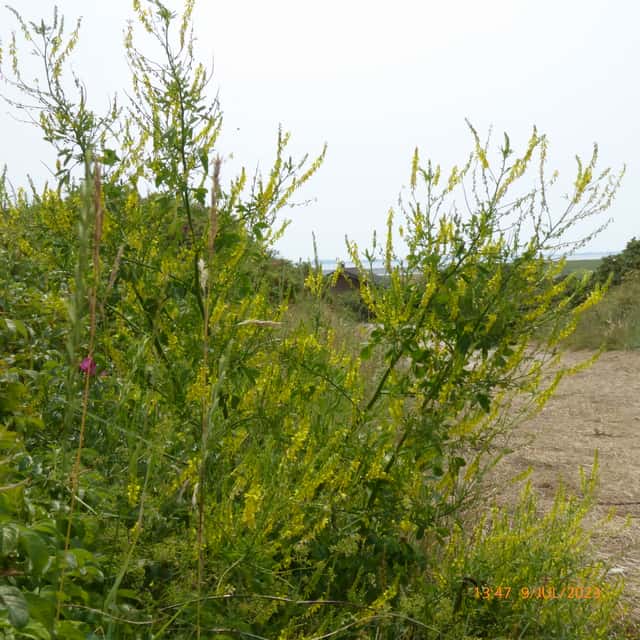
Fabaceae
Yellow Sweet Clover
Melilotus officinalis
Prefers full sun and well-drained, neutral to alkaline soil. Drought-tolerant once established, but needs consistent moisture during germination and its first year. Biennial: grows as a low rosette the first year, then flowers, sets seed, and dies in its second year.
Every 7 days
Direct sun
10° - 30°C
40% - 60%
Categories
What is Yellow Sweet Clover?
Yellow Sweet Clover (Melilotus officinalis) is a easy-care plant from the Fabaceae family. Yellow sweet clover (Melilotus officinalis) is a biennial herb in the Fabaceae (legume) family, native to Europe and Asia and now naturalized across much of the world. It forms freely branching stems up to about 1.5 m tall, with trifoliate leaves and small, fragrant yellow flowers borne in slender r...
Yellow Sweet Clover grows up to 1.5m, spread of 90cm, watering every 7 days, 10°C – 30°C, 40–60% humidity. It is not suitable for indoor environments and safe for pets.
Unlike many tropical plants, Yellow Sweet Clover tolerates watering mistakes. Best for beginners. Unlike many popular species, Yellow Sweet Clover is safe to keep around pets.
How to Care for Yellow Sweet Clover?
TLDR: Yellow Sweet Clover needs Direct sun, watering every 7 days, and temperatures between 10-30°C with 40-60% humidity.
How Often Should You Water Yellow Sweet Clover?
Keep the soil lightly moist during germination and the first year; once established, water only during prolonged drought, since its deep taproot gives it good drought tolerance.
How Much Light Does Yellow Sweet Clover Need?
Needs full sun - at least 6 hours of direct light a day - to flower well; growth and flowering are much reduced in shade.
What Is the Best Soil for Yellow Sweet Clover?
Tolerates sandy, clay, or rocky soils, but prefers well-drained, neutral to alkaline soil (pH 6.5-8.5), with strong adaptation to lime-rich (calcareous) soils.
What Pot Should You Use for Yellow Sweet Clover?
Not suitable for pots - its deep taproot needs open ground; if starting seedlings, use deep root-trainers or biodegradable pots before transplanting to the permanent site.
What Is Yellow Sweet Clover and Where Does It Come From?
Yellow sweet clover (Melilotus officinalis) is a biennial herb in the Fabaceae (legume) family, native to Europe and Asia and now naturalized across much of the world. It forms freely branching stems up to about 1.5 m tall, with trifoliate leaves and small, fragrant yellow flowers borne in slender racemes that are highly attractive to bees. It grows from a deep taproot, fixes nitrogen in the soil through symbiosis with rhizobia, and is widely used as a green manure and honey plant.
How to Propagate Yellow Sweet Clover?
Direct seeding
Inoculate seed with the appropriate Rhizobium bacteria before sowing to boost nitrogen fixation, and avoid transplanting older seedlings because of the deep taproot.
- 1 Prepare a well-drained bed in full sun and loosen the topsoil.
- 2 Scatter seed directly onto the soil surface in early spring or fall.
- 3 Cover lightly with about 0.6-1.2 cm (1/4-1/2 in) of soil.
- 4 Keep the seedbed consistently moist until seedlings emerge.
- 5 Thin seedlings once established; no fertilizer is usually needed thanks to nitrogen-fixing root nodules.
Materials needed:
How Big Does Yellow Sweet Clover Grow?
TLDR: Yellow Sweet Clover can reach up to 1.5m tall with Medium growth rate.
Max height
1.5m
Spread
90cm
Growth rate
Medium
Foliage
Deciduous
Plant Uses
Medicinal
Medicinal properties
Aromatic
Pleasant fragrance
Medicinal Uses
- Traditional venous tonic for varicose veins and poor circulation
- Used in infusions for digestive discomfort and mild inflammation
- Historic use for hemorrhoids and edema of the lower limbs
Is your plant showing symptoms?
Click on the symptom to discover possible causes:
What Diseases Commonly Affect Yellow Sweet Clover?
TLDR: Yellow Sweet Clover is susceptible to 3 known diseases. Monitor regularly for early detection.
Root Rot
Root rot is a serious fungal disease that affects the root system of plants, causing them to decay and die. It is primarily caused by overwatering, poor drainage, or soil-borne fungi such as Pythium, Phytophthora, Rhizoctonia, and Fusarium. The disease thrives in waterlogged conditions where roots are deprived of oxygen, making them susceptible to fungal infection.
Leaf Spot
Leaf spot is a common fungal disease caused by various pathogens including Alternaria, Ascochyta, Colletotrichum, Septoria, and Venturia. It primarily affects leaves, causing discolored spots that can lead to premature leaf drop if left untreated.
Canker
Canker is a disease caused by various fungi and bacteria that create necrotic, sunken areas on bark of branches, stems, and trunks. Pathogens enter through wounds and natural openings, especially when plants are stressed. Canker can gradually weaken or kill branches by disrupting water and nutrient flow.
Meaning & Symbolism
Known chiefly as a bee-forage and soil-improving cover crop rather than for formal symbolism, yellow sweet clover has long been associated with rural abundance and the sweet, hay-like scent of harvest time.
Fun Facts
Its sweet, vanilla-like fragrance comes from coumarin, which intensifies as the plant dries.
Its deep taproot can reach roughly 1-2 m into the soil, helping break up compacted ground.
It was historically used to scent stored hay and linens before synthetic fragrances existed.
Research into spoiled sweet clover hay in the 1920s-30s led directly to the discovery of the anticoagulant warfarin.
Frequently asked questions
Is yellow sweet clover toxic to pets?
How much sun does yellow sweet clover need?
Does yellow sweet clover need fertilizer?
Is yellow sweet clover invasive?
How long does yellow sweet clover live?
Compare with similar plants
| Attribute | Difficulty | Light | Watering | Pet Safe |
|---|---|---|---|---|
| Field Maple | Easy | Bright indirect | 14d | ✓ |
| Silver Birch | Easy | Direct sun | 14d | ✓ |
| Common Blanketflower | Easy | Direct sun | 10d | ✓ |
| Cushion Bush | Easy | Direct sun | 14d | ✓ |





