Plantaginaceae
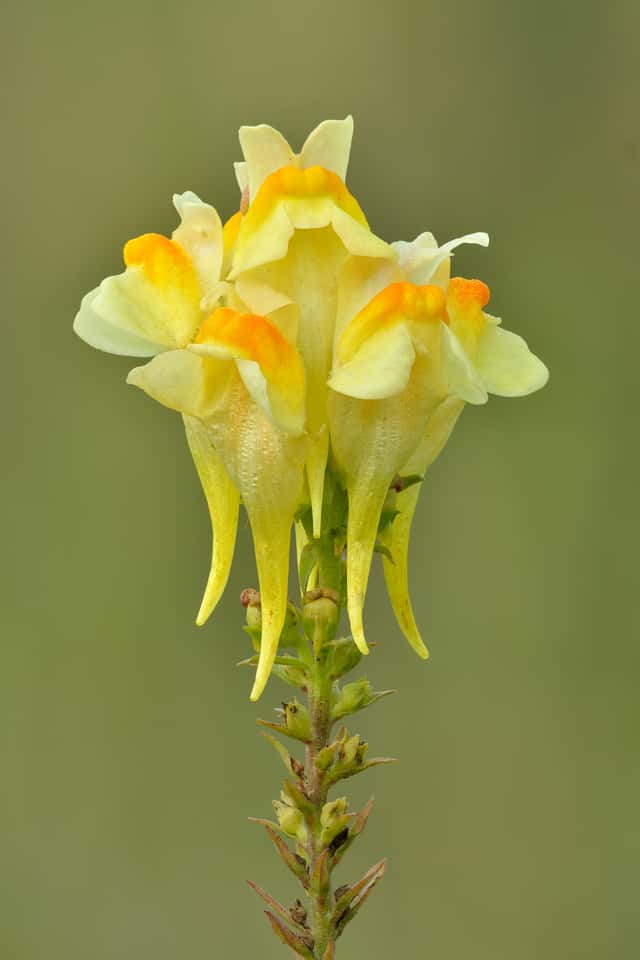
Yellow Toadflax — Linaria vulgaris
Linaria vulgaris
A tough, low-maintenance outdoor perennial that thrives in full sun and well-drained sandy soils. Extremely drought-tolerant once established. Spreads by rhizomes and self-seeds freely — best suited for wildflower gardens, roadsides, or naturalized areas.
Every 10 days
Direct sun
-20° - 30°C
30% - 60%
Categories
What is Yellow Toadflax?
Yellow Toadflax (Linaria vulgaris) is a easy-care plant from the Plantaginaceae family. Linaria vulgaris, commonly known as Yellow Toadflax or Butter and Eggs, is a perennial plant in the family Plantaginaceae, native to Europe and temperate Asia. It produces cheerful yellow and orange snapdragon-like flowers from midsummer through autumn and is highly drought-tolerant once established...
Yellow Toadflax grows up to 90cm, spread of 30cm, watering every 10 days, -20°C – 30°C, 30–60% humidity. It is not suitable for indoor environments and not safe for pets.
Unlike many tropical plants, Yellow Toadflax tolerates watering mistakes. Best for beginners. Without precautions, ingestion can cause irritation in pets. Keep out of reach of cats and dogs.
How to Care for Yellow Toadflax?
TLDR: Yellow Toadflax needs Direct sun, watering every 10 days, and temperatures between -20-30°C with 30-60% humidity.
How Often Should You Water Yellow Toadflax?
Water moderately during the establishment period. Once established, water only during extended dry spells, roughly every 10 days. Avoid waterlogged soil as this plant is very drought-tolerant and susceptible to root rot in wet conditions.
How Much Light Does Yellow Toadflax Need?
Requires full sun (at least 6 hours of direct sunlight daily) to flower abundantly. Tolerates partial shade but will produce fewer blooms.
What Is the Best Soil for Yellow Toadflax?
Thrives in light, sandy, well-drained soils. Tolerates poor, rocky, and alkaline soils (pH 6.5–8.0). Avoid heavy clay or waterlogged soils.
What Pot Should You Use for Yellow Toadflax?
Terra cotta pots with drainage holes are suitable, though this plant is best grown in outdoor beds where it can spread naturally.
Care Schedule
Fertilize
Every 60 days
What Is Yellow Toadflax and Where Does It Come From?
Linaria vulgaris, commonly known as Yellow Toadflax or Butter and Eggs, is a perennial plant in the family Plantaginaceae, native to Europe and temperate Asia. It produces cheerful yellow and orange snapdragon-like flowers from midsummer through autumn and is highly drought-tolerant once established. While valued as an ornamental and historically used in folk medicine, it is considered invasive in parts of North America.
How to Propagate Yellow Toadflax?
Direct Seeding
Autumn sowing produces stronger plants. Does not transplant well — sow in situ.
- 1 Sow seeds directly in the final location in spring or autumn
- 2 Press lightly into soil surface — seeds need light to germinate
- 3 Keep soil moist until germination
- 4 Thin seedlings to 15–20 cm spacing
Materials needed:
Crown Division
Best method for propagating established plants. Divide before new shoots emerge.
- 1 Divide established clumps in early spring
- 2 Replant divisions at final location
- 3 Water well after planting
Materials needed:
How Big Does Yellow Toadflax Grow?
TLDR: Yellow Toadflax can reach up to 90cm tall with Fast growth rate.
Max height
90cm
Spread
30cm
Growth rate
Fast
Foliage
Deciduous
Warning: Toxic Plant
This plant can be toxic if ingested. Keep out of reach of:
Plant Uses
Ornamental
Great for decoration
Medicinal
Medicinal properties
Medicinal Uses
- Historically used as a diuretic and laxative in European folk medicine
- Leaf tea used to treat jaundice, skin diseases, and oedema
- Plant extracts used as natural insecticide
Culinary Uses
- Young shoots edible when cooked — use with caution as plant is mildly toxic
Is your plant showing symptoms?
Click on the symptom to discover possible causes:
What Diseases Commonly Affect Yellow Toadflax?
TLDR: Yellow Toadflax is susceptible to 5 known diseases. Monitor regularly for early detection.
Aphids
Aphids are small, soft-bodied, pear-shaped insects (1/16 to 1/8 inch long) that feed by sucking nutrient-rich sap from plants. They reproduce rapidly and can quickly weaken plants, causing distorted growth and transmitting plant viruses. Aphids come in various colors including green, black, red, yellow, brown, and gray. They secrete honeydew, a sticky substance that attracts ants and encourages sooty mold growth.
Powdery Mildew
Powdery mildew is a common fungal disease caused by various fungi species including Erysiphe, Podosphaera, Oïdium, and Leveillula. It affects over 10,000 plant species worldwide. The disease thrives in warm, dry climates with high humidity and appears as a distinctive white powdery coating on plant surfaces.
Downy Mildew
Downy mildew is a fungal-like disease caused by oomycetes (water molds) that thrives in cool, wet conditions. It affects a wide range of plants, causing yellowing leaves with fuzzy white-gray growth underneath, leading to defoliation and reduced yields if left untreated.
Anthracnose
Anthracnose is a fungal disease caused by fungi in the genus Colletotrichum that affects many plants, including vegetables, fruits, and trees. The disease thrives in cool, wet conditions, causing dark, sunken lesions on leaves, stems, flowers, and fruits.
Fun Facts
The flowers mimic snapdragons and can only be opened by heavy bumblebees — the plant's pollination strategy is highly specialized
Yellow Toadflax was historically used in Europe to make a yellow fabric dye from its flowers and whole plant
It is native to Europe and Asia but has naturalized across North America, where it is listed as invasive in several states
Frequently asked questions
How often should I water Yellow Toadflax?
Is Linaria vulgaris toxic to cats and dogs?
Is Yellow Toadflax invasive?
What pests affect Yellow Toadflax?
Compare with similar plants
| Attribute | Difficulty | Light | Watering | Pet Safe |
|---|---|---|---|---|
| Field Maple | Easy | Bright indirect | 14d | ✓ |
| Silver Birch | Easy | Direct sun | 14d | ✓ |
| Common Blanketflower | Easy | Direct sun | 10d | ✓ |
| Cushion Bush | Easy | Direct sun | 14d | ✓ |





