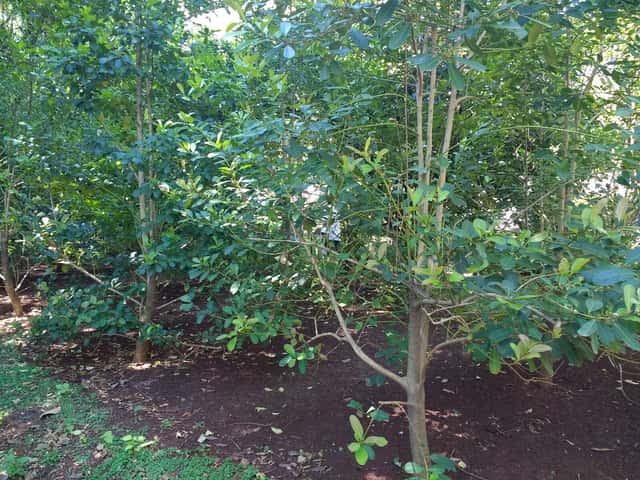
Aquifoliaceae
Yerba Mate: Edible Plant
Ilex paraguariensis
Prefers full sun to partial shade, with 4 to 6 hours of direct light per day, in fertile, well-drained, and slightly acidic soil rich in organic matter. Water frequently to keep the soil uniformly moist without waterlogging, and protect young plants from heavy frosts.
Every 4 days
Bright indirect
18° - 25°C
% - %
Categories
What is Yerba Mate?
Yerba Mate (Ilex paraguariensis) is a medium-care plant from the Aquifoliaceae family. Yerba mate (Ilex paraguariensis) is an evergreen tree or shrub in the Aquifoliaceae family, native to the subtropical regions of southern Brazil, Paraguay, Argentina, and Uruguay. Its leathery, dark green leaves are the base for chimarrão and tereré, traditional South American beverages rich in caff...
Yerba Mate grows up to 8.0m, spread of 400cm, watering every 4 days, 18°C – 25°C. It is suitable for indoor environments and not safe for pets.
Without precautions, ingestion can cause irritation in pets. Keep out of reach of cats and dogs. Without adequate drainage, root rot can develop within 8 days.
How to Care for Yerba Mate?
TLDR: Yerba Mate needs Bright indirect, watering every 4 days, and temperatures between 18-25°C with 40-70% humidity.
How Often Should You Water Yerba Mate?
Keep the soil consistently slightly moist, watering every 3-4 days in the summer; allow the surface to dry slightly between waterings in the winter. Wilted leaves and dry edges indicate a lack of water; yellowing leaves and soft roots indicate overwatering.
How Much Light Does Yerba Mate Need?
Grow in a location with full sun to partial shade, ensuring at least 4 to 6 hours of direct sunlight per day. Young seedlings tolerate more shade; adult plants can withstand full sun.
What Is the Best Soil for Yerba Mate?
Use a fertile substrate, rich in organic matter and well-drained, with a slightly acidic pH between 5.5 and 6.5. Add a layer of mulch to conserve soil moisture and temperature.
What Pot Should You Use for Yerba Mate?
Prefer large ceramic or plastic pots with good drainage holes, as yerba mate develops deep roots; repot every 2-3 years.
Care Schedule
Repot
Every 900 days
What Is Yerba Mate and Where Does It Come From?
Yerba mate (Ilex paraguariensis) is an evergreen tree or shrub in the Aquifoliaceae family, native to the subtropical regions of southern Brazil, Paraguay, Argentina, and Uruguay. Its leathery, dark green leaves are the base for chimarrão and tereré, traditional South American beverages rich in caffeine and antioxidants. In the wild, it can reach up to 15 meters in height, but in cultivation, it is generally maintained as a pruned shrub between 3 and 8 meters.
How to Propagate Yerba Mate?
Sowing
Scarification is essential to improve germination, which is naturally slow and uneven.
- 1 Scarify the seeds by soaking them in warm water for 12 to 24 hours
- 2 Sow about 1-2 cm deep in fertile, well-drained substrate
- 3 Keep moist and in a shaded spot until germination, which can take several weeks
- 4 Transplant seedlings when they reach 15-20 cm in height
Materials needed:
Stem Cuttings
Use healthy semi-woody branches; rooting hormone improves the success rate.
- 1 Cut 10-15 cm cuttings from healthy branches, removing the lower leaves
- 2 Apply rooting hormone to the base of the cut
- 3 Plant in a light substrate and maintain constant humidity
- 4 Wait for rooting in a shaded and protected location
Materials needed:
Layering
A slower but reliable method for adult plants with flexible branches.
- 1 Bend a low, flexible branch down to the ground
- 2 Make a small cut in the bark at the point of contact and cover with soil
- 3 Keep the area consistently moist until rooting occurs
- 4 Separate the new plant from the mother plant after rooting
Materials needed:
How Big Does Yerba Mate Grow?
TLDR: Yerba Mate can reach up to 8.0m tall with Slow growth rate.
Max height
8.0m
Spread
4.0m
Growth rate
Slow
Foliage
Evergreen
Warning: Toxic Plant
This plant can be toxic if ingested. Keep out of reach of:
Plant Uses
Edible
Can be consumed
Medicinal
Medicinal properties
Ornamental
Great for decoration
Medicinal Uses
- Traditionally used as a digestive stimulant and mild diuretic
- Rich in antioxidants (polyphenols) associated with anti-inflammatory effects
- Popularly used to increase alertness due to its caffeine content
Culinary Uses
- Dried and crushed leaves used in the preparation of chimarrão and tereré
- Used in extracts and infusions for teas and energy drinks
- Used as an ingredient in ice creams, liqueurs, and regional sweets
Is your plant showing symptoms?
Click on the symptom to discover possible causes:
What Diseases Commonly Affect Yerba Mate?
TLDR: Yerba Mate is susceptible to 6 known diseases. Monitor regularly for early detection.
Scale Insects
Scale insects are small sap-sucking pests that appear as brown, shell-like bumps on plant stems and leaves. There are over 25 species, divided into armored (hard) and unarmored (soft) scales. They feed by piercing plant tissue and extracting sap, which weakens the plant and can lead to yellowing, stunted growth, and even death if left untreated. They also excrete honeydew, which attracts ants and promotes sooty mold growth.
Spider Mites
Spider mites are tiny arachnids (less than 1/20 inch long) related to spiders and ticks that feed on plant sap. They thrive in hot, dry conditions and can cause significant damage to ornamental and vegetable plants. During severe infestations, crop losses can reach 14% or higher as these pests disrupt vital plant processes including photosynthesis, carbon dioxide absorption, and transpiration.
Root Rot
Root rot is a serious fungal disease that affects the root system of plants, causing them to decay and die. It is primarily caused by overwatering, poor drainage, or soil-borne fungi such as Pythium, Phytophthora, Rhizoctonia, and Fusarium. The disease thrives in waterlogged conditions where roots are deprived of oxygen, making them susceptible to fungal infection.
Powdery Mildew
Powdery mildew is a common fungal disease caused by various fungi species including Erysiphe, Podosphaera, Oïdium, and Leveillula. It affects over 10,000 plant species worldwide. The disease thrives in warm, dry climates with high humidity and appears as a distinctive white powdery coating on plant surfaces.
Meaning & Symbolism
Yerba mate is a symbol of hospitality, friendship, and sharing in the culture of southern Brazil, Argentina, Paraguay, and Uruguay—sharing chimarrão is a social ritual that represents welcoming and unity.
Compare with similar plants
| Attribute | Difficulty | Light | Watering | Pet Safe |
|---|---|---|---|---|
| Dark Fieldcap | Medium | Low light | 2d | ⚠️ |
| Azalea | Medium | Partial shade | 3d | ⚠️ |
| Muriel's Bamboo | Medium | Partial shade | 3d | ✓ |
| Bougainvillea | Medium | Direct sun | 7d | ⚠️ |




