Solanaceae
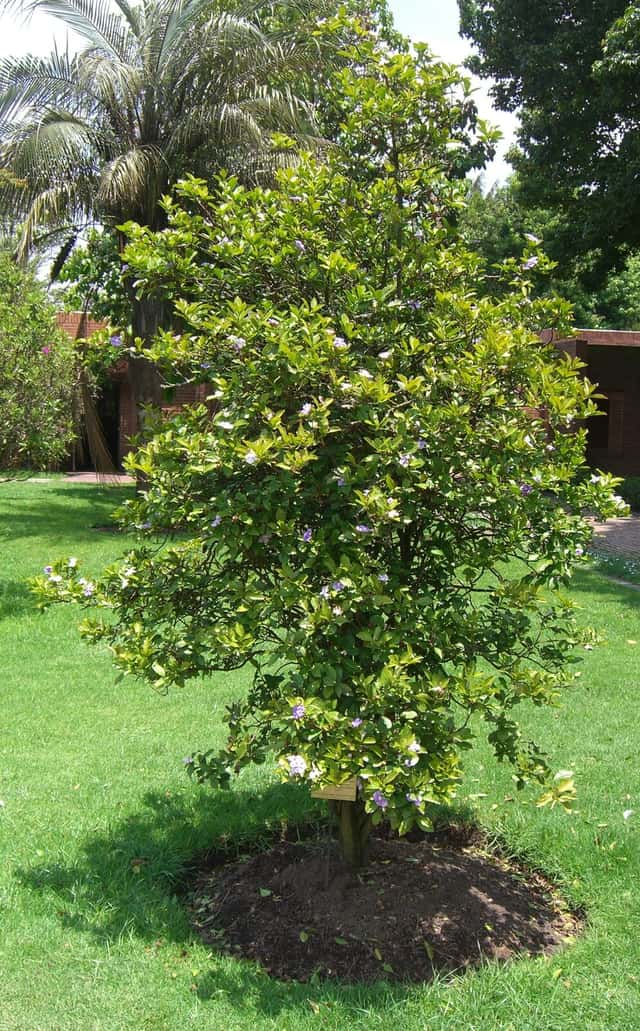
Yesterday-Today-and-Tomorrow (Brunfelsia pauciflora)
Brunfelsia pauciflora
A shrub for partial shade and acidic, humus-rich soil kept evenly moist. It grows outdoors in frost-free climates (USDA 9-11) and as a container plant elsewhere. All parts are toxic to pets and people, especially the fruit.
Every 4 days
Partial shade
10° - 32°C
50% - 80%
Categories
What is Yesterday-today-and-tomorrow plant?
Yesterday-today-and-tomorrow plant (Brunfelsia pauciflora) is a medium-care plant from the Solanaceae family. Yesterday-today-and-tomorrow (Brunfelsia pauciflora, formerly Brunfelsia calycina) is an evergreen shrub in the nightshade family, endemic to the Serra do Mar slopes of southeastern Brazil. It reaches about 2.4 m, has glossy dark green leaves and, from spring into summer, 5 cm flowers that open purp...
Yesterday-today-and-tomorrow plant grows up to 2.4m, spread of 150cm, watering every 4 days, 10°C – 32°C, 50–80% humidity. It is suitable for indoor environments and not safe for pets.
Without precautions, ingestion can cause irritation in pets. Keep out of reach of cats and dogs. Without adequate drainage, root rot can develop within 8 days.
How to Care for Yesterday-today-and-tomorrow plant?
TLDR: Yesterday-today-and-tomorrow plant needs Partial shade, watering every 4 days, and temperatures between 10-32°C with 50-80% humidity.
How Often Should You Water Yesterday-today-and-tomorrow plant?
Keep the soil evenly moist but never soggy, which usually means watering every 3 to 4 days in summer. Water less after flowering and through winter. Waterlogging yellows the leaves.
How Much Light Does Yesterday-today-and-tomorrow plant Need?
Best in partial shade or morning sun with midday shade; harsh all-day sun scorches the flowers. Indoors, give it bright light near a window.
What Is the Best Soil for Yesterday-today-and-tomorrow plant?
Use acidic (pH below 6), humus-rich, well-drained soil. In alkaline soil the leaves yellow from iron deficiency; ericaceous mix works well.
What Pot Should You Use for Yesterday-today-and-tomorrow plant?
A large pot with drainage holes and an acidic, humus-rich mix. Containers keep the plant compact; pot on or top-dress in late winter.
Care Schedule
Fertilize
Every 21 days
Repot
Every 365 days
What Is Yesterday-today-and-tomorrow plant and Where Does It Come From?
Yesterday-today-and-tomorrow (Brunfelsia pauciflora, formerly Brunfelsia calycina) is an evergreen shrub in the nightshade family, endemic to the Serra do Mar slopes of southeastern Brazil. It reaches about 2.4 m, has glossy dark green leaves and, from spring into summer, 5 cm flowers that open purple with a white eye, fade to lavender and finish white, so three colors show on the plant at once.
How to Propagate Yesterday-today-and-tomorrow plant?
Softwood cuttings
Prunings from the after-flowering trim make good cuttings. Wear gloves: the sap is toxic and can irritate skin.
- 1 In spring or summer, take 10 to 15 cm tips from new shoots
- 2 Strip the lower leaves and dip the base in rooting hormone
- 3 Insert into a light, moist mix
- 4 Keep warm, humid and in bright indirect light until rooted
Materials needed:
Seed
Seedlings are slow to flower; cuttings are the usual method.
- 1 Sow in early spring in a tray of light mix
- 2 Keep moist and warm in a sheltered spot
- 3 Pot on seedlings once they have a few leaves
Materials needed:
How Big Does Yesterday-today-and-tomorrow plant Grow?
TLDR: Yesterday-today-and-tomorrow plant can reach up to 2.4m tall with Slow growth rate.
Max height
2.4m
Spread
1.5m
Growth rate
Slow
Foliage
Evergreen
Warning: Toxic Plant
This plant can be toxic if ingested. Keep out of reach of:
Plant Uses
Ornamental
Great for decoration
Aromatic
Pleasant fragrance
Is your plant showing symptoms?
Click on the symptom to discover possible causes:
What Diseases Commonly Affect Yesterday-today-and-tomorrow plant?
TLDR: Yesterday-today-and-tomorrow plant is susceptible to 8 known diseases. Monitor regularly for early detection.
Spider Mites
Spider mites are tiny arachnids (less than 1/20 inch long) related to spiders and ticks that feed on plant sap. They thrive in hot, dry conditions and can cause significant damage to ornamental and vegetable plants. During severe infestations, crop losses can reach 14% or higher as these pests disrupt vital plant processes including photosynthesis, carbon dioxide absorption, and transpiration.
Whiteflies
Whiteflies are small, soft-bodied, winged insects closely related to aphids and mealybugs. They are moth-like in appearance, about 1/16 inch long, triangular in shape, and gray-white in color. These sap-sucking pests feed on plant tissue, causing yellowing, stunted growth, and wilting. They also excrete honeydew, which attracts ants and promotes sooty mold growth. Whiteflies can transmit serious plant viruses.
Thrips
Thrips are tiny cigar-shaped insects (1/25-inch long) that damage plants by sucking plant juices and scraping at fruits, flowers, and leaves. With over 6,000 species and rapid reproduction (lifecycle as short as 14 days), they can quickly infest plants and transmit viruses like tomato spotted wilt virus.
Mealybugs
Mealybugs are small, soft-bodied insects covered with a white, waxy, cottony material. They are common pests of houseplants and outdoor plants in mild climates. These sap-sucking insects feed on plant tissue, causing damage, stunted growth, and can lead to plant death if left untreated. They produce sticky honeydew which attracts sooty mold.
Meaning & Symbolism
The flowers shift from purple to lavender to white, showing three colors at once, so the plant stands for the passage of time and change.
Fun Facts
Brunfelsia calycina is the older name for the same plant.
The genus honors Otto Brunfels, a 16th-century German monk and botanist.
It holds the Royal Horticultural Society Award of Garden Merit.
Frequently asked questions
Why do yesterday-today-and-tomorrow flowers change color?
Is yesterday-today-and-tomorrow poisonous to dogs and cats?
How often should I water Brunfelsia pauciflora?
Why are my Brunfelsia leaves turning yellow?
When should I prune yesterday-today-and-tomorrow?
Compare with similar plants
| Attribute | Difficulty | Light | Watering | Pet Safe |
|---|---|---|---|---|
| Dark Fieldcap | Medium | Low light | 2d | ⚠️ |
| Azalea | Medium | Partial shade | 3d | ⚠️ |
| Muriel's Bamboo | Medium | Partial shade | 3d | ✓ |
| Bougainvillea | Medium | Direct sun | 7d | ⚠️ |




