Bromeliaceae
Zebra Plant (Cryptanthus zonatus)
Cryptanthus zonatus
Bright light without harsh sun, warmth (never below 15 °C), a light, free-draining mix and humid air. Water moderately while it is growing and less in winter, mist the leaves with lukewarm water and feed once a month with diluted fertilizer. The biggest risk is too much water: soggy soil rots the roots and the center of the plant.
Every 7 days
Partial shade
15° - 30°C
50% - %
Categories
What is Zebra Plant?
Zebra Plant (Cryptanthus zonatus) is a medium-care plant from the Bromeliaceae family. Cryptanthus zonatus is a ground-dwelling bromeliad in the family Bromeliaceae, endemic to northeastern Brazil, where it grows on the Atlantic Forest floor. It forms a low, flat rosette up to 10 cm tall and 10 to 50 cm across. The leaves are narrow, wavy and finely toothed at the edges, dark green to...
Zebra Plant grows up to 10cm, spread of 50cm, watering every 7 days, 15°C – 30°C. It is suitable for indoor environments and safe for pets.
Unlike many popular species, Zebra Plant is safe to keep around pets. Without adequate drainage, root rot can develop within 14 days.
How to Care for Zebra Plant?
TLDR: Zebra Plant needs Partial shade, watering every 7 days, and temperatures between 15-30°C with 50-70% humidity.
How Often Should You Water Zebra Plant?
Water when the top of the mix is almost dry, roughly once a week in warm weather. Keep the mix moist but never soggy, and do not leave water standing in the saucer. Water less in winter. Use soft, room-temperature water and mist the leaves regularly.
How Much Light Does Zebra Plant Need?
It prefers bright filtered light or partial shade, such as near a window with a sheer curtain. Strong direct sun scorches the leaves; in low light the silver bands fade and the plant loses color.
What Is the Best Soil for Zebra Plant?
Use a terrestrial bromeliad mix or a light blend of potting soil, coarse sand and perlite. It should hold a little moisture and drain well; slightly acidic pH is best.
What Pot Should You Use for Zebra Plant?
A small, shallow pot (10 to 15 cm) with a drainage hole. Terrariums and open bottle gardens also work well because they keep the air humid.
Care Schedule
Fertilize
Every 30 days
Misting
Every 7 days
What Is Zebra Plant and Where Does It Come From?
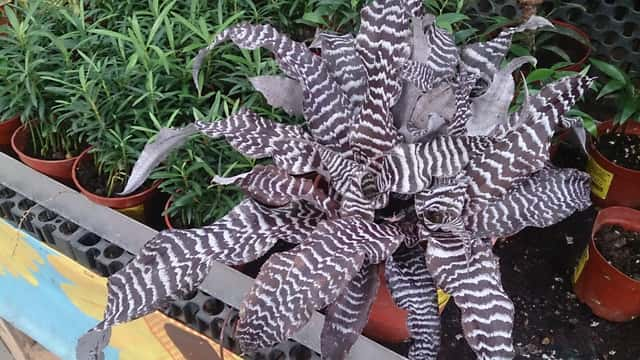
Cryptanthus zonatus is a ground-dwelling bromeliad in the family Bromeliaceae, endemic to northeastern Brazil, where it grows on the Atlantic Forest floor. It forms a low, flat rosette up to 10 cm tall and 10 to 50 cm across. The leaves are narrow, wavy and finely toothed at the edges, dark green to coppery with silvery-grey crossbands like a zebra's stripes. In summer, small white flowers appear in the center of the rosette, half hidden among the leaves. It grows slowly and is grown for its foliage.
How to Propagate Zebra Plant?
Dividing pups
After flowering, the mother plant produces pups and slowly dies back; that is the natural time to propagate. Pups without roots take longer to establish.
- 1 Wait until the pup is about a third the size of the mother plant and has its own roots
- 2 Detach the pup from the base of the mother plant by hand or with a clean knife
- 3 Plant it in a small pot with bromeliad mix, without burying the center of the rosette
- 4 Keep the mix lightly moist and the pot somewhere bright and warm until it settles
Materials needed:
Seeds
Slow and rarely used at home; pups give an adult plant much sooner.
- 1 Sow as soon as the seed is ripe, on fine, moist mix
- 2 Keep at about 27 °C in a bright, humid spot
- 3 Transplant the seedlings once they are sturdy
Materials needed:
How Big Does Zebra Plant Grow?
TLDR: Zebra Plant can reach up to 10cm tall with Slow growth rate.
Max height
10cm
Spread
50cm
Growth rate
Slow
Foliage
Evergreen
Plant Uses
Ornamental
Great for decoration
Is your plant showing symptoms?
Click on the symptom to discover possible causes:
What Diseases Commonly Affect Zebra Plant?
TLDR: Zebra Plant is susceptible to 5 known diseases. Monitor regularly for early detection.
Root Rot
Root rot is a serious fungal disease that affects the root system of plants, causing them to decay and die. It is primarily caused by overwatering, poor drainage, or soil-borne fungi such as Pythium, Phytophthora, Rhizoctonia, and Fusarium. The disease thrives in waterlogged conditions where roots are deprived of oxygen, making them susceptible to fungal infection.
Crown Rot
Crown rot is a serious fungal disease that attacks the crown (base) of the plant where the stem meets the soil. It is caused by various fungal pathogens including Phytophthora, Fusarium, and Rhizoctonia. The disease thrives in waterlogged conditions and can quickly spread to kill the entire plant if not addressed promptly.
Mealybugs
Mealybugs are small, soft-bodied insects covered with a white, waxy, cottony material. They are common pests of houseplants and outdoor plants in mild climates. These sap-sucking insects feed on plant tissue, causing damage, stunted growth, and can lead to plant death if left untreated. They produce sticky honeydew which attracts sooty mold.
Scale Insects
Scale insects are small sap-sucking pests that appear as brown, shell-like bumps on plant stems and leaves. There are over 25 species, divided into armored (hard) and unarmored (soft) scales. They feed by piercing plant tissue and extracting sap, which weakens the plant and can lead to yellowing, stunted growth, and even death if left untreated. They also excrete honeydew, which attracts ants and promotes sooty mold growth.
Fun Facts
Unlike most bromeliads, which live on trees, the zebra plant grows on the forest floor
Each rosette flowers only once and then carries on through its pups
The name Cryptanthus means hidden flower, because the flowers sit tucked among the leaves
Frequently asked questions
Is the zebra plant toxic to cats and dogs?
Why is my zebra plant rotting in the center?
Can it take direct sun?
How do I propagate a zebra plant?
Compare with similar plants
| Attribute | Difficulty | Light | Watering | Pet Safe |
|---|---|---|---|---|
| Dark Fieldcap | Medium | Low light | 2d | ⚠️ |
| Azalea | Medium | Partial shade | 3d | ⚠️ |
| Muriel's Bamboo | Medium | Partial shade | 3d | ✓ |
| Bougainvillea | Medium | Direct sun | 7d | ⚠️ |
Choose & Compare
Sources & References
- RHS — Cryptanthus zonatus (zebra plant)
- POWO (Kew) — Cryptanthus zonatus
- ASPCA — Pheasant Plant / Zebra Plant (Cryptanthus zonatus)
- Wikipedia — Cryptanthus zonatus
- Gardening Know How — Cryptanthus Earth Star: how to grow Cryptanthus plants
- NParks Flora & Fauna Web — Cryptanthus 'Dennis Cathcart' (C. zonatus f. zonatus cultivar)




