Poaceae
Zoysia Grass: Ground Cover Plant
Zoysia japonica
Prefers full sun, tolerates light partial shade but thins out in dense shade. Deep, infrequent watering promotes strong roots and greater drought tolerance. Well-drained soil with a pH between 6.0 and 7.0. Maintain mowing height between 2.5 and 5 cm (1 to 2 inches), with fertilization 3 to 5 times per growing season.
Every 7 days
Direct sun
-18° - 38°C
% - %
Categories
What is Zoysia Grass?
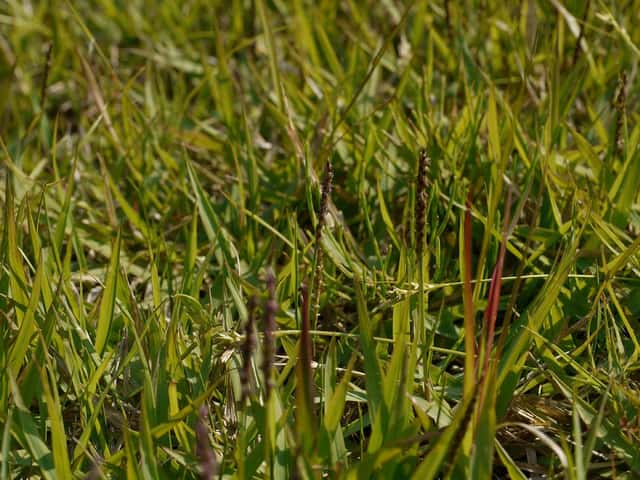
Zoysia Grass (Zoysia japonica) is a easy-care plant from the Poaceae family. Zoysia grass (Zoysia japonica) is a warm-season perennial grass native to East Asia, widely used in residential lawns and sports fields. It forms a dense, uniform mat due to vigorous growth via rhizomes (underground stems) and stolons (above-ground stems), making it effective in weed control. It is...
Zoysia Grass grows up to 15cm, spread of 100cm, watering every 7 days, -18°C – 38°C. It is not suitable for indoor environments and safe for pets.
Unlike many tropical plants, Zoysia Grass tolerates watering mistakes. Best for beginners. Unlike many popular species, Zoysia Grass is safe to keep around pets.
How to Care for Zoysia Grass?
TLDR: Zoysia Grass needs Direct sun, watering every 7 days, and temperatures between -18-38°C with 40-70% humidity.
How Often Should You Water Zoysia Grass?
Water deeply and infrequently, applying about 2.5 cm (1 inch) of water per week only when the grass shows signs of wilting. Allow the soil to dry out between waterings to encourage deep roots; once established, Zoysia grass can tolerate weeks without rain by entering dormancy.
How Much Light Does Zoysia Grass Need?
Thrives best in full sun (6 hours or more of direct light per day). Tolerates light partial shade, but in dense shade, the lawn becomes sparse and more susceptible to diseases.
What Is the Best Soil for Zoysia Grass?
Adapts to sandy, clay, or loamy soils, provided they are well-drained. The ideal pH is between 6.0 and 7.0, although it tolerates wider ranges (5.5 to 8.5).
What Pot Should You Use for Zoysia Grass?
This is not a species typically grown in pots — it is intended for lawns and outdoor areas. For ornamental use in borders or clumps, prefer wide, shallow containers with good drainage.
Care Schedule
Fertilize
Every 60 days
What Is Zoysia Grass and Where Does It Come From?
Zoysia grass (Zoysia japonica) is a warm-season perennial grass native to East Asia, widely used in residential lawns and sports fields. It forms a dense, uniform mat due to vigorous growth via rhizomes (underground stems) and stolons (above-ground stems), making it effective in weed control. It is slow-growing, which reduces mowing frequency, and exhibits excellent heat and drought tolerance. In colder climates, it loses its green color and turns golden/straw-colored during winter dormancy, regaining vigor in spring.
How to Propagate Zoysia Grass?
Plugs
- 1 Cut small squares (plugs) from an established Zoysia grass sod
- 2 Plant the plugs spaced 15 to 30 cm (6 to 12 inches) apart in prepared and leveled soil
- 3 Water daily for the first 2 weeks until rooting occurs
- 4 Gradually reduce watering frequency as the grass spreads and covers the soil
Materials needed:
Seeds
- 1 Sow in prepared soil during late spring or early summer, when the soil is warm
- 2 Keep the soil surface lightly moist until germination
- 3 Avoid walking on the area until the grass is well established
- 4 First mowing only after the grass reaches about 5-8 cm (2-3 inches) in height
Materials needed:
How Big Does Zoysia Grass Grow?
TLDR: Zoysia Grass can reach up to 15cm tall with Slow growth rate.
Max height
15cm
Spread
1.0m
Growth rate
Slow
Foliage
Semi-evergreen
Plant Uses
Ground Cover
Soil coverage
Ornamental
Great for decoration
Is your plant showing symptoms?
Click on the symptom to discover possible causes:
What Diseases Commonly Affect Zoysia Grass?
TLDR: Zoysia Grass is susceptible to 3 known diseases. Monitor regularly for early detection.
Rust
Rust is a common fungal disease caused by fungi in the order Pucciniales that affects a wide variety of plants. The disease gets its name from the characteristic orange, yellow, or reddish-brown pustules that appear on leaves, resembling metal rust. This obligate fungal parasite requires living plants to survive and can cause significant economic losses in agricultural crops.
Leaf Spot
Leaf spot is a common fungal disease caused by various pathogens including Alternaria, Ascochyta, Colletotrichum, Septoria, and Venturia. It primarily affects leaves, causing discolored spots that can lead to premature leaf drop if left untreated.
Root-Knot Nematodes
Root-knot nematodes (Meloidogyne species) are microscopic roundworms that parasitize plant roots, causing characteristic galls or knots. These soil-borne pests are among the most economically damaging plant pathogens worldwide, affecting a wide range of ornamental and edible plants. The nematodes inject enzymes into root cells, causing abnormal swelling and disrupting water and nutrient uptake.
Meaning & Symbolism
As a resilient grass that thrives even in adverse conditions of drought and heat, Zoysia grass symbolizes resilience, perseverance, and the ability to recover after difficult periods.
Compare with similar plants
| Attribute | Difficulty | Light | Watering | Pet Safe |
|---|---|---|---|---|
| Field Maple | Easy | Bright indirect | 14d | ✓ |
| Muriel's Bamboo | Medium | Partial shade | 3d | ✓ |
| Silver Birch | Easy | Direct sun | 14d | ✓ |
| Common Blanketflower | Easy | Direct sun | 10d | ✓ |