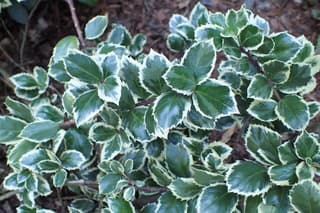
Blue Holly with Slow Growth: Causes & Solutions
Ilex × meserveae
Blue Holly is a plant that needs bright light and moderate watering. When showing slow growth, it may indicate issues related to its environment or care.
Is your Blue Holly showing slow growth? Discover 3 possible causes and how to treat them.
🔍 Possible Causes (3)
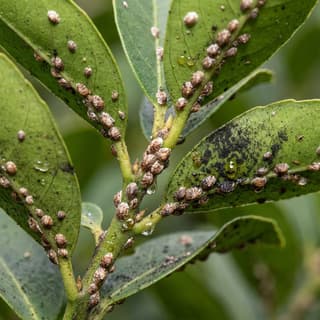
Scale Insects
Scale insects are small sap-sucking pests that appear as brown, shell-like bumps on plant stems and leaves. There are over 25 species, divided into armored (hard) and unarmored (soft) scales. They feed by piercing plant tissue and extracting sap, which weakens the plant and can lead to yellowing, stunted growth, and even death if left untreated. They also excrete honeydew, which attracts ants and promotes sooty mold growth.
✓ Related symptoms:
- • Stunted growth and reduced plant vigor
⚡ Quick Fixes:
Step 1
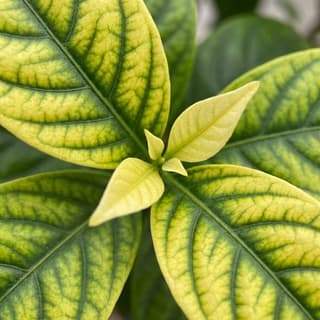
Iron Deficiency
Iron deficiency, commonly known as iron chlorosis, is a nutrient deficiency disorder where plants cannot access sufficient iron from the soil. While iron is typically abundant in soil, various soil conditions can limit plant uptake, resulting in characteristic yellowing of leaves while veins remain green.
✓ Related symptoms:
- • Poor overall growth and stunted development
⚡ Quick Fixes:
Step 1
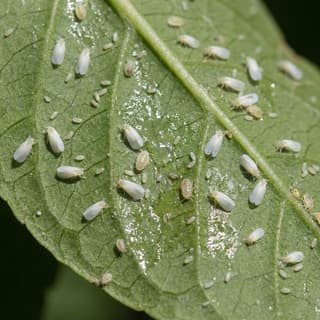
Whiteflies
Whiteflies are small, soft-bodied, winged insects closely related to aphids and mealybugs. They are moth-like in appearance, about 1/16 inch long, triangular in shape, and gray-white in color. These sap-sucking pests feed on plant tissue, causing yellowing, stunted growth, and wilting. They also excrete honeydew, which attracts ants and promotes sooty mold growth. Whiteflies can transmit serious plant viruses.
✓ Related symptoms:
- • Yellowing, wilting, and stunted growth of leaves
⚡ Quick Fixes:
Step 1