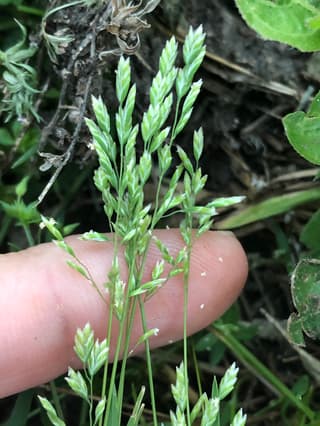
Annual Meadow Grass with Leaf Spots: Pet-Safe Treatment
Poa annua
Annual Meadow Grass is a plant that needs indirect light and infrequent watering. When showing leaf spots, it may indicate issues related to its environment or care.
Is your Annual Meadow Grass showing leaf spots? Discover 3 possible causes and how to treat them.
🔍 Possible Causes (3)
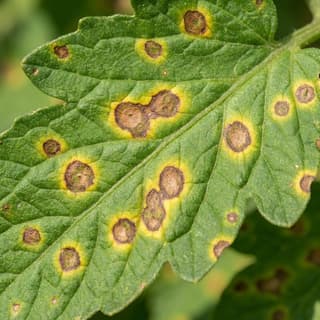
Leaf Spot
Leaf spot is a common fungal disease caused by various pathogens including Alternaria, Ascochyta, Colletotrichum, Septoria, and Venturia. It primarily affects leaves, causing discolored spots that can lead to premature leaf drop if left untreated.
✓ Related symptoms:
- • Circular brown, gray, black, or yellow spots on leaves
- • Spots with concentric rings or dark margins
- • Yellow halo surrounding spots
⚡ Quick Fixes:
Remove all visibly infected leaves
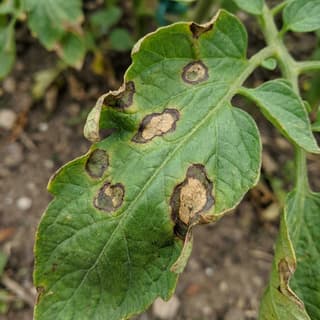
Anthracnose
Anthracnose is a fungal disease caused by fungi in the genus Colletotrichum that affects many plants, including vegetables, fruits, and trees. The disease thrives in cool, wet conditions, causing dark, sunken lesions on leaves, stems, flowers, and fruits.
✓ Related symptoms:
- • Small irregular yellow or brown spots on leaves
- • Dark sunken lesions on leaves, stems, flowers and fruits
- • Water-soaked lesions that darken as they age
⚡ Quick Fixes:
Remove and discard all visibly infected parts
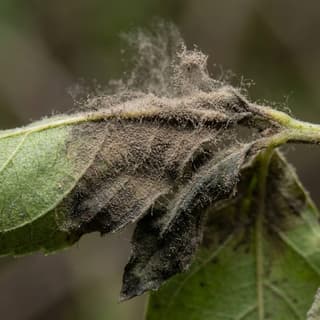
Gray Mold (Botrytis Blight)
Gray mold, caused by the fungus Botrytis cinerea, is a widespread necrotrophic pathogen affecting over 1,400 plant species. It thrives in cool, humid conditions and attacks weakened or aging plant tissues, causing soft rot and characteristic gray fuzzy growth.
✓ Related symptoms:
- • Soft, water-soaked brown lesions that rapidly expand
- • Ghost spots on fruits - small whitish rings from aborted infections
⚡ Quick Fixes:
Step 1