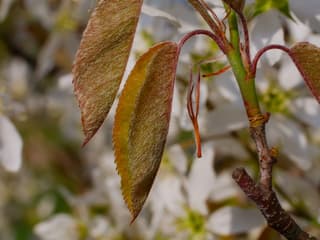
Juneberry with Wilting Leaves: Pet-Safe Treatment
Amelanchier × lamarckii
Juneberry is a plant that needs bright light and moderate watering. When showing wilting leaves, it may indicate issues related to its environment or care.
Is your Juneberry showing wilting leaves? Discover 3 possible causes and how to treat them.
🔍 Possible Causes (3)
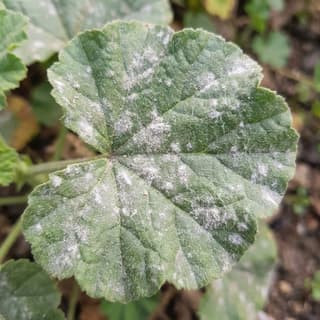
Powdery Mildew
Powdery mildew is a common fungal disease caused by various fungi species including Erysiphe, Podosphaera, Oïdium, and Leveillula. It affects over 10,000 plant species worldwide. The disease thrives in warm, dry climates with high humidity and appears as a distinctive white powdery coating on plant surfaces.
✓ Related symptoms:
- • Early wilting and leaf browning
⚡ Quick Fixes:
Remove heavily infected areas
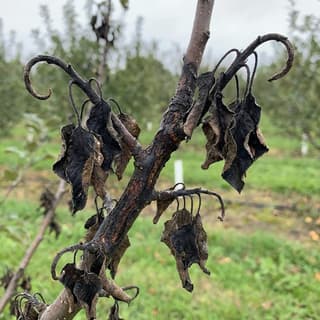
Fire Blight
Fire blight is a highly destructive and contagious bacterial disease caused by Erwinia amylovora. It primarily affects plants in the Rosaceae family, including apple, pear, quince trees, and various ornamental plants. The disease can destroy an entire orchard in a single growing season under ideal conditions, with the bacterium moving approximately 11 inches per week in new growth.
✓ Related symptoms:
- • Flowers and flower clusters appear water-soaked, then droop and shrivel, turning brown or black
- • Young shoots wilt forming the characteristic shepherd's crook hook shape
⚡ Quick Fixes:
Immediate Pruning
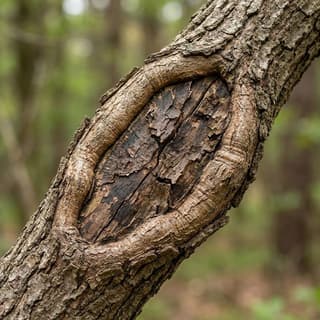
Canker
Canker is a disease caused by various fungi and bacteria that create necrotic, sunken areas on bark of branches, stems, and trunks. Pathogens enter through wounds and natural openings, especially when plants are stressed. Canker can gradually weaken or kill branches by disrupting water and nutrient flow.
✓ Related symptoms:
- • Wilting foliage above infection site
⚡ Quick Fixes:
Identify and mark all branches with canker