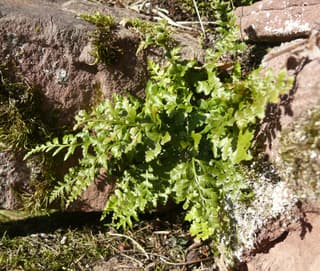
Black Spleenwort with Yellow Leaves: Pet-Safe Treatment
Asplenium adiantum-nigrum
Black Spleenwort is a plant that needs low light and moderate watering. When showing yellow leaves, it may indicate issues related to its environment or care.
Is your Black Spleenwort showing yellow leaves? Discover 3 possible causes and how to treat them.
🔍 Possible Causes (3)
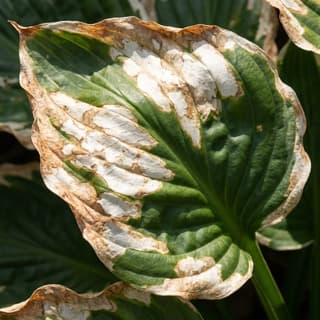
Sunburn (Sun Scorch)
Sunburn or sun scorch is an environmental condition that occurs when plants are exposed to intense, direct sunlight beyond their tolerance level. This causes the breakdown of chlorophyll in the leaves, resulting in bleached, dried, and damaged foliage. The damage can happen rapidly, sometimes within just a few hours of exposure.
✓ Related symptoms:
- • Affected areas turn yellow, then brown, and become brittle
⚡ Quick Fixes:
Step 1
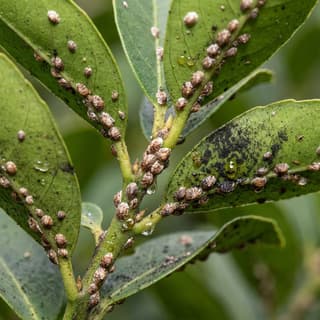
Scale Insects
Scale insects are small sap-sucking pests that appear as brown, shell-like bumps on plant stems and leaves. There are over 25 species, divided into armored (hard) and unarmored (soft) scales. They feed by piercing plant tissue and extracting sap, which weakens the plant and can lead to yellowing, stunted growth, and even death if left untreated. They also excrete honeydew, which attracts ants and promotes sooty mold growth.
✓ Related symptoms:
- • Yellowing or chlorotic (pale) leaves
⚡ Quick Fixes:
Step 1
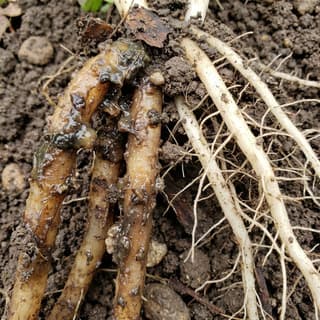
Root Rot
Root rot is a serious fungal disease that affects the root system of plants, causing them to decay and die. It is primarily caused by overwatering, poor drainage, or soil-borne fungi such as Pythium, Phytophthora, Rhizoctonia, and Fusarium. The disease thrives in waterlogged conditions where roots are deprived of oxygen, making them susceptible to fungal infection.
✓ Related symptoms:
- • Yellowing or browning of leaves
⚡ Quick Fixes:
Emergency unpotting