Amazon Water Lily Prone to Boron Deficiency: How to Protect
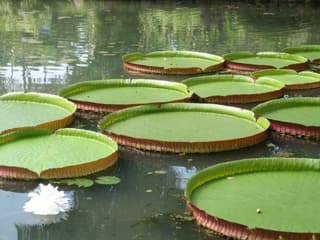
Victoria amazonica
Boron Deficiency on Amazon Water Lily: What to Know?
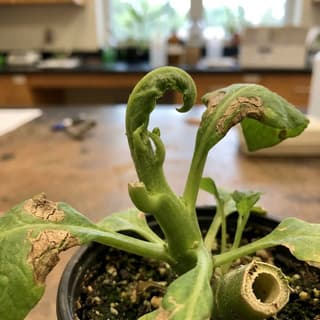
Boron Deficiency on Amazon Water Lily (Victoria amazonica) is a nutrient_deficiency condition with moderate severity. Amazon Water Lily has high susceptibility to this disease. Boron deficiency is a nutrient disorder that affects plant growth and development, particularly at growing points. Boron is essential for cell wall formation, reproductive development, and carbohydrat...
Amazon Water Lily is a hard-care plant. Recovery from Boron Deficiency takes approximately 35 days with proper treatment.
Amazon Water Lily is highly susceptible to Boron Deficiency, unlike most plants in the same family. Without early intervention, recovery takes 53 days instead of 35 days.
🔍 What Does Boron Deficiency Look Like on Amazon Water Lily?
- • Dying or brown growing tips and terminal buds
- • Stunted, bushy growth with shortened stem segments
- • Young leaves become thick, brittle, wrinkled or distorted
- • Yellowing (chlorosis) of young foliage
- • Brown necrotic spots on leaf tips and margins
- • Poor root development with stubby, thickened roots
- • Flower abortion and poor fruit set
- • Hollow stems or internal browning in severe cases
❓ What Causes Boron Deficiency on Amazon Water Lily?
- → Low boron levels in soil or growing medium
- → High pH conditions (above 6.5) that reduce boron availability
- → Sandy or heavily leached soils with low organic matter
- → Drought or low soil moisture preventing boron uptake
- → Excessive calcium or potassium interfering with boron absorption
- → Cold soil temperatures limiting nutrient uptake
💊 How to Treat Boron Deficiency on Amazon Water Lily?
TLDR: Treat Boron Deficiency on Amazon Water Lily with quick treatment (~21 days) or organic (~35 days). Amazon Water Lily has high susceptibility to this disease.
Quick Fixes
Identify symptoms quickly
Confirm dying growing tips, stunted bushy growth, and brittle leaves indicate boron deficiency.
Check soil pH
Use pH meter or test strips. If pH is above 6.5, boron is locked up.
Prepare foliar spray
Mix 1/4 teaspoon of borax per gallon of water. Add a drop of dish soap as surfactant.
Apply foliar spray
Spray leaf surfaces (especially undersides) early morning or evening. Foliar application provides fast uptake.
Soil drench application
Mix 1 teaspoon borax per gallon water and drench root zone. Use 1 cup per plant for containers, more for garden beds.
Flush with water
After 2-3 days, water plants thoroughly to distribute boron and prevent localized toxicity.
Monitor response
Watch new growth over 1-2 weeks. If improvement stalls, consider pH adjustment or reapplication.
Organic Treatment
Confirm deficiency
Examine symptoms carefully: dying growing tips, thick brittle leaves, and poor flowering indicate boron deficiency.
Test pH levels
Check soil or growing medium pH. If above 6.5, boron is likely locked up and unavailable.
Adjust pH naturally
If pH is high, apply sulfur or organic acidifiers to bring pH down to 5.5-6.5 range.
Apply compost
Work 2-3 inches of well-aged compost into soil or top-dress container plants. Compost provides slow-release boron.
Apply kelp or seaweed
Water with liquid kelp or seaweed extract (follow label rates). These are naturally rich in boron and other trace minerals.
Prepare borax solution
Dissolve 1 teaspoon of household borax in 1 gallon of water. This creates a safe, dilute boron solution.
Apply borax carefully
Water plants with borax solution once, using about 1 cup per square foot. Do NOT over-apply as boron toxicity is easy to cause.
Ensure proper watering
Keep soil consistently moist (not waterlogged). Boron uptake requires adequate moisture.
Monitor new growth
Watch for healthier new leaves and growing tips over the next 2-4 weeks. Recovery is gradual.
🛡️ How to Prevent Boron Deficiency on Amazon Water Lily?
TLDR: Prevent Boron Deficiency on Amazon Water Lily with 6 essential preventive care practices.
- ✓ Maintain soil pH between 5.0-6.5 for optimal boron availability
- ✓ Incorporate organic matter (compost) to improve boron retention
- ✓ Ensure consistent moisture levels; avoid prolonged drought
- ✓ Test soil regularly and apply boron only when needed
- ✓ Avoid over-liming which raises pH and locks up boron
- ✓ Use balanced fertilizers that include micronutrients
🌱 How to Care for Amazon Water Lily to Prevent Boron Deficiency?
💧 How to Water
Victoria amazonica lives in an aquatic environment and requires permanently standing water. Maintain water depth between 90-120 cm (3-4 ft). Partially refresh water periodically to prevent excessive algae buildup. Fertilize weekly during active growth with NPK 2-1-4 plus magnesium traces. Avoid any fertilizers containing boron or copper, which are toxic to this plant.
☀️ Lighting
Requires full sun with a minimum of 6 hours of direct sunlight per day. Position the pond in a completely open, unshaded area. Without adequate light, the plant will not bloom and leaf growth will be stunted. In temperate climates, a heated greenhouse is necessary for survival.
🪴 Ideal Soil
Use a substrate rich in organic matter, similar to the rich mud found at the bottom of Amazonian rivers. A mix of clay loam soil with organic compost works well. Target pH between 6.0 and 7.5. Avoid substrates containing boron or copper compounds.
Frequently asked questions
Can Boron Deficiency kill my Amazon Water Lily?
How long does Amazon Water Lily take to recover from Boron Deficiency?
Is Boron Deficiency contagious to other plants near Amazon Water Lily?
Sources & References
- Boron deficiency (plant disorder) - Wikipedia
- Cure Boron Deficiency in Plants | Trifecta Natural
- Boron Deficiency in Plants: Symptoms and Cures | Borates Today
- Boron for Minnesota soils | UMN Extension
- Jardineiro.net - Victoria amazonica
- Gardenia.net - Victoria amazonica
- NC State Extension - Victoria amazonica
- PictureThis - Vitória-régia