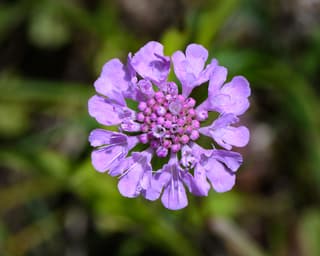
Pigeon Scabious with Botrytis: Prevention & Cure
Scabiosa columbaria
Botrytis on Pigeon Scabious: What to Know?
Botrytis on Pigeon Scabious (Scabiosa columbaria) is a fungal condition with moderate severity. Pigeon Scabious has moderate susceptibility to this disease.
Pigeon Scabious is a easy-care plant.
Unlike bacterial infections, Botrytis on Pigeon Scabious can be managed with organic fungicides.
🌱 How to Care for Pigeon Scabious to Prevent Botrytis?
💧 How to Water
Water only during prolonged dry spells. Once established, Pigeon Scabious is very drought-tolerant. Allow the soil to dry out completely between waterings. Waterlogging must be avoided as it causes root rot. Pay particular attention to good drainage in winter.
☀️ Lighting
Full sun is ideal – at least 6 hours of direct sunlight daily. In semi-shady locations, the plant will develop longer, weaker stems and bloom significantly less. For abundant flowering, definitely choose a sunny, south-facing spot.
🪴 Ideal Soil
Well-drained, calcareous to slightly alkaline soil (pH 7.0–8.0) is optimal. Sandy or stony, nutrient-poor soils are well tolerated. Heavy, clayey, or waterlogged soils are unsuitable. Incorporate lime into acidic soils.