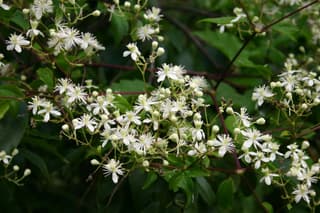
Virgin's bower with Clematis Wilt: Prevention & Cure
Clematis virginiana
Clematis Wilt on Virgin's bower: What to Know?
Clematis Wilt on Virgin's bower (Clematis virginiana) is a fungal condition with high severity. Virgin's bower has moderate susceptibility to this disease. Clematis wilt is a serious fungal disease caused by the fungus Calophoma clematidina. It causes sudden wilting and blackening of stems and leaves, often just before flowering. The fungus attacks the p...
Virgin's bower is a easy-care plant. Recovery from Clematis Wilt takes approximately 30 days with proper treatment.
Unlike bacterial infections, Clematis Wilt on Virgin's bower can be managed with organic fungicides. Without precautions, chemical treatments for Clematis Wilt can be harmful to pets. Use organic methods for Virgin's bower in pet-friendly homes.
🔍 What Does Clematis Wilt Look Like on Virgin's bower?
- • Sudden wilting of the upper parts of the plant
- • Blackening and drying of leaves
- • Brown to black lesions on the stems
- • Collapse of entire shoots within a few days
- • Stem breakage at the site of infection
❓ What Causes Clematis Wilt on Virgin's bower?
- → Calophoma clematidina fungus
- → High humidity and poor air circulation
- → Mechanical damage to stems near the ground
- → Overhead watering onto the foliage
🛡️ How to Prevent Clematis Wilt on Virgin's bower?
TLDR: Prevent Clematis Wilt on Virgin's bower with 4 essential preventive care practices.
- ✓ Plant clematis 4 to 6 inches (10-15 cm) deeper than it was in the pot
- ✓ Ensure good soil drainage
- ✓ Water directly at the roots, not on the leaves
- ✓ Regularly remove fallen leaves from around the plant
🌱 How to Care for Virgin's bower to Prevent Clematis Wilt?
💧 How to Water
Water about once a week to keep the soil moist, especially for young plants and in hot weather. Once established it copes with dry shade and even occasional flooding.
☀️ Lighting
Takes full sun to deep shade; it flowers even in shade but blooms more heavily with a few hours of sun.
🪴 Ideal Soil
Prefers soil high in organic matter, moist and well drained. It tolerates black walnut (juglone).