Ranunculaceae
Virgin's Bower: Complete Care Guide
Clematis virginiana
Fast-growing and low-maintenance in rich, moist, well-drained soil, in anything from full sun to deep shade. It is one of the few vines that flower in shade. Prune in late autumn or early spring and give it thin supports to twine around. All parts are poisonous.
Every 7 days
Partial shade
° - °C
% - %
Categories
What is Virgin's bower?
Virgin's bower (Clematis virginiana) is a easy-care plant from the Ranunculaceae family. Virgin's bower (Clematis virginiana) is a deciduous woody vine in the buttercup family, native to eastern North America from Newfoundland to the Gulf of Mexico. It climbs by twisting leaf stalks to 3 to 6 metres, with leaves of three coarsely toothed leaflets. From midsummer into early autumn it is...
Virgin's bower grows up to 6.0m, spread of 180cm, watering every 7 days. It is not suitable for indoor environments and not safe for pets.
Unlike many tropical plants, Virgin's bower tolerates watering mistakes. Best for beginners. Without precautions, ingestion can cause irritation in pets. Keep out of reach of cats and dogs.
How to Care for Virgin's bower?
TLDR: Virgin's bower needs Partial shade, watering every 7 days, and temperatures between 15-30°C with 40-70% humidity.
How Often Should You Water Virgin's bower?
Water about once a week to keep the soil moist, especially for young plants and in hot weather. Once established it copes with dry shade and even occasional flooding.
How Much Light Does Virgin's bower Need?
Takes full sun to deep shade; it flowers even in shade but blooms more heavily with a few hours of sun.
What Is the Best Soil for Virgin's bower?
Prefers soil high in organic matter, moist and well drained. It tolerates black walnut (juglone).
What Pot Should You Use for Virgin's bower?
Large, deep pot with drainage and a trellis or fine mesh; it does best in the ground along fences and shrubs
What Is Virgin's bower and Where Does It Come From?
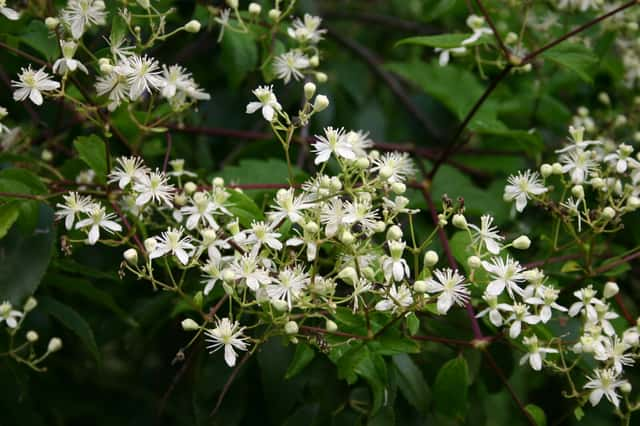
Virgin's bower (Clematis virginiana) is a deciduous woody vine in the buttercup family, native to eastern North America from Newfoundland to the Gulf of Mexico. It climbs by twisting leaf stalks to 3 to 6 metres, with leaves of three coarsely toothed leaflets. From midsummer into early autumn it is smothered in small, fragrant white flowers, followed on female plants by seed heads with long silvery feathery plumes.
How to Propagate Virgin's bower?
Layering
Stems that trail along the ground root easily.
- 1 Bend a stem down to the ground
- 2 Bury a node lightly and pin it in place
- 3 Keep the soil moist
- 4 Sever from the parent once rooted
Materials needed:
Seed
It self-seeds readily and can become weedy; pull unwanted seedlings.
- 1 Collect the feathery seeds from female plants in autumn
- 2 Sow in pots or in place and leave outdoors over winter
- 3 Keep the compost moist in spring
- 4 Plant out the seedlings once they are sturdy
Materials needed:
Stem cuttings
Wear gloves: the sap can irritate skin.
- 1 Take semi-ripe cuttings with one or two nodes
- 2 Remove the lower leaves
- 3 Insert in light, moist compost
- 4 Keep in bright shade until rooted
Materials needed:
How Big Does Virgin's bower Grow?
TLDR: Virgin's bower can reach up to 6.0m tall with Fast growth rate.
Max height
6.0m
Spread
1.8m
Growth rate
Fast
Foliage
Deciduous
Warning: Toxic Plant
This plant can be toxic if ingested. Keep out of reach of:
Plant Uses
Ornamental
Great for decoration
Ground Cover
Soil coverage
Is your plant showing symptoms?
Click on the symptom to discover possible causes:
What Diseases Commonly Affect Virgin's bower?
TLDR: Virgin's bower is susceptible to 10 known diseases. Monitor regularly for early detection.
Powdery Mildew
Powdery mildew is a common fungal disease caused by various fungi species including Erysiphe, Podosphaera, Oïdium, and Leveillula. It affects over 10,000 plant species worldwide. The disease thrives in warm, dry climates with high humidity and appears as a distinctive white powdery coating on plant surfaces.
Rust
Rust is a common fungal disease caused by fungi in the order Pucciniales that affects a wide variety of plants. The disease gets its name from the characteristic orange, yellow, or reddish-brown pustules that appear on leaves, resembling metal rust. This obligate fungal parasite requires living plants to survive and can cause significant economic losses in agricultural crops.
Leaf Spot
Leaf spot is a common fungal disease caused by various pathogens including Alternaria, Ascochyta, Colletotrichum, Septoria, and Venturia. It primarily affects leaves, causing discolored spots that can lead to premature leaf drop if left untreated.
Scale Insects
Scale insects are small sap-sucking pests that appear as brown, shell-like bumps on plant stems and leaves. There are over 25 species, divided into armored (hard) and unarmored (soft) scales. They feed by piercing plant tissue and extracting sap, which weakens the plant and can lead to yellowing, stunted growth, and even death if left untreated. They also excrete honeydew, which attracts ants and promotes sooty mold growth.
Fun Facts
Its stems can grow about 6 metres in a single year.
The silvery feathery seed heads explain folk names such as 'devil's hair'.
It attracts bees, moths and hummingbirds.
Frequently asked questions
Does virgin's bower flower in shade?
When should I prune virgin's bower?
Is virgin's bower poisonous?
Why do only some plants have feathery seed heads?
Compare with similar plants
| Attribute | Difficulty | Light | Watering | Pet Safe |
|---|---|---|---|---|
| Field Maple | Easy | Bright indirect | 14d | ✓ |
| Iberian Houseleek | Easy | Direct sun | 14d | ✓ |
| Silver Birch | Easy | Direct sun | 14d | ✓ |
| Common Blanketflower | Easy | Direct sun | 10d | ✓ |





