Cottony Scale (Pulvinaria): Pest Control | Identify & Treat
Pulvinaria is a genus of soft-bodied scale insects that feed on plant sap. Many species deposit conspicuous, cotton-like egg sacs ("white cushions") next to or beneath their brownish, oval scales during spring and early summer. Typical signs include sticky leaves (honeydew), often followed by black sooty mold, yellowing foliage, stunted growth, and the clearly visible white cottony masses on leaf veins, shoots, or bark. Frequently affected plants include ornamental trees and shrubs such as maple, linden, hydrangea, holly, and camellia, as well as fruit trees and indoor or container plants like Ficus and Citrus.
What is Cottony Scale (Pulvinaria)?
Cottony Scale (Pulvinaria) is a pest condition with moderate severity that affects plants. Pulvinaria is a genus of soft-bodied scale insects that feed on plant sap. Many species deposit conspicuous, cotton-like egg sacs ("white cushions") next to or beneath their brownish, oval scales during spring and early summer. Typical signs include sticky leaves (honeydew), often followed by black...
Cottony Scale (Pulvinaria) is a pest disease with moderate severity.
Unlike fungal diseases, Cottony Scale (Pulvinaria) can be controlled quickly with integrated management. Without immediate action, the infestation spreads to nearby plants. Unlike many common diseases, Cottony Scale (Pulvinaria) is not contagious between plants.
🧪 Natural vs Chemical: Which Treatment Works for Cottony Scale (Pulvinaria)?
🌱 Natural Solutions
- ✓ Prune back heavily infested shoots and dispose of them in the general household waste.
- ✓ Wipe individual insects and egg sacs off indoor and container plants using a cotton swab soaked in isopropyl alcohol, then rinse the plant with lukewarm water.
- ✓ Wash off honeydew with water and a small amount of mild dish soap so the leaves can breathe again.
- ✓ Place the plant in a bright spot but out of direct midday sun, and avoid both drought stress and waterlogging.
- ✓ Promote or release beneficial insects such as ladybugs, lacewing larvae, and parasitic wasps (e.g., Coccophagus and Metaphycus species) outdoors or in the greenhouse.
- ✓ Keep ants away by applying grease bands to trunks and sealing off entry points.
- ✓ Isolate new or infested indoor plants for 2 to 3 weeks and regularly inspect them with a magnifying glass on leaf undersides, veins, and shoot axes.
💉 Chemical Solutions
- ✓ Apply treatments specifically against newly hatched young larvae for maximum effectiveness, repeat the application after 7 to 10 days, and ensure thorough coverage of leaf undersides.
- ✓ Spray potassium soaps (potassium salts of fatty acids).
- ✓ Use horticultural oils such as paraffin oil, white oil, or rapeseed oil for their suffocating effect, especially against overwintering stages on woody plants.
- ✓ Use Azadirachtin (Neem) to inhibit the development of young insects, particularly on indoor and container plants.
- ✓ Do not spray flowering plants and take care to protect beneficial insects.
🛡️ How to Prevent Cottony Scale (Pulvinaria)?
TLDR: Prevent Cottony Scale (Pulvinaria) with 7 essential care practices. Regular monitoring is key for early detection.
- ✓ Choose an appropriate location with plenty of light, good air circulation, and a consistent water supply without waterlogging.
- ✓ Keep nitrogen fertilization moderate to prevent shoots from becoming too soft and susceptible.
- ✓ Inspect plants every 1 to 2 weeks, especially in spring and summer, checking leaf undersides, veins, shoot axes, and bark.
- ✓ Quarantine new plants for 2 to 3 weeks before introducing them to your collection.
- ✓ Thoroughly check container plants before moving them into winter quarters and treat them if necessary.
- ✓ Manage ant populations around woody plants using grease bands to allow beneficial insects access to the scale.
- ✓ Clean tools after pruning to prevent the accidental spread of pests.
🔗Related Diseases
Whitefly
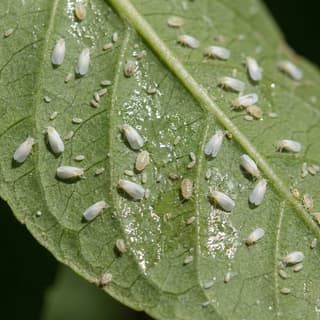
Whiteflies (family Aleyrodidae) are tiny, sap-sucking insects that thrive in warm, still air. They are common on houseplants, greenhouse crops, and garden plants such as tomatoes, peppers, cucumbers, fuchsias, hibiscus, poinsettias, citrus, and many herbs. You’ll often see small white adults flutter up when you touch the plant, sticky honeydew on leaves or nearby surfaces, black sooty mould growing on that honeydew, and leaves that yellow, curl, or drop. Check the undersides of leaves for pale, scale-like nymphs and tiny eggs laid in small arcs. Heavy infestations weaken plants and slow growth.
Woolly Beech Aphid
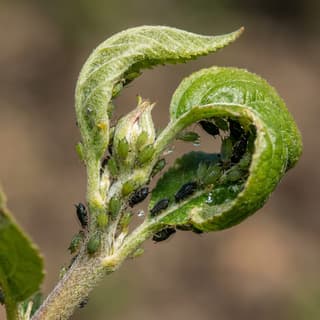
Phyllaphis is a genus of woolly aphids that primarily attack beech (Fagus), typically common beech and copper beech in hedges and as trees. They suck plant sap from young shoots and the undersides of leaves in spring and early summer. Signs of infestation include curled or rolled leaves, sticky honeydew, black sooty mold, and a white, cottony coating around the colonies. The plants usually survive, but heavy infestations can weaken new growth and make the hedge sticky and unsightly. The aphids often overwinter as eggs on thin twigs near buds.
Flea beetle damage
MediumFlea beetles are small, jumping insects that feed on the leaves of many vegetable crops. They chew numerous small, circular holes, creating a characteristic 'shothole' appearance. While established plants can often tolerate the damage, young seedlings are highly susceptible and can be stunted or killed if the infestation is severe.
Woolly Aphid
Prociphilus is a genus of woolly aphids that feed by sucking sap from plants. They produce a fluffy, white, cotton-like coating on leaves, shoots, or sometimes roots. Signs include sticky honeydew, black sooty mold growing on the honeydew, leaf curling or distortion, and clusters of tiny, soft-bodied insects hidden in the "wool." Ants are often active around them because they feed on the honeydew. These aphids commonly affect alder and maple (woolly alder aphid) and ash (woolly ash aphid). They rarely kill established trees, but they can stress young plants and create a messy, sticky problem.