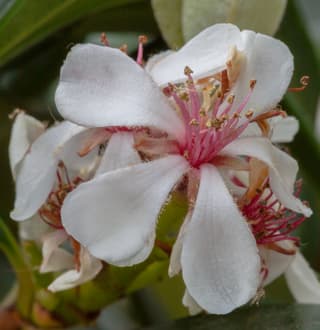
Yeddo Hawthorn Prone to Entomosporium leaf spot: How to Protect
Rhaphiolepis umbellata
Entomosporium leaf spot on Yeddo Hawthorn: What to Know?
Entomosporium leaf spot on Yeddo Hawthorn (Rhaphiolepis umbellata) is a fungal condition with moderate severity. Yeddo Hawthorn has high susceptibility to this disease. A common fungal disease caused by Entomosporium mespili that primarily affects plants in the Rosaceae family like Photinia and Indian Hawthorn. It thrives in cool, wet weather and spreads through spla...
Yeddo Hawthorn is a easy-care plant. Recovery from Entomosporium leaf spot takes approximately 21 days with proper treatment.
Yeddo Hawthorn is highly susceptible to Entomosporium leaf spot, unlike most plants in the same family. Without early intervention, recovery takes 32 days instead of 21 days. Unlike bacterial infections, Entomosporium leaf spot on Yeddo Hawthorn can be managed with organic fungicides.
🔍 What Does Entomosporium leaf spot Look Like on Yeddo Hawthorn?
- • Small bright red spots on new leaves
- • Spots with dark borders and gray centers
- • Yellowing of leaves around the red spots
- • Premature leaf drop starting from the bottom
- • Tiny black dots in the center of mature spots
❓ What Causes Entomosporium leaf spot on Yeddo Hawthorn?
- → High humidity and frequent rainfall
- → Overhead watering that wets the foliage
- → Poor air circulation between plants
- → Fungal spores overwintering on fallen leaves
🛡️ How to Prevent Entomosporium leaf spot on Yeddo Hawthorn?
TLDR: Prevent Entomosporium leaf spot on Yeddo Hawthorn with 4 essential preventive care practices.
- ✓ Water at the base of the plant only
- ✓ Space plants out to improve air flow
- ✓ Rake and dispose of fallen leaves immediately
- ✓ Prune during dry weather to remove infected tips
🌱 How to Care for Yeddo Hawthorn to Prevent Entomosporium leaf spot?
💧 How to Water
Water regularly during the first year after planting to encourage establishment; once developed, the shrub is quite drought-tolerant and only needs occasional watering during the hottest months.
☀️ Lighting
Prefers full sun positions, which promote richer flowering and more compact foliage; however, it tolerates partial shade, especially in hotter climates.
🪴 Ideal Soil
Adapts to various soil types but requires excellent drainage to avoid waterlogging and root rot; it prefers medium-textured substrates, ranging from neutral to slightly acidic.