Rosaceae
Yeddo Hawthorn: Ground Cover Plant
Rhaphiolepis umbellata
A robust and low-maintenance shrub once established. It prefers full sun for abundant flowering, tolerates drought well, and requires minimal pruning, generally limited to the period immediately after flowering.
Every 10 days
Bright indirect
-10° - 35°C
30% - 70%
Categories
What is Yeddo Hawthorn?
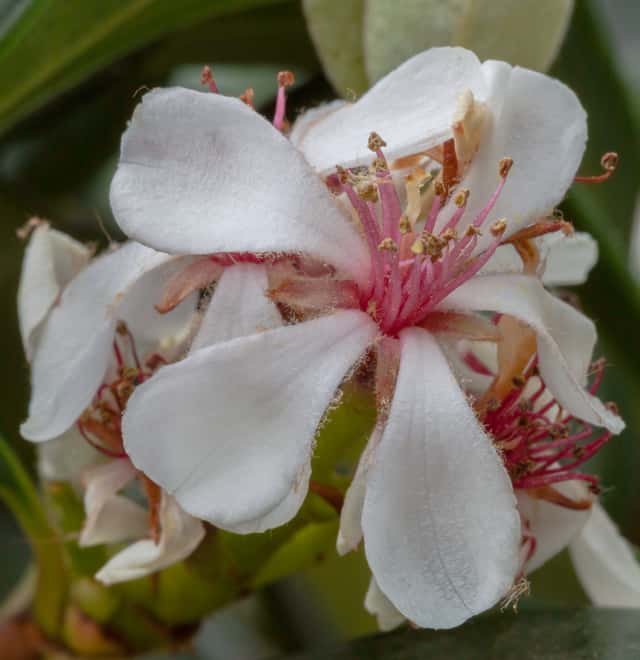
Yeddo Hawthorn (Rhaphiolepis umbellata) is a easy-care plant from the Rosaceae family. Rhaphiolepis umbellata, commonly known as Yeddo Hawthorn, is an evergreen shrub native to Japan and Korea, highly valued in coastal gardens for its remarkable tolerance to salt spray and wind. It features oval, leathery, glossy dark green leaves that often take on purple hues in winter. Between spri...
Yeddo Hawthorn grows up to 1.8m, spread of 180cm, watering every 10 days, -10°C – 35°C, 30–70% humidity. It is not suitable for indoor environments and safe for pets.
Unlike many tropical plants, Yeddo Hawthorn tolerates watering mistakes. Best for beginners. Unlike many popular species, Yeddo Hawthorn is safe to keep around pets.
How to Care for Yeddo Hawthorn?
TLDR: Yeddo Hawthorn needs Bright indirect, watering every 10 days, and temperatures between -10-35°C with 30-70% humidity.
How Often Should You Water Yeddo Hawthorn?
Water regularly during the first year after planting to encourage establishment; once developed, the shrub is quite drought-tolerant and only needs occasional watering during the hottest months.
How Much Light Does Yeddo Hawthorn Need?
Prefers full sun positions, which promote richer flowering and more compact foliage; however, it tolerates partial shade, especially in hotter climates.
What Is the Best Soil for Yeddo Hawthorn?
Adapts to various soil types but requires excellent drainage to avoid waterlogging and root rot; it prefers medium-textured substrates, ranging from neutral to slightly acidic.
What Pot Should You Use for Yeddo Hawthorn?
Large, heavy ceramic or terracotta pots if grown as a terrace specimen, to ensure stability and good drainage.
Care Schedule
Fertilize
Every 180 days
What Is Yeddo Hawthorn and Where Does It Come From?
Rhaphiolepis umbellata, commonly known as Yeddo Hawthorn, is an evergreen shrub native to Japan and Korea, highly valued in coastal gardens for its remarkable tolerance to salt spray and wind. It features oval, leathery, glossy dark green leaves that often take on purple hues in winter. Between spring and early summer, it produces dense clusters of fragrant white or slightly pink flowers, followed by decorative blue-black berries. It is a hardy, slow-growing plant that typically reaches 3 to 6 feet in height and width.
How to Propagate Yeddo Hawthorn?
Semi-hardwood Cuttings
- A heating mat at the base can significantly speed up rooting.
- 1 Taking the cutting
Cut a 4-6 inch apical section of semi-mature wood from the current season's growth, preferably in late summer.
- 2 Preparation
Remove the lower leaves and dip the base into rooting hormone powder.
- 3 Planting
Insert into a moist mix of peat and perlite, maintaining a shaded and humid environment until rooting occurs.
Materials needed:
Sowing
- Fresh seeds have a higher germination rate than stored ones.
- 1 Seed extraction
Extract seeds from mature blue-black berries and wash away the pulp.
- 2 Stratification
Cold stratify the seeds in the refrigerator for 2-3 months to break dormancy.
- 3 Sowing
Sow in a well-draining substrate and keep constantly moist.
Materials needed:
How Big Does Yeddo Hawthorn Grow?
TLDR: Yeddo Hawthorn can reach up to 1.8m tall with Slow growth rate.
Max height
1.8m
Spread
1.8m
Growth rate
Slow
Foliage
Evergreen
Plant Uses
Ornamental
Great for decoration
Ground Cover
Soil coverage
Is your plant showing symptoms?
Click on the symptom to discover possible causes:
What Diseases Commonly Affect Yeddo Hawthorn?
TLDR: Yeddo Hawthorn is susceptible to 8 known diseases. Monitor regularly for early detection.
Entomosporium leaf spot
A common fungal disease caused by Entomosporium mespili that primarily affects plants in the Rosaceae family like Photinia and Indian Hawthorn. It thrives in cool, wet weather and spreads through splashing water. If left untreated, it can cause total leaf drop and weaken the plant significantly.
Fire Blight
Fire blight is a highly destructive and contagious bacterial disease caused by Erwinia amylovora. It primarily affects plants in the Rosaceae family, including apple, pear, quince trees, and various ornamental plants. The disease can destroy an entire orchard in a single growing season under ideal conditions, with the bacterium moving approximately 11 inches per week in new growth.
Anthracnose
Anthracnose is a fungal disease caused by fungi in the genus Colletotrichum that affects many plants, including vegetables, fruits, and trees. The disease thrives in cool, wet conditions, causing dark, sunken lesions on leaves, stems, flowers, and fruits.
Powdery Mildew
Powdery mildew is a common fungal disease caused by various fungi species including Erysiphe, Podosphaera, Oïdium, and Leveillula. It affects over 10,000 plant species worldwide. The disease thrives in warm, dry climates with high humidity and appears as a distinctive white powdery coating on plant surfaces.
Meaning & Symbolism
In Japan, it is often associated with resilience and protection due to its ability to withstand harsh coastal conditions such as wind and salt.
Compare with similar plants
| Attribute | Difficulty | Light | Watering | Pet Safe |
|---|---|---|---|---|
| Field Maple | Easy | Bright indirect | 14d | ✓ |
| Silver Birch | Easy | Direct sun | 14d | ✓ |
| Common Blanketflower | Easy | Direct sun | 10d | ✓ |
| Cushion Bush | Easy | Direct sun | 14d | ✓ |





