Pear Prone to Fire Blight: How to Protect
Pyrus
Fire Blight on Pear: What to Know?
Fire Blight on Pear (Pyrus) is a bacterial condition with critical severity. Pear has high susceptibility to this disease. Fire blight is a highly destructive and contagious bacterial disease caused by Erwinia amylovora. It primarily affects plants in the Rosaceae family, including apple, pear, quince trees, and various o...
Pear is a medium-care plant. Recovery from Fire Blight takes approximately 90 days with proper treatment.
Pear is highly susceptible to Fire Blight, unlike most plants in the same family. Without early intervention, recovery takes 135 days instead of 90 days.
🔍 What Does Fire Blight Look Like on Pear?
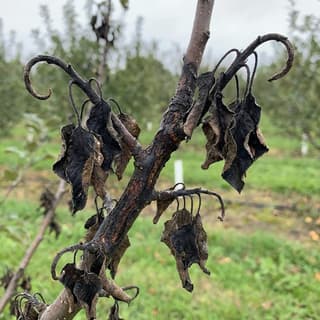
- • Flowers and flower clusters appear water-soaked, then droop and shrivel, turning brown or black
- • Blackened flowers and leaves remain attached to branches
- • Young shoots wilt forming the characteristic shepherd's crook hook shape
- • Leaves turn gray-green, then brown or black
- • Sticky bacterial ooze on infected tissue
- • Sunken, discolored cankers on branches and trunks
- • Scorched appearance as if burned by fire
❓ What Causes Fire Blight on Pear?
- → Erwinia amylovora bacterium that overwinters in cankers formed during the previous season
- → Spread by pollinating insects (especially bees) visiting bacterial ooze
- → Dispersal by rain splash and wind
- → Contaminated pruning tools transmit the disease between plants
- → Warm temperatures (70-80°F) and high humidity create ideal conditions
- → New, succulent growth is highly susceptible to infection
- → Excessive nitrogen fertilization promotes vulnerable growth
💊 How to Treat Fire Blight on Pear?
TLDR: Treat Fire Blight on Pear with quick treatment (~45 days) or organic (~90 days). Pear has high susceptibility to this disease.
Quick Fixes
Immediate Pruning
Cut all infected branches 8-12 inches below symptoms. Sterilize tools with alcohol between cuts. Destroy infected material.
Antibiotic Application
Spray kasugamycin or oxytetracycline within 24 hours. Acidify spray tank to pH 5. Apply thorough coverage.
Follow-up Sprays
Reapply antibiotic before predicted rain events. Continue every 3-5 days during warm, humid weather.
Organic Treatment
Sanitation Pruning
Remove all infected branches cutting 8-12 inches below visible symptoms. Sterilize tools between each cut with 70% alcohol. Burn or dispose of infected material away from garden.
Preventive Copper Application
Spray 0.5% Bordeaux mixture or soluble copper product on all affected and adjacent plants. Repeat every 4-5 days during wet periods.
Biological Control
Apply Blossom Protect (Aureobasidium pullulans) during bloom followed by Bacillus-based products after petal fall.
Continued Monitoring
Inspect plants weekly. Promptly remove any new infected tissue. Continue preventive sprays during disease-favorable conditions.
🛡️ How to Prevent Fire Blight on Pear?
TLDR: Prevent Fire Blight on Pear with 8 essential preventive care practices.
- ✓ Plant resistant varieties when available (e.g., Kieffer, Moonglow, Orient pears; Enterprise, Freedom, Liberty apples)
- ✓ Avoid excessive nitrogen fertilization, especially late in the season
- ✓ Avoid heavy pruning in early summer that stimulates succulent growth
- ✓ Reduce irrigation during bloom period
- ✓ Maintain good air circulation through weed and cover crop management
- ✓ Monitor regularly for early detection
- ✓ Remove and destroy infected flowers and tissue as soon as detected
- ✓ Sterilize pruning tools between cuts with 70% isopropyl alcohol or 10% bleach solution
🌱 How to Care for Pear to Prevent Fire Blight?
💧 How to Water
Water pear trees approximately every 7 days during dry periods, providing about 1 inch (2.5 cm) of water weekly. Established trees tolerate some drought but consistent irrigation improves fruit quality. Avoid waterlogged soil as roots are sensitive to excess moisture.
☀️ Lighting
Pear trees require full sun — at least 6 to 8 hours of direct sunlight per day. Insufficient light reduces fruit production and increases disease susceptibility. Plant in open, sunny locations away from shade.
🪴 Ideal Soil
Pear trees prefer deep, well-drained loamy soil rich in organic matter, with a pH between 6.0 and 7.5. Avoid compacted or waterlogged locations. Incorporate compost before planting to improve soil structure and fertility.
Frequently asked questions
Can Fire Blight kill my Pear?
How long does Pear take to recover from Fire Blight?
Is Fire Blight contagious to other plants near Pear?
Sources & References
- Fireblight: Symptoms, Causes, and Treatment - UGA Extension
- Fire Blight - UC IPM
- Fire Blight of Apple and Pear - WSU Tree Fruit
- Fire Blight - USU Extension
- Fire Blight - UMN Extension
- NC State Extension - Pyrus communis
- Plant Detectives - The Pear Tree Guide
- EatingMeals - Pear Symbolism and History
- Magickal Spot - Pear Tree Symbolism