Holes in leaves from chewing pests: Pest Control | Identify & Treat
Damage caused by insects such as caterpillars, beetles, and grasshoppers that feed on leaf tissue. The holes can be irregular or circular, reducing the plant's ability to photosynthesize and making it vulnerable to other diseases.
Medium
15 days
What is Holes in leaves from chewing pests?
Holes in leaves from chewing pests is a pest condition with moderate severity that affects plants. Damage caused by insects such as caterpillars, beetles, and grasshoppers that feed on leaf tissue. The holes can be irregular or circular, reducing the plant's ability to photosynthesize and making it vulnerable to other diseases.
Holes in leaves from chewing pests is a pest disease with moderate severity that spreads at a moderate rate. Recovery typically takes approximately 15 days with proper treatment. This condition is contagious and can spread between plants.
Unlike fungal diseases, Holes in leaves from chewing pests can be controlled quickly with integrated management. Without immediate action, the infestation spreads to nearby plants. Without isolation, nearby plants can become infected within days.
🔍 What Are the Symptoms of Holes in leaves from chewing pests?
TLDR: Holes in leaves from chewing pests presents 5 main symptoms. Early identification is crucial for effective treatment.
Main Symptoms
- ! Irregular holes in the middle of leaves
- ! Chewed leaf edges
- ! Presence of dark frass on leaves
- ! Visible presence of caterpillars or beetles
- ! Leaf skeletonization, with only veins remaining
Visual Signs
❓ What Causes Holes in leaves from chewing pests in Plants?
- → Attack by various species of caterpillars
- → Presence of chewing beetles
- → Infestation by grasshoppers or crickets
- → Environment favorable to insect life cycles
💊 How to Treat Holes in leaves from chewing pests?
Step by Step
- 1
Manually remove visible pests
- 2
Apply a repellent solution or insecticide
- 3
Remove severely damaged plant parts
- 4
Monitor for the appearance of new holes
🧪 Natural vs Chemical: Which Treatment Works for Holes in leaves from chewing pests?
🌱 Natural Solutions
- ✓ Neem oil
- ✓ Tobacco extract
- ✓ Mild soap solution
- ✓ Pepper and garlic infusion
💉 Chemical Solutions
- ✓ Insecticides based on Deltamethrin
- ✓ Insecticides based on Malathion
🛡️ How to Prevent Holes in leaves from chewing pests?
TLDR: Prevent Holes in leaves from chewing pests with 4 essential care practices. Regular monitoring is key for early detection.
- ✓ Inspect leaves weekly
- ✓ Keep the garden free of plant debris
- ✓ Plant repellent herbs like mint and rosemary
- ✓ Encourage natural predators such as ladybugs
🔗Related Diseases
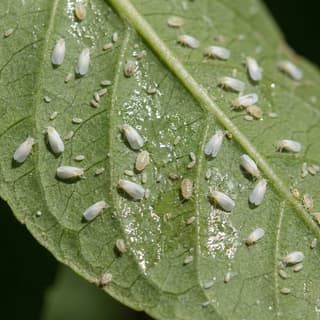
Whitefly
Whiteflies (family Aleyrodidae) are tiny, sap-sucking insects that thrive in warm, still air. They are common on houseplants, greenhouse crops, and garden plants such as tomatoes, peppers, cucumbers, fuchsias, hibiscus, poinsettias, citrus, and many herbs. You’ll often see small white adults flutter up when you touch the plant, sticky honeydew on leaves or nearby surfaces, black sooty mould growing on that honeydew, and leaves that yellow, curl, or drop. Check the undersides of leaves for pale, scale-like nymphs and tiny eggs laid in small arcs. Heavy infestations weaken plants and slow growth.
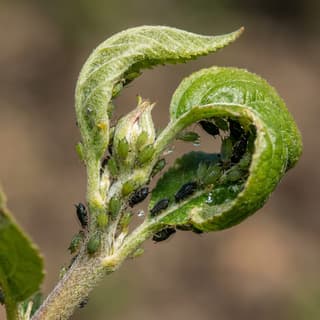
Woolly Beech Aphid
Phyllaphis is a genus of woolly aphids that primarily attack beech (Fagus), typically common beech and copper beech in hedges and as trees. They suck plant sap from young shoots and the undersides of leaves in spring and early summer. Signs of infestation include curled or rolled leaves, sticky honeydew, black sooty mold, and a white, cottony coating around the colonies. The plants usually survive, but heavy infestations can weaken new growth and make the hedge sticky and unsightly. The aphids often overwinter as eggs on thin twigs near buds.
Flea beetle damage
MediumFlea beetles are small, jumping insects that feed on the leaves of many vegetable crops. They chew numerous small, circular holes, creating a characteristic 'shothole' appearance. While established plants can often tolerate the damage, young seedlings are highly susceptible and can be stunted or killed if the infestation is severe.
Woolly Aphid
Prociphilus is a genus of woolly aphids that feed by sucking sap from plants. They produce a fluffy, white, cotton-like coating on leaves, shoots, or sometimes roots. Signs include sticky honeydew, black sooty mold growing on the honeydew, leaf curling or distortion, and clusters of tiny, soft-bodied insects hidden in the "wool." Ants are often active around them because they feed on the honeydew. These aphids commonly affect alder and maple (woolly alder aphid) and ash (woolly ash aphid). They rarely kill established trees, but they can stress young plants and create a messy, sticky problem.