Peacock Plant Prone to Low Humidity Stress: How to Protect
Calathea makoyana
Low Humidity Stress on Peacock Plant: What to Know?
Low Humidity Stress on Peacock Plant (Calathea makoyana) is a environmental condition with moderate severity. Peacock Plant has high susceptibility to this disease. Low humidity stress occurs when indoor air becomes too dry, causing plants to lose moisture faster than they can absorb it through their roots. This is especially common during winter heating periods,...
Peacock Plant is a hard-care plant. Recovery from Low Humidity Stress takes approximately 14 days with proper treatment. As an indoor plant, ensure good ventilation to aid recovery.
Peacock Plant is highly susceptible to Low Humidity Stress, unlike most plants in the same family. Without early intervention, recovery takes 21 days instead of 14 days.
🔍 What Does Low Humidity Stress Look Like on Peacock Plant?
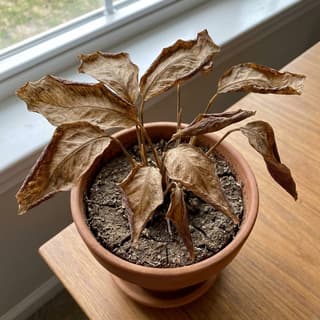
- • Dry, crispy, or brown leaf edges and tips
- • Leaf curling downward or inward (different from underwatering where leaves curl upward)
- • Drooping or wilting leaves despite adequate soil moisture
- • Premature leaf drop, especially on tropical species
- • Brown spots developing on leaf surfaces
- • New leaves emerging smaller than normal
- • Overall stunted or slowed growth
- • Increased susceptibility to pest infestations (spider mites thrive in dry conditions)
❓ What Causes Low Humidity Stress on Peacock Plant?
- → Winter heating systems reducing indoor humidity to 20-30%
- → Proximity to radiators, heating vents, or fireplaces
- → Air conditioning removing moisture from the air
- → Dry climate conditions
- → Poor air circulation trapping dry air around plants
- → Lack of moisture sources in the growing environment
💊 How to Treat Low Humidity Stress on Peacock Plant?
TLDR: Treat Low Humidity Stress on Peacock Plant with quick treatment (~7 days) or organic (~14 days). Peacock Plant has high susceptibility to this disease.
Quick Fixes
Step 1
Install a portable humidifier near affected plants immediately
Step 2
Move plants to naturally humid rooms like bathrooms or kitchens
Step 3
Create emergency humidity tent using clear plastic bag over plant for 24-48 hours
Step 4
Water soil thoroughly if dry, ensuring proper drainage
Step 5
Mist all leaf surfaces generously 2-3 times daily
Organic Treatment
Step 1
Place plant pots on pebble trays filled with water to create natural evaporation
Step 2
Group plants together to create a microclimate with higher humidity
Step 3
Move plants away from heat sources, air vents, and drafty windows
Step 4
Mist leaves regularly in the morning using room-temperature water
Step 5
Place open water containers near plants for passive humidity increase
🛡️ How to Prevent Low Humidity Stress on Peacock Plant?
TLDR: Prevent Low Humidity Stress on Peacock Plant with 7 essential preventive care practices.
- ✓ Monitor humidity levels with a hygrometer; most plants thrive at 40-60% humidity
- ✓ Keep plants away from heating vents, radiators, and air conditioner outlets
- ✓ Group plants together to create a microclimate with higher humidity
- ✓ Place plants in naturally humid rooms like bathrooms or kitchens
- ✓ Use a pebble tray: place pots on trays filled with water and pebbles (pot bottom should not touch water)
- ✓ Avoid placing tropical plants in very dry environments without humidity support
- ✓ During winter, increase humidity measures proactively before symptoms appear
🌱 How to Care for Peacock Plant to Prevent Low Humidity Stress?
💧 How to Water
Keep the substrate slightly moist, watering when the top 1-2 inches are dry. Use distilled, filtered, or rainwater, as the plant is sensitive to chlorine and fluoride. In winter, reduce frequency to once a week.
☀️ Lighting
Prefers abundant indirect light, avoiding direct sun that can burn delicate leaves. Ideal for east or north-facing rooms. Tolerates partial shade, but with abundant indirect light it will produce more healthy leaves.
🪴 Ideal Soil
Substrate rich in organic matter with good drainage. An ideal mix contains 50% potting soil, 25% orchid bark, and 25% perlite. pH should be slightly acidic (5.5-6.5).
Frequently asked questions
Can Low Humidity Stress kill my Peacock Plant?
How long does Peacock Plant take to recover from Low Humidity Stress?
Is Low Humidity Stress contagious to other plants near Peacock Plant?
Sources & References
- High & Low Humidity Symptoms in Plants - How to Prevent It?
- Signs of Low Humidity in Plants & How to Fix It – Riverdene Garden Centre
- How To Identify And Fix Low Humidity In Plants
- Temperature and humidity guide for houseplants
- Humidity and Indoor Plants Guide | OurHouseplants
- Success with Houseplants – Humidity | Nebraska Extension
- Calatheas: Guia Prático para Cuidar e Erros Mais Comuns
- Plant Care – Calatheas: saiba como cuidar e inspire-se
- Calathea makoyana - Planthiza
- Muda de Maranta Pavão ou Calathea Makoyana