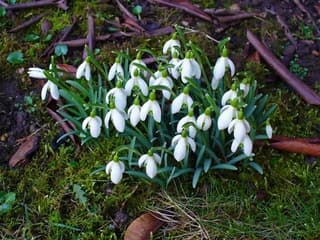
Common Snowdrop with Red Blotch (Stagonospora curtisii)? Rare but Treatable
Galanthus nivalis
Red Blotch (Stagonospora curtisii) on Common Snowdrop: What to Know?
Red Blotch (Stagonospora curtisii) on Common Snowdrop (Galanthus nivalis) is a fungal condition with moderate severity. Common Snowdrop has low susceptibility to this disease. A common fungal disease affecting bulbous plants such as Amaryllis. It is characterized by elongated, bright red lesions that can deform leaves and stems, eventually weakening the bulb over time.
Common Snowdrop is a easy-care plant. Recovery from Red Blotch (Stagonospora curtisii) takes approximately 21 days with proper treatment.
Unlike most plants, Common Snowdrop has natural resistance to Red Blotch (Stagonospora curtisii). Best treated with preventive measures rather than reactive treatment. Unlike bacterial infections, Red Blotch (Stagonospora curtisii) on Common Snowdrop can be managed with organic fungicides. Without precautions, chemical treatments for Red Blotch (Stagonospora curtisii) can be harmful to pets. Use organic methods for Common Snowdrop in pet-friendly homes.
🔍 What Does Red Blotch (Stagonospora curtisii) Look Like on Common Snowdrop?
- • Elongated red spots on leaves and stems
- • Deformation of new foliage
- • Red specks on bulb scales
- • Flower stalks that bend or break easily
- • Stunted plant growth
❓ What Causes Red Blotch (Stagonospora curtisii) on Common Snowdrop?
- → Excessively high ambient humidity
- → Overhead watering on the foliage
- → Previously infected bulbs
- → Poor ventilation between plants
🛡️ How to Prevent Red Blotch (Stagonospora curtisii) on Common Snowdrop?
TLDR: Prevent Red Blotch (Stagonospora curtisii) on Common Snowdrop with 4 essential preventive care practices.
- ✓ Avoid wetting the leaves when watering
- ✓ Ensure proper air circulation
- ✓ Disinfect pruning tools
- ✓ Inspect new bulbs before planting
🌱 How to Care for Common Snowdrop to Prevent Red Blotch (Stagonospora curtisii)?
💧 How to Water
Keep the soil moist from autumn to late spring. In summer the bulbs are dormant and need no watering, but they should not bake completely dry.
☀️ Lighting
Full sun to partial shade in winter and spring; light shade from trees in summer is ideal.
🪴 Ideal Soil
Moist, well-drained soil rich in leaf mould or compost. It tolerates clay and occasional wet spots.