Mollusca — Plant Disease
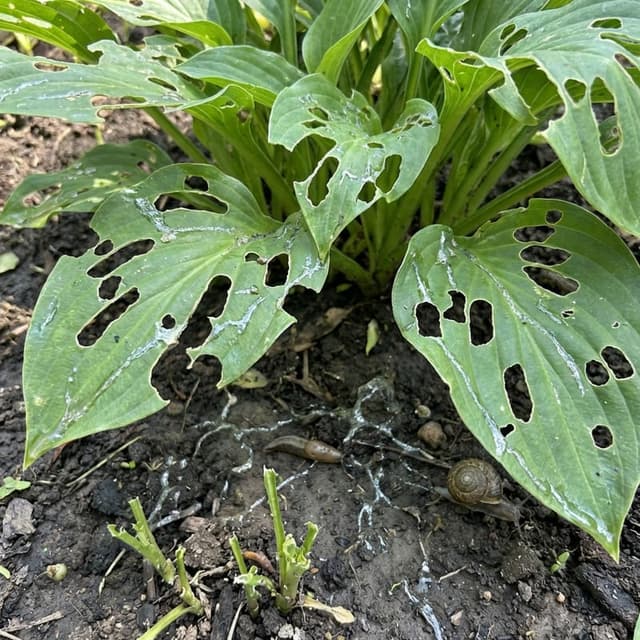
Mollusca (snails and slugs) are soft-bodied pests that feed mostly at night and in damp weather. They chew irregular holes in leaves, flowers, and fruit and often leave shiny slime trails. Seedlings, tender greens (like lettuce), hostas, strawberries, and many shade- or moisture-loving plants are frequent targets. Look for ragged leaf edges, missing seedlings, and damage low on the plant or at soil level. Cool, wet conditions, heavy mulch, and cluttered ground cover give them ideal hiding places.
What is Slugs and Snails?
Slugs and Snails is a other condition with moderate severity that affects plants. Mollusca (snails and slugs) are soft-bodied pests that feed mostly at night and in damp weather. They chew irregular holes in leaves, flowers, and fruit and often leave shiny slime trails. Seedlings, tender greens (like lettuce), hostas, strawberries, and many shade- or moisture-loving plants are fr...
Slugs and Snails is a other disease with moderate severity. It affects 1 plant species in our database.
Unlike many common diseases, Slugs and Snails is not contagious between plants.
🧪 Natural vs Chemical: Which Treatment Works for Slugs and Snails?
🌱 Natural Solutions
- ✓ Hand-pick in the evening or early morning using a flashlight and drop them into soapy water.
- ✓ Reduce hiding spots by clearing plant debris, slightly lifting pots for airflow, and keeping mulch thin and dry on top.
- ✓ Create barriers by applying copper tape around pots or raised beds, placing sharp grit or rough wool rings at the base of plants, and fitting snug collars around stems.
- ✓ Use traps by sinking shallow dishes of yeast-and-water or beer to soil level, and empty and refresh them often.
- ✓ Water in the morning so the surface is drier overnight.
- ✓ Encourage natural helpers like ground beetles, toads, and birds by providing varied habitat.
- ✓ Apply slug-parasitic nematodes (Phasmarhabditis spp.) to moist soil where available as directed.
💉 Chemical Solutions
- ✓ Apply iron phosphate (ferric phosphate) bait in small amounts near, not on, plants, and reapply after rain as directed.
- ✓ Keep baits away from children and pets and avoid overuse.
- ✓ Use ferric sodium EDTA baits where permitted and follow label precautions.
- ✓ Combine chemical baits with non-chemical steps for best results.
🛡️ How to Prevent Slugs and Snails?
TLDR: Prevent Slugs and Snails with 7 essential care practices. Regular monitoring is key for early detection.
- ✓ Improve drainage and avoid overwatering.
- ✓ Space plants for airflow and prune dense, ground-touching leaves.
- ✓ Raise vulnerable seedlings in trays until sturdy, then transplant with collars or barriers in place.
- ✓ Store boards, pots, and bags off the ground to reduce shelters.
- ✓ Keep paths and bed edges tidy.
- ✓ Inspect new plants and pots before bringing them home or moving them indoors.
- ✓ Refresh traps and barriers during wet spells.
🔗Related Diseases
Mosaic Virus
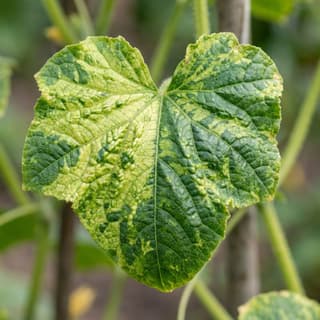
Potyviruses (family Potyviridae, genus Potyvirus) are plant viruses transmitted primarily by aphids during feeding and mechanically through sap. They cause mosaic patterns (light and dark patches) on leaves, leaf curling and distortion, vein clearing, leaf blistering, stunting, and in vegetables and fruits, streaks and discoloration. In potatoes (Potato virus Y), necrotic spots on leaves and ringspots on tubers may occur; in cucurbits (e.g., Zucchini yellow mosaic virus), distinct mosaic and deformations of leaves and fruit; in peppers, streaks and spots on fruit; in brassicas (Turnip mosaic virus), mosaic and stunted growth; and in plums, Sharka (plum pox) causing spots and fruit distortion. Infection can also be introduced via seeds, seedlings, tubers, scions, and host weeds. Unfortunately, infected plants cannot be cured.
Phytophthora Root Rot
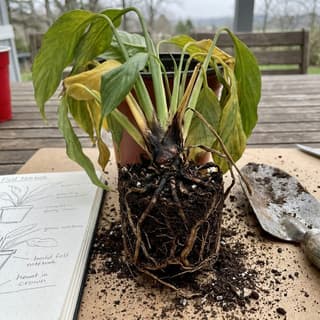
The Phytophthora genus consists of soil-borne oomycetes (water molds) that act as plant pathogens, primarily affecting trees and woody plants. It typically spreads through the root system, leading to systemic decline and eventual plant collapse.
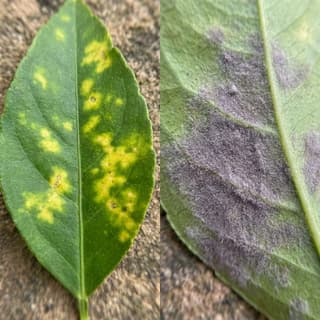
Downy Mildew
Pseudoperonospora is a genus of pathogens causing what is known as downy mildew. These are moisture-loving 'molds' from the kingdom Chromista that primarily attack leaves. Angular yellow spots appear between the veins on the upper side of the leaves, while a grayish-purple coating forms on the underside in humid conditions. The leaves turn brown, dry out, and the plant weakens. It most commonly affects cucumbers and other cucurbits (zucchini, pumpkins, melons) and, in our region, hops. It spreads via wind and rain and thrives during prolonged humidity, dew, cooler nights, and in stuffy greenhouses.
Annual Bluegrass (Poa annua)
MediumAnnual bluegrass is a common lawn weed that rapidly outcompetes desirable grass species. It is characterized by its lighter color, shallow root system, and prolific seed production even under low mowing heights. It is highly resilient and spreads quickly.