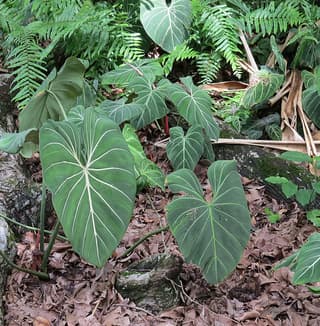
Philodendron Gloriosum with Nutrient Deficiency: Prevention & Cure
Philodendron gloriosum
Nutrient Deficiency on Philodendron Gloriosum: What to Know?
Nutrient Deficiency on Philodendron Gloriosum (Philodendron gloriosum) is a nutrient_deficiency condition with moderate severity. Philodendron Gloriosum has moderate susceptibility to this disease. Nutrient deficiency occurs when a plant cannot access one or more essential mineral elements in sufficient quantities for healthy growth. Plants require 17 essential nutrients: macronutrients (N, P, K...
Philodendron Gloriosum is a hard-care plant. Recovery from Nutrient Deficiency takes approximately 21 days with proper treatment. As an indoor plant, ensure good ventilation to aid recovery.
🔍 What Does Nutrient Deficiency Look Like on Philodendron Gloriosum?
- • Nitrogen (N): overall yellowing starting from older/lower leaves, progressing upward; slow stunted growth; pale lime-green foliage
- • Phosphorus (P): purple or reddish discoloration on leaf undersides and stems; dull dark-green older leaves; poor root and shoot elongation
- • Potassium (K): brown scorched edges on older leaves (marginal necrosis); weak stems; reduced flowering and fruiting
- • Calcium (Ca): tip burn and distortion on youngest leaves and growing tips; blossom end rot in fruiting plants; stunted new growth
- • Magnesium (Mg): interveinal chlorosis on older leaves (veins stay green while tissue yellows); leaves may curl upward; premature leaf drop
- • Iron (Fe): bright interveinal chlorosis on youngest/newest leaves (veins remain green); severe cases turn leaves nearly white
- • Zinc (Zn): small chlorotic or bronze mottled new leaves; shortened internodes; distorted leaf shape
- • General: stunted overall growth, poor flowering and fruiting, leaf necrosis in advanced cases
❓ What Causes Nutrient Deficiency on Philodendron Gloriosum?
- → Depleted or inherently nutrient-poor soil lacking organic matter
- → Incorrect soil pH — acidic pH (<6.0) locks out K, Ca, Mg; alkaline pH (>7.5) locks out Fe, Mn, Zn, B
- → Over-watering or heavy rain leaching mobile nutrients (N, K, Mg) out of root zone
- → Root damage from root rot, pests, physical injury, or waterlogging impairing uptake
- → Imbalanced fertilization creating nutrient antagonism (excess K blocking Mg; excess P blocking Fe/Zn)
- → Using soil-less or heavily peat-based mixes without supplemental feeding
- → Failure to repot container plants depleting limited soil volume
- → Salt buildup in substrate from over-fertilization locking out nutrients via osmotic stress
💊 How to Treat Nutrient Deficiency on Philodendron Gloriosum?
TLDR: Treat Nutrient Deficiency on Philodendron Gloriosum with quick treatment (~? days) or organic (~? days). Philodendron Gloriosum has moderate susceptibility to this disease.
🛡️ How to Prevent Nutrient Deficiency on Philodendron Gloriosum?
TLDR: Prevent Nutrient Deficiency on Philodendron Gloriosum with 8 essential preventive care practices.
- ✓ Test soil pH annually and maintain 6.0–6.8 for most plants (or 5.5–6.5 for acid-lovers)
- ✓ Perform soil or tissue tests every 1–2 years to identify deficiencies before symptoms appear
- ✓ Use a balanced fertilizer (NPK + micros) on a consistent schedule during the growing season
- ✓ Incorporate organic matter (compost, aged manure) to improve soil nutrient retention and structure
- ✓ Repot container plants every 1–2 years to refresh growing medium
- ✓ Avoid over-watering to prevent nutrient leaching and root damage
- ✓ Monitor for salt buildup — flush soil periodically with plain water if EC is high
- ✓ Choose fertilizers matched to plant type (e.g., acid fertilizer for ericaceous plants)
🌱 How to Care for Philodendron Gloriosum to Prevent Nutrient Deficiency?
💧 How to Water
Water when the top 1 inch (2-3 cm) of the substrate is dry to the touch, approximately every 7 days in summer and less frequently in winter. Avoid waterlogging as it is very susceptible to root rot. Use chlorine-free water at room temperature.
☀️ Lighting
Place the plant about 3 feet from a south-facing window or directly in an east or west-facing window where it does not receive direct sun. It needs bright indirect light to maintain its characteristic colors and develop large leaves. Avoid full shade and direct sun exposure.
🪴 Ideal Soil
Use an airy aroid mix: combine orchid bark, perlite, and coconut coir or peat moss in equal parts. The substrate should drain quickly but retain some moisture. A pH between 5.0 and 7.0 is ideal. Avoid compact substrates that retain too much water.