Wendt's Water Trumpet with Nutrient Deficiency: Prevention & Cure
Cryptocoryne wendtii
Nutrient Deficiency on Wendt's Water Trumpet: What to Know?
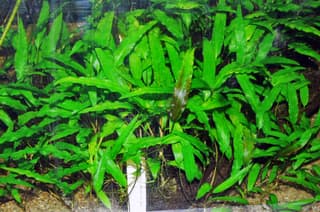
Nutrient Deficiency on Wendt's Water Trumpet (Cryptocoryne wendtii) is a nutrient_deficiency condition with moderate severity. Wendt's Water Trumpet has moderate susceptibility to this disease. Nutrient deficiency occurs when a plant cannot access one or more essential mineral elements in sufficient quantities for healthy growth. Plants require 17 essential nutrients: macronutrients (N, P, K...
Wendt's Water Trumpet is a easy-care plant. Recovery from Nutrient Deficiency takes approximately 21 days with proper treatment. As an indoor plant, ensure good ventilation to aid recovery.
🔍 What Does Nutrient Deficiency Look Like on Wendt's Water Trumpet?
- • Nitrogen (N): overall yellowing starting from older/lower leaves, progressing upward; slow stunted growth; pale lime-green foliage
- • Phosphorus (P): purple or reddish discoloration on leaf undersides and stems; dull dark-green older leaves; poor root and shoot elongation
- • Potassium (K): brown scorched edges on older leaves (marginal necrosis); weak stems; reduced flowering and fruiting
- • Calcium (Ca): tip burn and distortion on youngest leaves and growing tips; blossom end rot in fruiting plants; stunted new growth
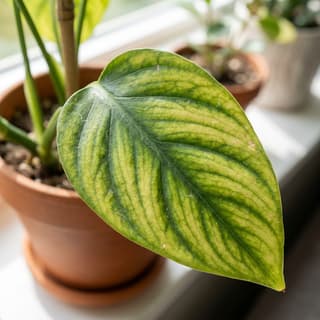
- • Magnesium (Mg): interveinal chlorosis on older leaves (veins stay green while tissue yellows); leaves may curl upward; premature leaf drop
- • Iron (Fe): bright interveinal chlorosis on youngest/newest leaves (veins remain green); severe cases turn leaves nearly white
- • Zinc (Zn): small chlorotic or bronze mottled new leaves; shortened internodes; distorted leaf shape
- • General: stunted overall growth, poor flowering and fruiting, leaf necrosis in advanced cases
❓ What Causes Nutrient Deficiency on Wendt's Water Trumpet?
- → Depleted or inherently nutrient-poor soil lacking organic matter
- → Incorrect soil pH — acidic pH (<6.0) locks out K, Ca, Mg; alkaline pH (>7.5) locks out Fe, Mn, Zn, B
- → Over-watering or heavy rain leaching mobile nutrients (N, K, Mg) out of root zone
- → Root damage from root rot, pests, physical injury, or waterlogging impairing uptake
- → Imbalanced fertilization creating nutrient antagonism (excess K blocking Mg; excess P blocking Fe/Zn)
- → Using soil-less or heavily peat-based mixes without supplemental feeding
- → Failure to repot container plants depleting limited soil volume
- → Salt buildup in substrate from over-fertilization locking out nutrients via osmotic stress
🛡️ How to Prevent Nutrient Deficiency on Wendt's Water Trumpet?
TLDR: Prevent Nutrient Deficiency on Wendt's Water Trumpet with 8 essential preventive care practices.
- ✓ Test soil pH annually and maintain 6.0–6.8 for most plants (or 5.5–6.5 for acid-lovers)
- ✓ Perform soil or tissue tests every 1–2 years to identify deficiencies before symptoms appear
- ✓ Use a balanced fertilizer (NPK + micros) on a consistent schedule during the growing season
- ✓ Incorporate organic matter (compost, aged manure) to improve soil nutrient retention and structure
- ✓ Repot container plants every 1–2 years to refresh growing medium
- ✓ Avoid over-watering to prevent nutrient leaching and root damage
- ✓ Monitor for salt buildup — flush soil periodically with plain water if EC is high
- ✓ Choose fertilizers matched to plant type (e.g., acid fertilizer for ericaceous plants)
🌱 How to Care for Wendt's Water Trumpet to Prevent Nutrient Deficiency?
💧 How to Water
As a fully submerged aquatic plant, it must remain permanently underwater. Regular partial water changes (approximately once a week) maintain stable parameters and prevent sudden fluctuations that cause leaf decomposition.
☀️ Lighting
It thrives in both low and higher lighting, but achieves the most compact and colorful growth under medium light intensity for 8–10 hours a day. A sudden change in light intensity can cause stress and leaf drop.
🪴 Ideal Soil
It requires a nutrient-rich, fine-grained substrate (such as aquarium soil or sand enriched with root tabs) to establish its roots. As a heavy root feeder, it benefits primarily from fertilizer applied directly into the substrate.
Frequently asked questions
Can Nutrient Deficiency kill my Wendt's Water Trumpet?
How long does Wendt's Water Trumpet take to recover from Nutrient Deficiency?
Is Nutrient Deficiency contagious to other plants near Wendt's Water Trumpet?
Sources & References
- Cryptocoryne Wendtii Care - A How To Guide - AquariumStoreDepot
- Cryptocoryne Wendtii Care and Types | Ultimate Guide - Fish Laboratory
- How to Prevent Cryptocoryne Melt - Buce Plant
- Cryptocoryne | Aquarium and Pond Plants of the World
- Cryptocoryne wendtii - Kryptokoryna Wendtova | zoozone.sk
- Cryptocoryne Wendtii Care Guide - Planting, Growing, and Propagation