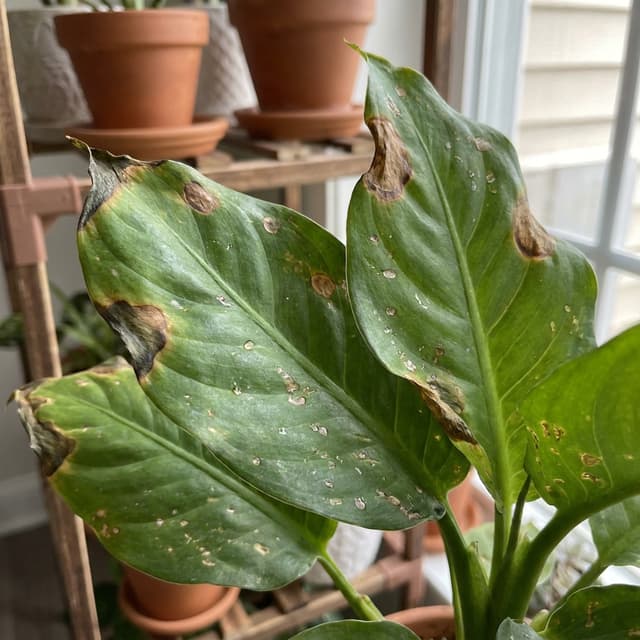
pesticide damage — Plant Disease
Pesticide damage is plant injury caused by a spray or soil-applied product that was too strong, used in the wrong weather, or drifted from nearby. It can happen with insecticides, fungicides, and especially herbicides. Typical signs include leaf scorch or browning edges, speckling, silvery or bronzed patches, twisted or cupped leaves, puckered or stunted new growth, yellowing, and sudden leaf drop. Symptoms often appear within hours to a few days and are worse on tender new leaves or on the side that was sprayed or hit by drift, although damage from some soil-applied or systemic herbicides can take longer to show. Many plants can be affected, including tomatoes, beans, cucumbers, peppers, roses, lawn turf, and common houseplants.
What is Pesticide Damage?
Pesticide Damage is a environmental condition with moderate severity that affects plants. Pesticide damage is plant injury caused by a spray or soil-applied product that was too strong, used in the wrong weather, or drifted from nearby. It can happen with insecticides, fungicides, and especially herbicides. Typical signs include leaf scorch or browning edges, speckling, silvery or bronze...
Pesticide Damage is a environmental disease with moderate severity.
Unlike infectious diseases, Pesticide Damage is caused by environmental conditions. Without correcting the environment, symptoms return even after treatment. Unlike many common diseases, Pesticide Damage is not contagious between plants.
🧪 Natural vs Chemical: Which Treatment Works for Pesticide Damage?
🌱 Natural Solutions
- ✓ Help the plant recover with gentle care by moving container plants to bright shade for about a week, then increasing light gradually.
- ✓ Rinse leaves with clean water as soon as you notice a problem.
- ✓ For potted plants, flush the potting mix thoroughly once to dilute residues, let it drain well, and repot into fresh mix and a clean container if a spill or heavy dose is likely.
- ✓ For plants in the ground, water the root zone deeply once to reduce stress and avoid waterlogging.
- ✓ Prune only the most damaged leaves or tips so the plant can still photosynthesize.
- ✓ Keep soil evenly moist, avoid heavy fertilizing until new, healthy growth appears, and pause any further sprays until the plant stabilizes.
- ✓ Improve airflow and avoid heat or intense midday sun during recovery.
💉 Chemical Solutions
- ✓ Do not apply other chemicals to 'fix' pesticide damage and allow the plant to recover first.
🛡️ How to Prevent Pesticide Damage?
TLDR: Prevent Pesticide Damage with 10 essential care practices. Regular monitoring is key for early detection.
- ✓ Read and follow the label precisely, using the correct product, rate, water volume, and listed plants and pests.
- ✓ Spray in calm, cool conditions such as early morning or evening and avoid heat, strong sun, or windy periods.
- ✓ Do not treat drought-stressed, newly transplanted, or wilted plants.
- ✓ Spot-test a small area and wait 48 hours before full coverage.
- ✓ Keep separate, clearly labeled sprayers for herbicides and for other products and clean equipment after use.
- ✓ Do not mix products unless the label allows it.
- ✓ Reduce drift by using low pressure and larger droplets, holding the nozzle close to the target, and shielding nearby plants if needed.
- ✓ Store products tightly closed, out of heat and sun, check dates, and avoid old or unknown mixes.
- ✓ Do not use grass clippings, straw, or manure from areas treated with lawn weed killers in vegetable beds unless the label says it is safe.
- ✓ Keep simple records of what you used, where, and when to avoid repeat problems.
🔗Related Diseases
Severe Defoliation
HighThis condition involves a sudden and massive loss of leaves caused by adverse environmental factors. The plant sheds its foliage in an attempt to survive extreme stress, such as abrupt temperature changes, improper watering, or transplant shock. If the underlying cause is not addressed, the plant may completely wither and die.
Severe Defoliation and Dormancy
HighThis condition is triggered by extreme environmental stress, such as sudden temperature fluctuations, insufficient light, or improper watering. In an effort to survive, the plant sheds its leaves and enters a dormant state to conserve energy.
Leaf Drop (Environmental Stress)
MediumLeaf drop occurs when a plant undergoes sudden environmental changes, such as insufficient light, excessive wind, or temperature fluctuations. It is not a fungal disease, but rather a physical response to stress.
Physical Leaf Damage
LowThis is not an infectious disease, but rather the result of external mechanical or environmental factors. It occurs due to rough handling, strong winds, hail, or pets. Leaves exhibit tears, cuts, or frayed edges, but the rest of the plant typically remains healthy and green.