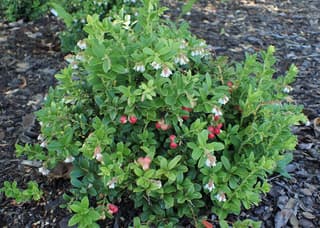
Lingonberry with Phomopsis Tip Blight? Rare but Treatable
Vaccinium vitis-idaea
Phomopsis Tip Blight on Lingonberry: What to Know?
Phomopsis Tip Blight on Lingonberry (Vaccinium vitis-idaea) is a fungal condition with moderate severity. Lingonberry has low susceptibility to this disease. A disease caused by the Phomopsis fungus that kills young shoots and causes brown spots on leaves. It thrives in humid conditions and spreads through water splashes.
Lingonberry is a medium-care plant. Recovery from Phomopsis Tip Blight takes approximately 21 days with proper treatment.
Unlike most plants, Lingonberry has natural resistance to Phomopsis Tip Blight. Best treated with preventive measures rather than reactive treatment. Unlike bacterial infections, Phomopsis Tip Blight on Lingonberry can be managed with organic fungicides.
🔍 What Does Phomopsis Tip Blight Look Like on Lingonberry?
- • Wilting of young shoot tips
- • Small black dots in dead tissue
- • Brown spots on leaves
- • Darkening of the stem base
❓ What Causes Phomopsis Tip Blight on Lingonberry?
- → Excessive humidity and rain
- → Poor air circulation within the foliage
- → Infected plant debris on the ground
🛡️ How to Prevent Phomopsis Tip Blight on Lingonberry?
TLDR: Prevent Phomopsis Tip Blight on Lingonberry with 4 essential preventive care practices.
- ✓ Water only at the soil level
- ✓ Maintain adequate spacing between plants
- ✓ Remove dead branches immediately
- ✓ Avoid excessive use of nitrogen fertilizers
🌱 How to Care for Lingonberry to Prevent Phomopsis Tip Blight?
💧 How to Water
The roots are very shallow and dry out fast. Keep the soil evenly moist, watering every 4-6 days in dry weather, ideally at the base and in the morning. Do not let it get waterlogged.
☀️ Lighting
Full sun, 8 hours a day in early summer, for good flowering and fruit. It tolerates part shade but bears less. In warm climates, afternoon shade helps.
🪴 Ideal Soil
Strongly acidic soil (pH 4.5 to 5.5), peaty and free-draining, like soil for blueberries or azaleas. Mulch with 5-8 cm of peat. Feed lightly, only in early spring, with a fertilizer for acid-loving plants.