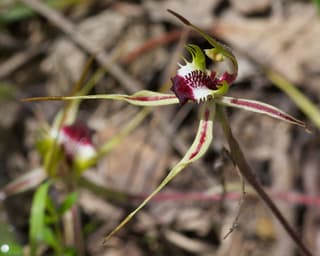
Small Spider-orchid with Phytophthora: Prevention & Cure
Caladenia parva
Phytophthora on Small Spider-orchid: What to Know?
Phytophthora on Small Spider-orchid (Caladenia parva) is a other condition with moderate severity. Small Spider-orchid has moderate susceptibility to this disease. The Phytophthora genus consists of soil-borne oomycetes (water molds) that act as plant pathogens, primarily affecting trees and woody plants. It typically spreads through the root system, leading to...
Small Spider-orchid is a hard-care plant.
🛡️ How to Prevent Phytophthora on Small Spider-orchid?
TLDR: Prevent Phytophthora on Small Spider-orchid with 5 essential preventive care practices.
- ✓ Ensure proper soil drainage to prevent waterlogging and saturated conditions.
- ✓ Utilize resistant species and cultivars, and ensure all seeds and seedlings are healthy and certified disease-free.
- ✓ Implement crop rotation and avoid planting susceptible crops in soil known to be infested with Phytophthora.
- ✓ Apply preventative chemical treatments if necessary, such as copper-based sprays or phosphonates, though be mindful that over-reliance can lead to resistant strains.
- ✓ Sanitize tools, pots, and hands thoroughly to prevent the transmission of the pathogen.
🌱 How to Care for Small Spider-orchid to Prevent Phytophthora?
💧 How to Water
Water moderately only during the active growth phase (autumn to spring), keeping the substrate slightly moist but never waterlogged. Suspend watering completely when the leaf withers and the plant enters summer dormancy—the tuber must remain dry to prevent rot.
☀️ Lighting
Prefer protected partial shade with about 50% light, mimicking the open forest and woodland understory where the species naturally occurs. Avoid full, direct sun.
🪴 Ideal Soil
Use a well-drained substrate with a good proportion of coarse sand and slow-decomposing organic matter (e.g., half native potting mix + half sand). The soil should drain quickly but retain some moisture without becoming waterlogged.