Rust: Fungal Disease | Treatment Guide
Rust is a common fungal disease caused by fungi in the order Pucciniales that affects a wide variety of plants. The disease gets its name from the characteristic orange, yellow, or reddish-brown pustules that appear on leaves, resembling metal rust. This obligate fungal parasite requires living plants to survive and can cause significant economic losses in agricultural crops.
Medium
21 days
What is Rust?
Rust is a fungal condition with moderate severity that affects plants. Rust is a common fungal disease caused by fungi in the order Pucciniales that affects a wide variety of plants. The disease gets its name from the characteristic orange, yellow, or reddish-brown pustules that appear on leaves, resembling metal rust. This obligate fungal parasite requires living plan...
Rust is a fungal disease with moderate severity that spreads at a moderate rate. Recovery typically takes approximately 21 days with proper treatment. It affects 10 plant species in our database. This condition is contagious and can spread between plants.
Unlike bacterial infections, Rust spreads slowly but is harder to eradicate. Without treatment, affected leaves won't recover. Without isolation, nearby plants can become infected within days.
🔍 What Are the Symptoms of Rust?
TLDR: Rust presents 6 main symptoms. Early identification is crucial for effective treatment.
Main Symptoms
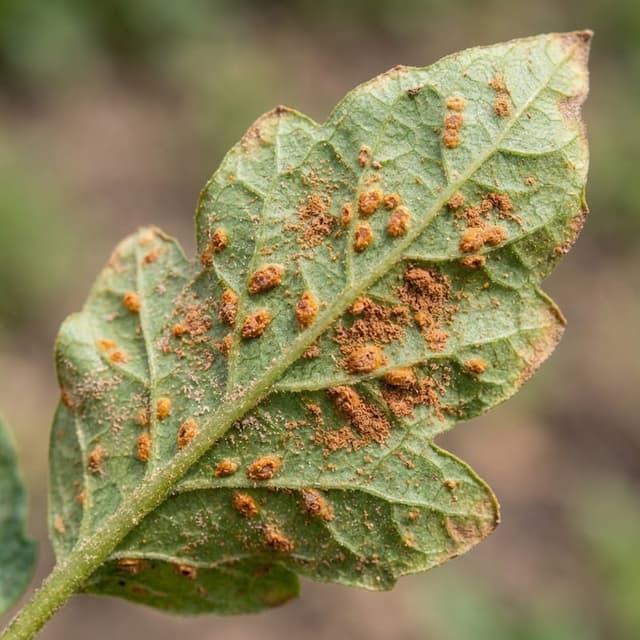
- ! Raised orange, yellow, brown, or red pustules on leaf surfaces
- ! Ring-shaped or oval spore masses, typically on leaf undersides
- ! Premature yellowing and leaf drop
- ! Stunted plant growth
- ! Orange dust transferring to hands or clothing when touched
- ! In severe cases, death of entire leaves
Visual Signs
❓ What Causes Rust in Plants?
- → Infection by lightweight fungal spores carried by wind or water
- → Wet foliage for 6-10 hours at temperatures of 15-25°C (59-77°F)
- → High humidity and poor air circulation
- → Late-day overhead watering leaving leaves wet overnight
- → Nearby alternate host plants (many rust fungi require two hosts)
- → Soft, susceptible growth due to excess nitrogen
💊 How to Treat Rust?
TLDR: Treat Rust with 11 days of quick treatment or 21 days of organic treatment. Full recovery takes approximately 21 days.
Quick Fixes
~11 days
Immediate Pruning
Cut all visibly infected leaves and dispose. Clean tools.
Systemic Application
Apply systemic fungicide (azoxystrobin or similar) according to package instructions. Product will be absorbed and circulate through the plant.
Reapplication
Reapply after 7-14 days as per product label.
Environmental Adjustment
Switch watering to early morning and improve ventilation.
Materials needed:
Organic Treatment
~21 days
Mechanical Removal
Remove all infected leaves and parts with clean shears. Dispose in trash (not compost). Clean tools with 70% alcohol between cuts.
Sulfur Application
Apply sulfur fungicide to all leaf surfaces, especially undersides. Do this in the morning for quick drying. Do not apply above 30°C (86°F).
Watering Adjustment
Switch to drip irrigation or water directly at soil level. If using overhead watering, do so between 5-10 AM.
Improve Circulation
Prune dense branches to increase airflow. Maintain proper spacing between plants.
Monitoring
Inspect weekly. Reapply sulfur every 7-10 days for 3 weeks. Continue for 2 weeks after last symptom.
Materials needed:
Expert Treatment
~32 days
Accurate Diagnosis
Identify the specific rust species (Puccinia, Hemilleia, etc.) if possible. Assess severity and distribution on plant.
Complete Sanitation
Remove all infected material and surrounding debris. Disinfect tools and work area. Isolate affected plants.
Rotation Protocol
Apply systemic fungicide (cyproconazole or fenbuconazole) in first week. Alternate with contact fungicide (mancozeb) in second week to prevent resistance.
Soil and Nutrition Adjustment
Test soil pH (ideal 6.0-7.0). Reduce nitrogen if necessary. Increase potassium and phosphorus to strengthen natural defenses.
Environmental Modification
Install drip irrigation system. Improve drainage if needed. Increase spacing between plants. Consider artificial ventilation in enclosed environments.
Intensive Monitoring
Inspect daily for 2 weeks, then weekly. Apply preventive fungicides during critical period (15-25°C with high humidity). Continue program for 4-6 weeks.
Alternate Host Assessment
Identify and remove alternate host plants within 50m radius if applicable (some rust fungi require two different hosts).
Step by Step
- 1
Remove all infected parts and destroy them (do not compost late summer/fall material)
- 2
Improve air circulation by pruning dense vegetation
- 3
Apply copper or sulfur fungicide in early spring or fall
- 4
Adjust watering practices to morning drip irrigation
- 5
Monitor plants weekly during wet weather
- 6
Continue treatment for 2-3 weeks after symptoms disappear
🧪 Natural vs Chemical: Which Treatment Works for Rust?
🌱 Natural Solutions
- ✓ Copper-based fungicides for susceptible species
- ✓ Sulfur fungicides (do not use in high temperatures)
- ✓ Weekly light sulfur spray as preventive
- ✓ Neem oil applied at first appearance
- ✓ Baking soda spray (1 tablespoon per liter of water)
- ✓ Remove infected leaves immediately
💉 Chemical Solutions
- ✓ Azoxystrobin (systemic, sap translocation)
- ✓ Mancozeb (contact, surface protection)
- ✓ Cyproconazole (systemic, ergosterol inhibitor)
- ✓ Fenbuconazole (systemic)
- ✓ Triazoles and strobilurins (effective against Puccinia strains)
Treatment Comparison
| Type | Estimated time | Steps | Difficulty | Best For |
|---|---|---|---|---|
| ⚡Quick | ~11 days | 4 | Medium | Urgent cases |
| 🌿Organic | ~21 days | 5 | Advanced | Indoor plants |
| 🔬Expert | ~32 days | 7 | Advanced | Severe infections |
🛡️ How to Prevent Rust?
TLDR: Prevent Rust with 9 essential care practices. Regular monitoring is key for early detection.
- ✓ Water early morning (5-10 AM) to allow leaves to dry
- ✓ Use drip irrigation instead of overhead sprinklers
- ✓ Improve air circulation through proper pruning
- ✓ Remove fallen leaf debris where spores can overwinter
- ✓ Plant resistant cultivars when available
- ✓ Avoid excessive nitrogen fertilization
- ✓ Quarantine new plants for two weeks
- ✓ Remove and destroy infected parts when infestation is minimal
- ✓ Wash tools between plants to prevent spread
🔗Related Diseases
Rust
Rust fungi (Pucciniales) are fungal diseases that form rust-colored, usually orange to brown pustules with powdery spore dust on leaves, stems, or fruits. Typical symptoms include small spots that develop into cushions or rings; leaves turn yellow, curl, and drop prematurely. The fungi spread primarily in damp weather and dense foliage. Many ornamental and crop plants are affected, frequently including roses, mallows (hollyhocks), pears (pear rust), and currants. Some rust fungi require two host plants for their life cycle, such as pear and certain juniper species.
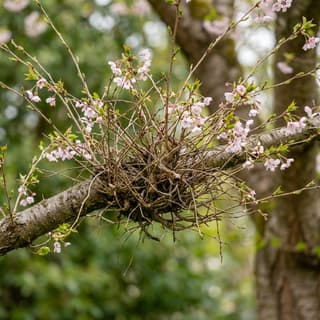
Cherry Witches' Broom
Taphrina wiesneri is a fungal disease affecting cherry trees (Prunus species, including sweet, sour, and ornamental varieties). The fungus overwinters in buds and bark, infecting young leaves and shoots during cool, wet spring weather. Infected leaves become thickened, puckered, and curled, often displaying reddish or yellow blotches and a fine whitish bloom on the surface. Severely affected leaves may drop prematurely. Small twigs can develop 'witches' brooms,' which are dense clusters of weak, distorted shoots.
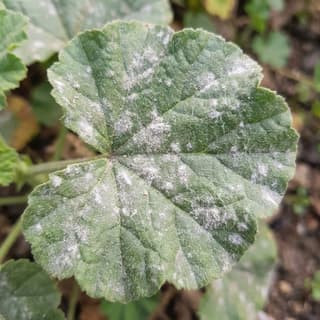
Powdery Mildew
MediumPowdery mildew is a common fungal disease caused by various fungi species including Erysiphe, Podosphaera, Oïdium, and Leveillula. It affects over 10,000 plant species worldwide. The disease thrives in warm, dry climates with high humidity and appears as a distinctive white powdery coating on plant surfaces.

Root Rot
HighRoot rot is a serious fungal disease that affects the root system of plants, causing them to decay and die. It is primarily caused by overwatering, poor drainage, or soil-borne fungi such as Pythium, Phytophthora, Rhizoctonia, and Fusarium. The disease thrives in waterlogged conditions where roots are deprived of oxygen, making them susceptible to fungal infection.