Daylily Prone to Rust: How to Protect
Hemerocallis
Rust on Daylily: What to Know?
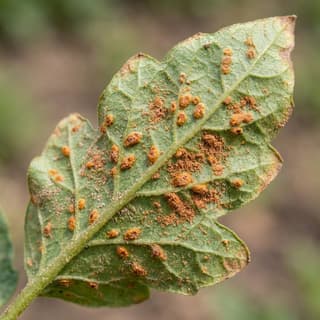
Rust on Daylily (Hemerocallis) is a fungal condition with moderate severity. Daylily has high susceptibility to this disease. Rust is a common fungal disease caused by fungi in the order Pucciniales that affects a wide variety of plants. The disease gets its name from the characteristic orange, yellow, or reddish-brown pustu...
Daylily is a easy-care plant. Recovery from Rust takes approximately 21 days with proper treatment.
Daylily is highly susceptible to Rust, unlike most plants in the same family. Without early intervention, recovery takes 32 days instead of 21 days. Unlike bacterial infections, Rust on Daylily can be managed with organic fungicides. Without precautions, chemical treatments for Rust can be harmful to pets. Use organic methods for Daylily in pet-friendly homes.
🔍 What Does Rust Look Like on Daylily?
- • Raised orange, yellow, brown, or red pustules on leaf surfaces
- • Ring-shaped or oval spore masses, typically on leaf undersides
- • Premature yellowing and leaf drop
- • Stunted plant growth
- • Orange dust transferring to hands or clothing when touched
- • In severe cases, death of entire leaves
❓ What Causes Rust on Daylily?
- → Infection by lightweight fungal spores carried by wind or water
- → Wet foliage for 6-10 hours at temperatures of 15-25°C (59-77°F)
- → High humidity and poor air circulation
- → Late-day overhead watering leaving leaves wet overnight
- → Nearby alternate host plants (many rust fungi require two hosts)
- → Soft, susceptible growth due to excess nitrogen
💊 How to Treat Rust on Daylily?
TLDR: Treat Rust on Daylily with quick treatment (~11 days) or organic (~21 days). Daylily has high susceptibility to this disease.
Quick Fixes
Immediate Pruning
Cut all visibly infected leaves and dispose. Clean tools.
Systemic Application
Apply systemic fungicide (azoxystrobin or similar) according to package instructions. Product will be absorbed and circulate through the plant.
Reapplication
Reapply after 7-14 days as per product label.
Environmental Adjustment
Switch watering to early morning and improve ventilation.
Organic Treatment
Mechanical Removal
Remove all infected leaves and parts with clean shears. Dispose in trash (not compost). Clean tools with 70% alcohol between cuts.
Sulfur Application
Apply sulfur fungicide to all leaf surfaces, especially undersides. Do this in the morning for quick drying. Do not apply above 30°C (86°F).
Watering Adjustment
Switch to drip irrigation or water directly at soil level. If using overhead watering, do so between 5-10 AM.
Improve Circulation
Prune dense branches to increase airflow. Maintain proper spacing between plants.
Monitoring
Inspect weekly. Reapply sulfur every 7-10 days for 3 weeks. Continue for 2 weeks after last symptom.
🛡️ How to Prevent Rust on Daylily?
TLDR: Prevent Rust on Daylily with 9 essential preventive care practices.
- ✓ Water early morning (5-10 AM) to allow leaves to dry
- ✓ Use drip irrigation instead of overhead sprinklers
- ✓ Improve air circulation through proper pruning
- ✓ Remove fallen leaf debris where spores can overwinter
- ✓ Plant resistant cultivars when available
- ✓ Avoid excessive nitrogen fertilization
- ✓ Quarantine new plants for two weeks
- ✓ Remove and destroy infected parts when infestation is minimal
- ✓ Wash tools between plants to prevent spread
🌱 How to Care for Daylily to Prevent Rust?
💧 How to Water
Water deeply once a week, providing about 1 inch of water. Allow the top few inches of soil to dry slightly between waterings. In hot climates, water twice weekly during peak bloom for best flower production.
☀️ Lighting
Prefers full sun with at least 6 hours of direct light daily. Tolerates partial shade, especially in hot climates where afternoon shade protects deeper-colored blooms. More sun means more flowers.
🪴 Ideal Soil
Plant in well-draining soil enriched with organic matter. Tolerates clay, chalk, and loam soils but avoid waterlogged conditions which promote crown rot. Ideal pH 6.0-7.5.
Frequently asked questions
Can Rust kill my Daylily?
How long does Daylily take to recover from Rust?
Is Rust contagious to other plants near Daylily?
Sources & References
- Rust diseases – causes, symptoms, and treatment | Cropaia
- Rust diseases: Symptoms & Control | RHS Advice
- Rust Fungus: Identify Symptoms to Treat and Control Rust Disease
- How to Identify and Control Rust Plant Disease
- Rust (fungus) - Wikipedia
- Hemerocallis (Daylily): Beautiful and Versatile Perennials - Gardenia
- Daylily (Hemerocallis) Diseases - Illinois Extension IPM
- Daylily (Hemerocallis): Plant Profile and Care Guide
- Hemerocallis Diseases and Insect Pests - The Plant Aide