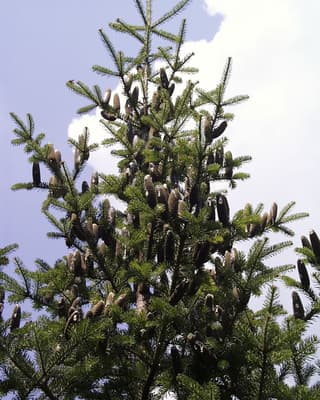
Balsam fir Prone to sap-sucking pests: How to Protect
Abies balsamea
sap-sucking pests on Balsam fir: What to Know?
sap-sucking pests on Balsam fir (Abies balsamea) is a other condition with moderate severity. Balsam fir has high susceptibility to this disease. Group of pests including aphids and scales, feeding on sugary sap on leaves, twigs, and branches. These pests often produce honeydew, which can later be infected by a fungal disease
Balsam fir is a medium-care plant.
Balsam fir is highly susceptible to sap-sucking pests, unlike most plants in the same family.
🛡️ How to Prevent sap-sucking pests on Balsam fir?
TLDR: Prevent sap-sucking pests on Balsam fir with 3 essential preventive care practices.
- ✓ Encourage the presence of natural enemies (e.g. lady beetles, lacewings, parasitic wasps).
- ✓ Apply dormant oil (controls pests and diseases during the off-season).
- ✓ Inspect new plants for signs of an infestation. Inspect the underside of leaves and stem joints.
🌱 How to Care for Balsam fir to Prevent sap-sucking pests?
💧 How to Water
For the first 2-3 years, water deeply once a week in dry weather. Once established, rain is usually enough in cool climates. A bark mulch keeps the shallow roots moist.
☀️ Lighting
Full sun to part shade. Young trees take a lot of shade; mature trees grow denser and fuller in sun. In warm regions, afternoon shade helps.
🪴 Ideal Soil
Acidic soil (pH 4-6.5), rich in organic matter, moist and well-drained. Tolerates wet ground but not chalky, dry or compacted soil.
Frequently asked questions
Can sap-sucking pests kill my Balsam fir?
Is sap-sucking pests contagious to other plants near Balsam fir?
Sources & References
- Wikipedia - Abies balsamea
- Brooklyn Botanic Garden - Balsam fir
- University of Minnesota Extension - Balsam fir
- NC State Extension Gardener Plant Toolbox - Abies balsamea
- University of Alaska Fairbanks Cooperative Extension - Abies balsamea cultivar profile
- The Ferret - Are Christmas trees toxic to pets? (fact check)